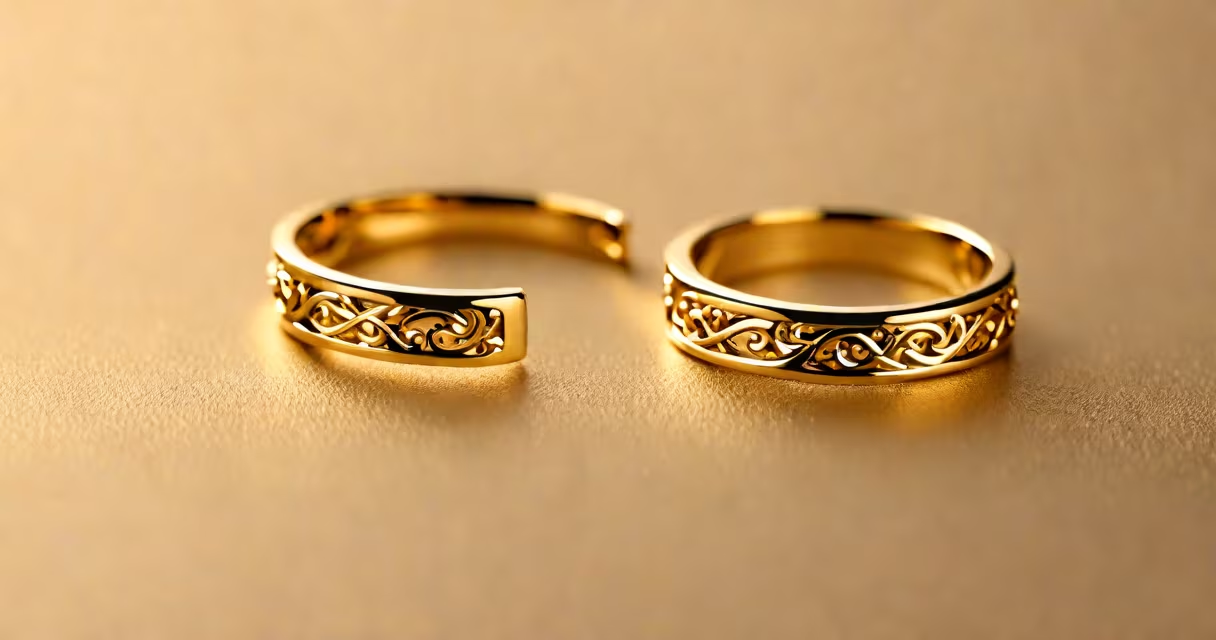
14k means the metal contains 58.3% pure gold by weight, with the rest made of alloy metals like silver, copper, or nickel. This standard balances durability and affordability in jewelry.
Karat is a measure of gold purity, not weight. The term "k" stands for karat, derived from the carob seed used historically to weigh gold. Twenty-four karats represent pure gold. So 14k equals 14 parts gold out of 24 total parts.
For example, a 10-gram 14k gold ring contains 5.83 grams of pure gold and 4.17 grams of alloy metals. The alloy adds strength and resistance to wear, making 14k ideal for everyday rings, earrings, and bracelets.
Karat values range from 10k to 24k. Higher numbers indicate more pure gold. But pure gold is too soft for most jewelry. 24k gold bends easily and tarnishes quickly, so it's mostly used in bullion or decorative art.
10k gold is 41.7% pure gold. It's less expensive but more prone to scratching and discoloration. 18k gold is 75% pure gold-richer in color but softer and more costly. 14k sits between them: 58.3% gold, harder than 18k, and widely accepted as the sweet spot for balance.
The U.S. Federal Trade Commission requires any item labeled "14k" to contain at least 58.3% gold. Items below this threshold cannot legally carry the label. This standard ensures consistency across brands and retailers.
14k gold comes in several colors, determined by the alloy mix:
| Color | Alloy Metals | Common Uses |
|---|---|---|
| Yellow | Copper, silver | Rings, wedding bands, necklaces |
| White | Nickel, palladium, zinc | Engagement rings, fashion jewelry |
| Pink/rose | Copper, silver | Bracelets, earrings, custom designs |
White 14k gold often uses palladium instead of nickel for better skin tolerance. Nickel can cause allergic reactions in some people. Palladium-based white gold is more hypoallergenic and resists tarnishing better.
Many jewelers use 14k yellow gold for engagement rings because it holds up well under daily wear. A 14k yellow gold band with a 1-carat diamond setting lasts longer than 18k gold in high-stress areas like the band's interior.
14k gold is the most common standard in U.S. jewelry retail. Over 70% of gold rings sold in major chains like Kay Jewelers and Zales are 14k. This dominance stems from practicality, cost, and regulatory clarity.
For example, a 14k gold wedding band priced at $600 includes about $350 in raw gold value based on current market rates. The remaining $250 covers labor, design, and markup. In contrast, an 18k band with similar dimensions would cost $900-$1,200 due to higher gold content and lower durability.
14k gold also resists fading and maintains its luster over time. A 20-year-old 14k yellow gold ring worn daily shows minimal wear compared to 10k gold, which develops scratches faster. This longevity makes 14k a preferred choice for heirloom pieces.
Some buyers assume 14k gold is "fake" or "low quality." That's incorrect. The term "14k" refers to composition, not authenticity. All 14k gold is real gold, just mixed with other metals for structural stability.
Another myth is that 14k gold turns your skin green. While certain alloys can cause discoloration, 14k gold itself doesn't. Green marks come from reactions between skin chemistry and low-quality metals like brass or cadmium. Reputable jewelers use certified alloys that minimize such risks.
A lesser-known fact: 14k gold is more resistant to bending than 18k gold. A study by the Gemological Institute of America (GIA) tested 14k and 18k gold samples under standardized pressure. The 14k sample required 37% more force to bend permanently. This difference matters in settings with tight prongs or delicate filigree.
Consider a 14k yellow gold engagement ring with a 0.5-carat center diamond. The band weighs 3.2 grams. Using current gold prices ($1,850 per troy ounce), the gold content is worth approximately $112. The diamond adds $1,200-$1,800 depending on cut and clarity. Total retail price: $2,500.
If the same ring were 18k, the gold value would rise to $168-but the increased softness means the band is more likely to dent during daily wear. After five years, the 14k version shows less deformation and fewer repair needs.
I once helped a customer replace a 10k gold ring that had bent after two years of wear. They switched to 14k gold with a thicker band. The new ring still fits perfectly after seven years, even with frequent hand washing and gardening.
14k is not the same as 14K in other contexts. For example, "14K" in music refers to a song title by the group 14K. In finance, "14K" may refer to IRS Form 14K, filed by companies going public. These are unrelated to gold purity.
Also, 14k gold differs from "plated" or "filled" gold. Plated gold has a thin layer of gold over a base metal-often lasting only months. Filled gold has a thicker layer but still wears off. Only solid 14k gold contains 58.3% gold throughout the piece.
When shopping, look for hallmarks: "14K," "14KT," or "585" (the European equivalent). These confirm the metal's composition. Avoid vague terms like "gold tone" or "gold plated" unless you're buying costume jewelry.
Understanding what 14k means prevents confusion and empowers informed choices. It's not a compromise-it's a standard. The 58.3% gold content offers a proven balance of beauty, strength, and value. building a collection, 14k gold remains the benchmark for responsible, long-lasting jewelry.