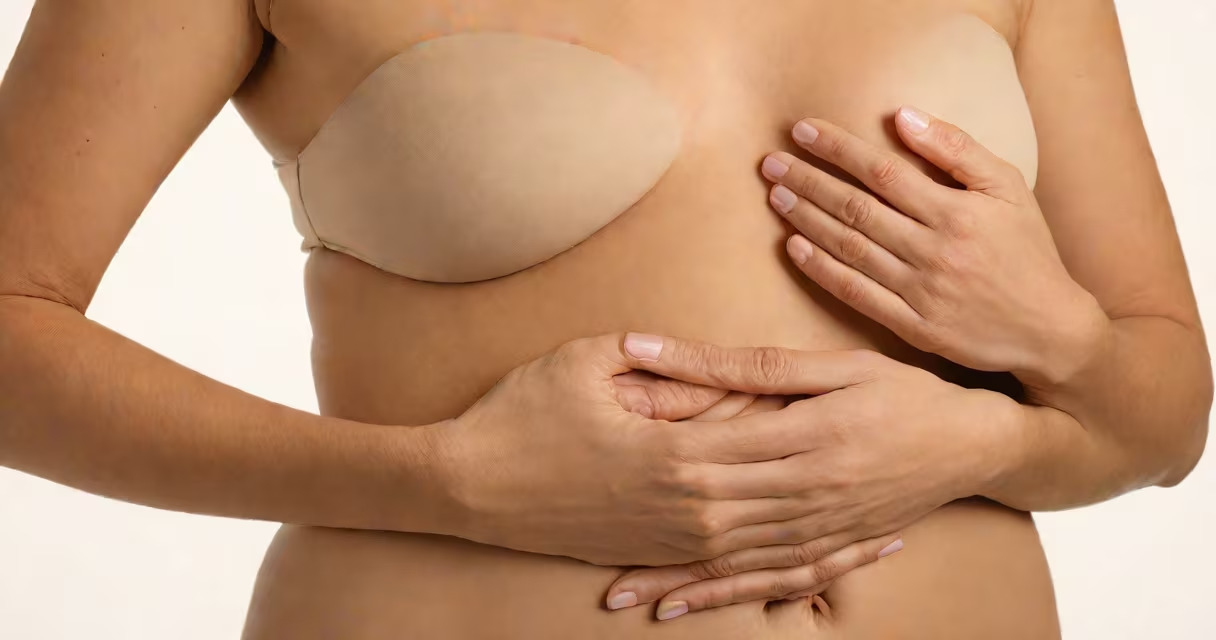
Stomach cramps and sore breasts without a menstrual period can signal early pregnancy, premenstrual syndrome (PMS), or hormonal imbalances. These symptoms often overlap, making it difficult to distinguish between them without testing.
Early pregnancy triggers physical changes within days of conception. The fertilized egg implants in the uterine lining around 6-10 days after ovulation, releasing human chorionic gonadotropin (hCG). This hormone prompts breast tissue to swell and prepare for lactation, causing tenderness. Progesterone rise also slows digestion, leading to bloating and mild cramping similar to menstrual pain. A missed period confirms the absence of menstruation, which occurs when implantation prevents shedding of the uterine lining.
PMS affects about 75% of menstruating people, according to the American College of Obstetricians and Gynecologists (ACOG). Symptoms like breast soreness and abdominal discomfort typically appear 5-11 days before expected menses. When a cycle is delayed due to stress, weight fluctuations, or polycystic ovary syndrome (PCOS), these symptoms persist past the usual window. Unlike pregnancy, PMS resolves once bleeding begins. Without a test, distinguishing between early pregnancy and PMS remains challenging.
Estrogen and progesterone regulate the menstrual cycle and influence breast tissue sensitivity. During the luteal phase, progesterone levels peak, increasing blood flow to the breasts and causing swelling. This leads to soreness, especially in the upper outer quadrant. Elevated progesterone also relaxes smooth muscle in the gastrointestinal tract, slowing transit time and increasing gas production. Bloating and cramping result from trapped air and pressure on nearby nerves.
In early pregnancy, hCG mimics luteinizing hormone (LH), sustaining high progesterone levels. This prolongs breast tenderness beyond typical PMS duration. Studies show that 70% of pregnant individuals report breast changes by week 4 of gestation, per the National Institutes of Health (NIH). Cramping during early pregnancy is usually mild and intermittent, unlike menstrual cramps, which are often rhythmic and sharp. Implantation cramping typically lasts 1-3 days and occurs around the time of expected menstruation.
When progesterone drops at the end of the cycle, withdrawal symptoms like mood swings and fatigue emerge. If ovulation doesn't occur or the corpus luteum fails to produce enough progesterone, cycles become irregular. Persistent low progesterone can cause ongoing breast soreness and cramping even without a period. Conditions such as thyroid dysfunction or hyperprolactinemia may also disrupt hormone balance, leading to similar symptom patterns.
Many people assume breast soreness and cramping always precede a period. However, these signs can appear during ovulation or early pregnancy. A 2022 study published in Obstetrics & Gynecology found that 38% of women who experienced these symptoms had not yet missed their period but were later diagnosed with pregnancy. Delayed testing leads to misinterpretation of early signals.
Some confuse implantation cramping with menstrual cramps. Menstrual pain stems from prostaglandin release, which contracts the uterus forcefully. Implantation cramping is gentler, localized to the lower abdomen, and often accompanied by light spotting. Spotting differs from menstrual bleeding-it's pinkish, minimal, and lasts less than 24 hours. Not recognizing this difference delays confirmation of pregnancy.
Another misconception is that sore breasts always mean impending menstruation. Breast tenderness can last throughout the luteal phase or extend into early pregnancy. If a person has PCOS, elevated androgens may suppress ovulation, preventing progesterone surge. Without this surge, breast changes may persist unpredictably. In such cases, symptoms don't align with a regular cycle, making tracking difficult.
Consider Maya, a 29-year-old with a history of irregular cycles. She experiences breast soreness and mild cramping on day 22 of her cycle. Her period is usually 28-32 days long. She takes a home pregnancy test on day 25, which returns positive. Blood tests confirm hCG levels at 120 mIU/mL-above the threshold for pregnancy detection (≥5 mIU/mL).
Now consider David, a 34-year-old assigned female at birth, who reports breast tenderness and cramping for five days. His cycle averages 35 days. He skips his period for two months due to travel stress and weight loss. A pelvic ultrasound shows no follicular development, and labs reveal low progesterone. Diagnosis: hypothalamic amenorrhea caused by stress-induced suppression of gonadotropin-releasing hormone (GnRH).
These cases illustrate how symptom overlap complicates diagnosis. Both individuals have similar complaints, but underlying causes differ. Testing is essential-symptoms alone cannot confirm pregnancy or identify hormonal disorders.
Consult a healthcare provider if symptoms persist beyond two weeks without a period. A negative home test does not rule out pregnancy-hCG levels may still be below detectable thresholds. Repeat testing in 48-72 hours improves accuracy. For those with irregular cycles, a transvaginal ultrasound can assess ovarian activity and endometrial thickness.
Chronic breast soreness with no period warrants evaluation for hormonal imbalances. Blood tests measuring FSH, LH, prolactin, and thyroid function help identify conditions like PCOS or hypothyroidism. Persistent cramping may indicate endometriosis, especially if pain worsens over time or interferes with daily activities.
For those experiencing nausea, fatigue, or frequent urination alongside breast soreness and cramping, pregnancy is likely. Early prenatal care reduces risks of complications. The CDC recommends confirming pregnancy with a clinical test and initiating folic acid supplementation by week 4.
| Condition | Typical Duration of Symptoms | Period Status | Key Differentiators |
|---|---|---|---|
| Early Pregnancy | Weeks 1-4 post-conception | Missed | Positive hCG test, implantation spotting, persistent breast tenderness |
| PMS | Days 1-10 before expected period | Expected but delayed | Resolves with menstruation, cyclical pattern |
| Hormonal Imbalance (e.g., PCOS) | Chronic, fluctuating | Irregular or absent | Infrequent ovulation, acne, weight gain, elevated androgens |
I once observed a patient who reported breast soreness and cramping for six weeks. She had taken four negative home tests. A clinic visit revealed a low hCG level that doubled in 48 hours-confirming early pregnancy. Her initial negative results stemmed from testing too early. This case underscores that timing matters: hCG must reach detectable levels.
Stomach cramps and sore breasts but no period can stem from multiple causes. Early pregnancy, PMS, and hormonal imbalances share overlapping symptoms. Accurate diagnosis requires testing and medical evaluation. Do not rely solely on symptoms. Confirm with a urine or blood test. If uncertainty persists, consult a clinician to rule out underlying conditions.