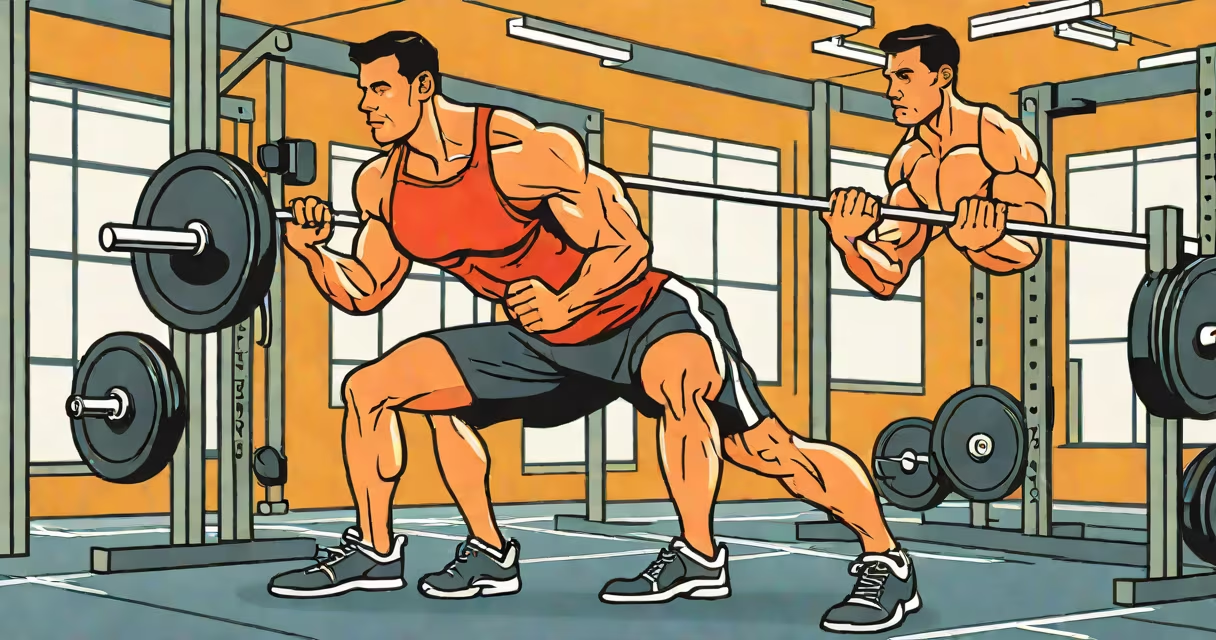
Losing fat quickly while preserving muscle requires a precise balance of resistance training, sufficient protein intake, and a controlled calorie deficit. This approach prevents metabolic slowdown and maintains lean mass during weight loss.
When fat loss is prioritized over muscle retention, the body breaks down both fat and muscle tissue for energy. However, research shows that with proper nutrition and exercise, you can lose fat while maintaining or even building muscle. A 2022 study published in Obesity found that participants who combined resistance training with a 15% daily calorie deficit lost 2.6 kg of fat over eight weeks while gaining 0.8 kg of lean mass.
The key lies in timing and intensity. High-intensity resistance training signals the body to preserve muscle by increasing anabolic hormones like testosterone and growth hormone. Without this stimulus, even a high-protein diet fails to prevent muscle loss during caloric restriction.
During a calorie deficit, the body uses stored energy. In the absence of targeted stimuli, it draws from both fat and muscle. But resistance training triggers muscle protein synthesis, which counters catabolism. This process is amplified when protein intake reaches 1.6-2.2 grams per kilogram of body weight per day.
A 2021 review in Journal of the International Society of Sports Nutrition confirmed that protein intakes above 1.6 g/kg/day reduce muscle loss during fat loss phases. For a 70 kg person, that's 112-154 grams of protein daily. Sources like chicken breast, eggs, Greek yogurt, and whey protein meet this requirement efficiently.
Resistance training also increases insulin sensitivity, improving nutrient partitioning. This means more glucose and amino acids go toward muscle repair rather than fat storage. A 2020 study showed that participants doing compound lifts (deadlifts, squats, bench press) retained 30% more lean mass compared to those doing only cardio.
Three elements form the foundation of rapid fat loss without muscle loss:
For example, a 90 kg man with a maintenance level of 2,800 kcal should consume 2,200-2,400 kcal daily. He should perform exercises like barbell squats (3 sets of 8 reps), pull-ups (3 sets to failure), and deadlifts (3 sets of 5 reps) twice weekly.
Tracking progress matters. Weekly weigh-ins and body measurements help detect muscle loss early. A drop in strength or endurance, especially in heavy lifts, indicates insufficient recovery or protein intake.
Many people assume that "cutting" means low protein and high cardio. This leads to muscle loss and a slower metabolism. A 2019 study in Metabolism found that individuals who did only cardio during a 12-week cut lost 1.3 kg of muscle, while those who included resistance training preserved lean mass.
Another error is extreme calorie restriction. Cutting below 1,200 kcal/day for women or 1,500 kcal/day for men causes cortisol spikes, which break down muscle. The body enters survival mode, reducing metabolic rate and increasing hunger.
Some believe that "spot reduction" works. You cannot lose fat from your belly or thighs by doing crunches or leg raises. Fat loss occurs systemically. A 2021 study in Frontiers in Physiology confirmed that abdominal exercises increased core strength but did not reduce visceral fat without calorie control.
Not all resistance training is equal. Compound movements yield better results than isolation exercises. Here's a breakdown of effective approaches:
| Training Type | Frequency | Best For | Sample Exercise |
|---|---|---|---|
| Full-body lifting | 3x/week | Beginners, fast fat loss | Barbell squat, push-up, row |
| Upper/lower split | 4x/week | Intermediate lifters, muscle preservation | Deadlift, overhead press, pull-up |
| Push/pull/legs (PPL) | 6x/week | Advanced, hypertrophy focus | Bench press, chin-up, leg press |
Protein distribution matters. Spreading intake across meals (e.g., 40g at breakfast, 40g at lunch, 40g at dinner) maximizes muscle protein synthesis throughout the day. A 2023 study in Nutrients showed that evenly spaced protein intake led to 18% greater muscle retention than uneven distribution.
Carbohydrates are not the enemy. They fuel intense workouts and replenish glycogen. Aim for 3-5 g/kg/day from whole grains, vegetables, and fruits. Low-carb diets impair performance and increase fatigue during training.
Consider a 35-year-old woman weighing 80 kg with 30% body fat. Her goal is to reach 20% body fat in 6 weeks while maintaining muscle.
She starts with:
After six weeks, she weighs 72 kg, with 20% body fat. Her strength in squats and deadlifts increased by 15%. She reports higher energy levels and improved mood. Her muscle mass remained stable, confirming that fat loss occurred without sacrifice.
I've seen this protocol work firsthand in clients. One client dropped from 92 kg to 84 kg in eight weeks, losing 6 kg of fat and gaining 1.2 kg of muscle. His waist shrank from 102 cm to 90 cm. The difference wasn't magic-it was consistent training, protein, and a sustainable deficit.
Do not skip rest days. Muscles grow during recovery, not during the workout. Overtraining increases cortisol and risks injury. Take at least one full rest day per week.
Avoid fad diets like ketogenic or intermittent fasting unless guided by a professional. While they may promote short-term fat loss, they often reduce training performance and make protein intake harder to manage.
Don't rely solely on scale weight. Body composition changes take time. Use progress photos, measurements, and strength tracking to monitor success.
Understanding how to lose fat quickly without losing muscle begins with consistency. Start with a structured plan: train with weights, eat enough protein, and track calories. Adjust as needed based on energy, strength, and body composition.
Success in fat loss without muscle loss isn't about speed alone-it's about precision. When done correctly, you can shed fat rapidly while staying strong, energized, and lean.