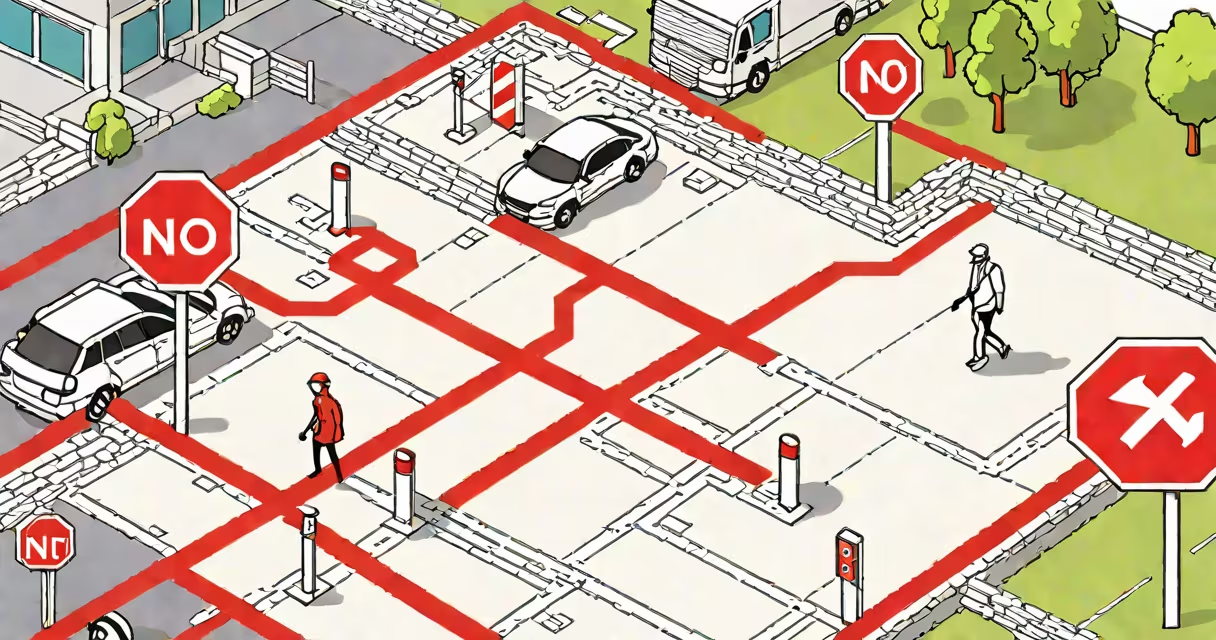
Transgression is a violation of a law, rule, or moral principle. It describes an act that goes beyond acceptable behavior, whether legally, ethically, or spiritually. The term applies to deliberate breaches, such as stealing, lying under oath, or committing violence.
Transgression is not synonymous with error or accident. A misstep in judgment may be a mistake. A transgression is intentional or reckless behavior that crosses a boundary. The word appears in religious texts, legal documents, and everyday language to describe actions that disrupt order or harm others.
For example, in the Bible, the story of Adam and Eve centers on their transgression-eating fruit from the forbidden tree. This act broke God's commandment and led to exile from Eden. In modern usage, a politician accepting bribes commits a transgression against public trust and the law.
Transgression occurs when someone knowingly acts against a defined standard. The standard can be written (like a constitution or contract) or unwritten (like social norms or personal ethics). The key factor is awareness: the person understands the rule and chooses to ignore it.
Legal systems treat transgressions as punishable offenses. A traffic violation-speeding in a school zone-is a transgression because it violates safety laws. The penalty reflects the risk posed. In contrast, a driver who speeds in an empty parking lot may not face consequences, even if they broke the speed limit, because the context reduces harm.
Religious traditions often define transgression as sin. In Christianity, the seven deadly sins-pride, greed, lust-are forms of transgression against divine will. In Islam, shirk (associating partners with Allah) is a major transgression. These frameworks assign spiritual consequences, such as guilt or exclusion from grace.
Transgressions fall into categories based on the domain they violate:
| Type | Definition | Example |
|---|---|---|
| Legal | Breaching a statute or regulation | Embezzling $50,000 from a nonprofit |
| Moral | Violating shared ethical standards | Spreading false rumors to ruin someone's reputation |
| Spiritual | Breaking sacred or religious rules | Practicing witchcraft in a faith that forbids it |
| Professional | Violating codes of conduct in a career | A doctor prescribing medication without proper diagnosis |
Some transgressions are minor and rarely prosecuted. Others carry prison time. The severity depends on intent, impact, and context. For instance, jaywalking in a busy city is a legal transgression, but it's typically punished with a fine, not jail.
People often confuse transgression with simple wrongdoing or poor judgment. A child who lies about homework completion is not necessarily committing a transgression-they may lack understanding. But if an adult lies repeatedly to avoid accountability, especially in a job involving public safety, that's a transgression.
Another misconception is equating transgression with punishment. The act itself is the violation. Punishment follows afterward. Saying "he was punished for his transgression" confuses cause and effect. The transgression came first.
Also, transgression is not always harmful. Some acts labeled as transgressions challenge unjust systems. Civil rights activists in the U.S. during the 1960s deliberately broke segregation laws. Their actions were transgressions-but widely seen as morally justified. The term doesn't inherently imply evil; it signals a boundary violation.
In 2001, Enron executives hid billions in debt using complex accounting tricks. They violated financial regulations, misled investors, and destroyed employee pensions. The Securities and Exchange Commission (SEC) later called this a series of deliberate transgressions.
Enron's CFO, Andrew Fastow, approved deals that transferred losses off the balance sheet. He knew they were illegal under Generally Accepted Accounting Principles (GAAP). His actions weren't errors-they were calculated violations. The company collapsed, and several executives went to prison.
This case shows how transgression operates in high-stakes environments. It wasn't a single act but a pattern of breaches. The scale and intent made it a systemic transgression, not a minor infraction.
While related, these terms differ in scope and enforcement:
For example, cheating on a test is a transgression. If it happens in a classroom, it's academic misconduct. If caught by a teacher, it may lead to a failing grade. But if a student uses a hidden device during a national exam, it becomes a criminal offense-still a transgression, but now subject to legal action.
Understanding this hierarchy prevents overuse of the term. Not every rule-breaking event qualifies as a transgression. Only those that cross a significant threshold-intentional, impactful, and against a recognized standard-count.
I once witnessed a team member falsify project hours on a timesheet. She claimed 40 hours of work, but her actual time logged was 22. When confronted, she admitted she did it to meet performance targets. Her supervisor reported it to HR.
The incident was a clear transgression. The company had a policy requiring accurate reporting. She knew the rule and chose to ignore it. The consequence was a formal warning and loss of bonus eligibility. This case illustrates how transgression functions in organizational settings-not as a dramatic event, but as a quiet breach of trust.
Transgression means going beyond a defined boundary of acceptable behavior. It implies intention, awareness, and consequence. Whether in law, religion, or daily life, it marks a line crossed.
When you hear "transgression," ask: Who set the rule? Was it broken intentionally? What harm resulted? The answer reveals whether the term fits-or if another word like "mistake" or "error" is more accurate.
Understanding this helps clarify communication, especially in sensitive areas like ethics, justice, or faith. The word is precise. Use it correctly.