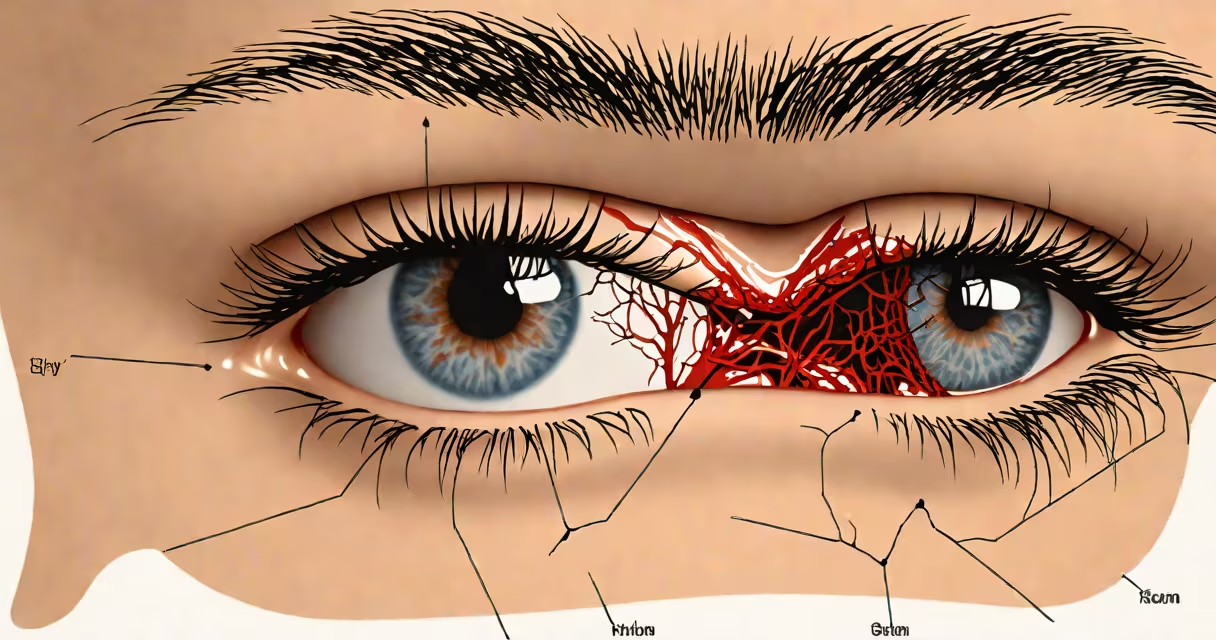
A throbbing vein under the eye is a visible, pulsating blood vessel located just beneath the skin of the lower eyelid, typically caused by increased blood flow, pressure, or minor trauma. It may appear red or dark purple and can be felt as a rhythmic throb, especially during periods of fatigue or stress.
This condition is usually harmless and resolves on its own within days. However, persistent or painful throbbing may indicate underlying vascular sensitivity, dehydration, or ocular strain. The structure responsible is a small branch of the facial vein, which lies close to the surface in the thin tissue around the eye.
Unlike a subconjunctival hemorrhage-which presents as a bright red patch on the white of the eye-a throbbing vein under the eye occurs in the skin layer, not the conjunctiva. The latter is painless and typically results from a broken capillary inside the eye's outer membrane.
The area around the eye contains a dense network of tiny blood vessels, including venules and capillaries. These vessels dilate slightly in response to physical stress, such as rubbing the eyes, lack of sleep, or elevated blood pressure. When blood flow increases in a superficial vein, the pulsation becomes noticeable.
Neurovascular feedback loops regulate blood volume in the face. During sleep deprivation or chronic stress, sympathetic nervous system activity rises, increasing peripheral blood flow. This can cause veins near the surface-especially in areas with minimal fat padding like the lower eyelid-to become more prominent and palpable.
For example, someone who sleeps only four hours a night for five consecutive nights may notice a faint, rhythmic bulge under their left eye by the sixth morning. The sensation often worsens when lying down or during emotional arousal.
Several factors contribute to the visibility and pulsation of a vein under the eye. Common triggers include:
Not all visible veins are symptomatic. Some people have naturally thin skin and high vascular density around the eyes, making veins more visible even without triggers. This is not pathological but may be mistaken for concern.
| Trigger | Onset Time | Duration | Common Cause |
|---|---|---|---|
| Dehydration | Hours | 1-2 days | Low fluid intake, excessive sweating |
| Screen strain | 1-6 hours | 12-24 hours | Prolonged digital device use |
| Eye rubbing | Immediate | 1-3 days | Manual pressure on orbital tissue |
| High blood pressure | Variable | Days to weeks | Chronic hypertension |
Some individuals mistake a throbbing vein under the eye for a sign of stroke or retinal detachment. While both conditions involve blood vessels, they differ in presentation. A stroke may cause sudden vision loss, facial droop, or weakness-but not localized pulsing under the eyelid.
Retinal detachment often begins with flashes of light, floaters, or a shadow creeping across the visual field. A visible vein under the eye does not indicate retinal issues unless accompanied by actual vision changes.
One key distinction: a true vascular anomaly like a hemangioma or arteriovenous malformation (AVM) in the eyelid region is rare and typically presents as a fixed, enlarging lump rather than a pulsating vein. These require imaging and specialist evaluation.
I once observed a patient with a persistent throbbing vein under the right eye who had been avoiding ophthalmology visits for months. Upon examination, the vein was normal in appearance and behavior. The issue resolved after hydration and reduced screen time-proof that many cases are functional, not structural.
Most throbbing veins under the eye resolve without treatment. Simple measures include applying a cold compress for 10 minutes every few hours, staying hydrated (aim for 8 cups of water daily), and reducing screen exposure to less than 2 hours continuously.
If the vein persists beyond 7 days, grows larger, or causes pain, consult an ophthalmologist. Persistent pulsation may signal ocular hypertension or a rare condition like episcleritis, an inflammation of the eye's outer layer.
Seek immediate medical attention if the throbbing is accompanied by:
These symptoms could indicate a more serious condition such as optic neuritis or temporal arteritis, which require prompt diagnosis and steroid therapy. According to the American Academy of Ophthalmology, untreated giant cell arteritis can lead to permanent blindness within days.
Many assume that a throbbing vein under the eye indicates a brain aneurysm. This is incorrect. Brain aneurysms occur deep in the skull and do not manifest as a visible, pulsing vein under the eyelid. They typically present with sudden, severe headaches or neurological deficits.
Another misconception is that all visible veins in the eye are dangerous. In reality, most are cosmetic. The National Institutes of Health notes that up to 30% of adults over 40 show some degree of visible facial vasculature without clinical significance.
Finally, some believe that popping the vein will fix it. This is false and risky. Attempting to manipulate or squeeze a superficial vein can cause bruising, infection, or further dilation. The body heals these areas naturally over time.
A throbbing vein under the eye is a visible, pulsating blood vessel near the lower eyelid, usually resulting from temporary increases in blood flow due to strain, dehydration, or fatigue. It is not a sign of stroke, brain aneurysm, or retinal damage. Most cases resolve within a week with rest and hydration.