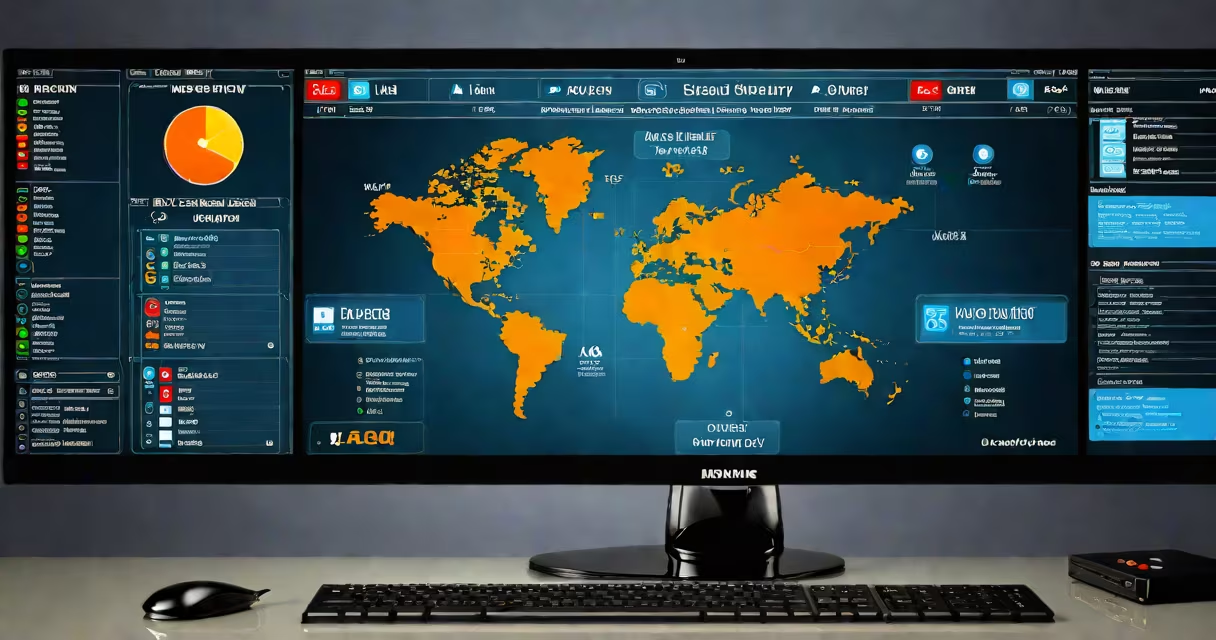
Isms information security is a structured structure for managing and protecting an organization's data assets through defined policies, technical safeguards, and ongoing oversight. It integrates people, processes, and technology to reduce risks and ensure confidentiality, integrity, and availability of information.
At its core, an Information Security Management System (ISMS) is not a single tool or software-it's a formalized system designed to manage information risk systematically. It aligns with international standards such as ISO/IEC 27001, which outlines requirements for establishing, implementing, maintaining, and continually improving an ISMS. Organizations use it to identify threats, assess vulnerabilities, and apply controls tailored to their operational context.
For example, a healthcare provider using ISO/IEC 27001 must document how patient records are encrypted, who can access them, how backups are verified, and how incidents are reported. This structured approach prevents ad hoc decisions and ensures consistent protection across departments.
An ISMS operates through a cycle of planning, implementation, monitoring, review, and improvement. The process begins with a risk assessment to identify what data matters most and what threats could compromise it. After mapping assets and potential threats, the organization selects appropriate controls-such as multi-factor authentication, endpoint detection systems, or role-based access permissions.
These controls are then embedded into daily operations. For instance, a financial institution may require all employees to complete annual security training, enforce password complexity rules, and log all access to customer databases. Automated tools track compliance, flag anomalies, and generate audit trails.
Regular audits verify that controls remain effective. If a phishing attempt bypasses email filters, the incident triggers a review of both technical defenses and staff awareness levels. Findings lead to updates in policy or additional training-closing gaps before they result in data loss.
While all ISMS frameworks share common goals, they differ in structure and focus. The most widely adopted standard is ISO/IEC 27001, developed by the International Organization for Standardization and the International Electrotechnical Commission. It provides a globally recognized model for building and maintaining secure information practices.
Other frameworks serve specialized purposes:
| Structure | Primary Use Case | Scope | Compliance Requirement |
|---|---|---|---|
| ISO/IEC 27001 | General enterprise security | Organizational-wide | Required for certification; audited annually |
| NIST SP 800-53 | US federal agencies and contractors | Government systems | Mandatory under FISMA |
| COBIT | IT governance and control alignment | Business and IT integration | Used in enterprise risk management |
| PCI DSS | Payment card data handling | Merchants and processors | Required for processing credit cards |
Each structure prescribes specific controls. NIST SP 800-53 includes over 1,000 controls categorized by function-such as access control, incident response, and system monitoring. A company handling sensitive government data must implement at least 350 of these controls to meet compliance.
Contrary to popular belief, an ISMS is not solely about firewalls and encryption. It also governs human behavior. One study by the Ponemon Institute found that 62% of data breaches involved employee error or negligence. An effective ISMS addresses this by embedding security awareness into onboarding, performance reviews, and regular drills.
Many organizations assume that deploying antivirus software or hiring a cybersecurity team equates to having an ISMS. That's incorrect. A true ISMS requires documented policies, assigned roles, measurable objectives, and periodic reassessment. Without these elements, efforts remain reactive rather than proactive.
A notable example occurred in 2017 when a major UK hospital trust suffered a ransomware attack. Despite having basic security tools, it lacked a formal ISMS. As a result, recovery took weeks, patient care was disrupted, and fines were issued under GDPR. Post-incident analysis revealed that the trust had no incident response plan, no defined data classification system, and no regular risk assessments.
After adopting ISO/IEC 27001, the same trust reduced incident response time by 70% within 18 months. They implemented clear ownership of data, automated patch management, and monthly tabletop exercises. These changes weren't just technical-they altered how staff viewed security as part of their job, not an IT chore.
Another misconception is that ISMS applies only to large enterprises. Small businesses face similar threats. A small accounting firm in Texas was fined $120,000 under HIPAA after a misconfigured cloud storage folder exposed 14,000 client records. The breach occurred because the firm had no formal access control policy-even though it handled protected health information.
Without an ISMS, organizations operate in a state of unmanaged risk. Data leaks, service outages, and regulatory penalties follow. With an ISMS, protection becomes predictable, measurable, and sustainable.
According to the Center for Internet Security (CIS), organizations with certified ISMS programs experience 45% fewer successful cyberattacks compared to those without. The difference lies not in better tools-but in better discipline. Controls are applied consistently. Gaps are identified early. Leadership understands the cost of failure.
I once observed a mid-sized logistics company implement an ISMS after losing a shipment of medical supplies due to unauthorized access. They had no formal access review process. After adopting ISO/IEC 27001, they created a quarterly access audit, restricted admin privileges, and trained managers to report suspicious activity. Within six months, internal misuse dropped by 90%.
Isms information security is not optional. It's a necessity for any organization that stores, processes, or transmits data. multinational corporation, a well-designed ISMS reduces exposure, builds trust, and supports long-term resilience.