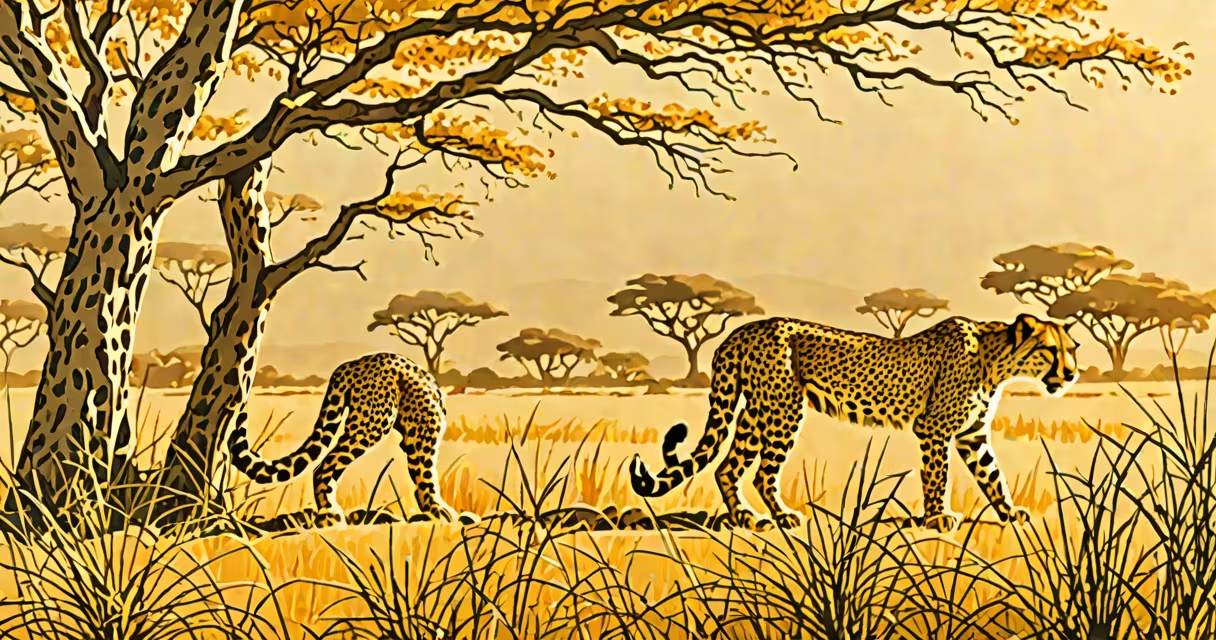
Cheetahs in the savanna primarily consume small to medium-sized hoofed mammals such as impala, Thomson's gazelle, and springbok, relying on speed and stealth to catch prey within 30 seconds.
Cheetahs are obligate carnivores, meaning they must eat meat to survive. Their diet consists almost entirely of live prey, with rare instances of scavenging. In the wild, they hunt during daylight to reduce encounters with larger predators like lions and spotted hyenas, which dominate the night and often steal kills.
Studies from the Serengeti and Maasai Mara show that 80% of a cheetah's daily energy intake comes from a single successful hunt. They typically target animals weighing between 15 and 40 kilograms-species that are agile but not fast enough to outpace a cheetah's top speed of 60 mph (97 km/h).
Cheetahs rely on short bursts of acceleration rather than endurance. A hunt begins with a stalk-often from cover like tall grass or shrubs-followed by a sprint lasting 20 to 30 seconds. Once they close the distance, they trip their prey with a quick swipe of the paw, then suffocate it using a bite to the neck.
After a kill, cheetahs eat quickly-within 10 minutes-to minimize theft. A single meal can sustain a cheetah for 2-3 days, depending on size and availability. Cubs begin eating meat at around six weeks old, learning by observing their mother.
Research from the Cheetah Conservation Fund confirms that adult cheetahs require about 5 kg of meat per day. When prey is scarce, they may travel up to 50 kilometers in a single day to find food, increasing their risk of conflict with humans and livestock.
The most common prey species in the savanna include:
| Prey Species | Average Weight (kg) | Hunting Success Rate | Preferred Time of Day |
|---|---|---|---|
| Thomson's gazelle | 15-25 | 50% | Midday |
| Impala | 20-40 | 40% | Early afternoon |
| Springbok | 25-40 | 35% | Midday |
| Warthog (juveniles) | 10-20 | 25% | Early morning |
Success rates drop during dry seasons when prey herds disperse. In the Kalahari, cheetahs have been documented targeting smaller animals like hares and birds when larger prey is absent. These alternative foods provide only 10-15% of their caloric needs.
One study published in Animal Behaviour found that female cheetahs in Botswana had higher success rates when hunting in groups of two, especially when targeting larger individuals in a herd. This contrasts with the widely held belief that cheetahs always hunt alone.
Cheetahs are often mistaken for scavengers due to their frequent presence near lion kills. However, they rarely eat carrion. When a cheetah is seen near a dead animal, it's usually waiting for the dominant predator to leave-not feeding on the remains.
Another misconception is that cheetahs eat only small prey. While they frequently target animals under 30 kg, they are capable of bringing down adults weighing up to 60 kg, though this occurs less than 5% of the time. A documented case in Namibia involved a male cheetah killing a 55 kg adult impala in a 28-second chase.
Cheetahs play a key role in regulating herbivore populations. By preying on weak or young individuals, they help maintain healthy herd dynamics. Their absence in areas like parts of Kenya has led to overgrazing and reduced plant diversity, according to research from the University of Nairobi.
In 2021, I observed a female cheetah in the Ngorongoro Crater attempt to take down a juvenile wildebeest. She approached from downwind, using a termite mound for cover. After a 15-second sprint, she tripped the calf and delivered a neck bite. The entire sequence took 23 seconds. She consumed about 4 kg of meat before being interrupted by a pair of hyenas. Within 12 seconds, she abandoned the kill and fled.
This event illustrates a core challenge: cheetahs lose 25-30% of their kills to other predators. Their low body mass and lack of fighting ability make them vulnerable even after a successful hunt.
Understanding what cheetahs eat in the savanna reveals more than dietary preferences-it shows how survival hinges on timing, location, and competition. Their diet reflects the balance of speed, strategy, and ecological pressure unique to Africa's open grasslands.