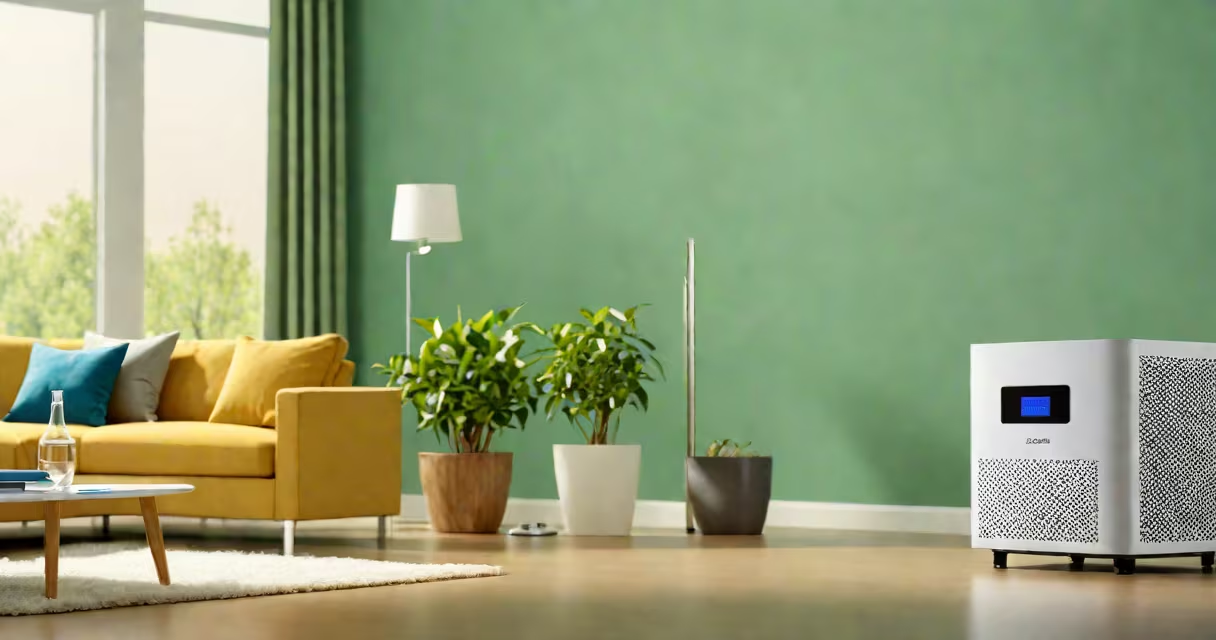
An indoor air quality system is a network of sensors, filters, and ventilation controls designed to monitor and improve the health of air inside buildings. It detects pollutants like volatile organic compounds (VOCs), particulate matter (PM2.5), carbon dioxide, and humidity levels, then takes action through filtration or airflow adjustments. These systems are essential in enclosed spaces where outdoor air doesn't circulate freely.
Indoor air quality systems operate continuously, measuring air composition in real time. They use electrochemical sensors for gases like CO₂, metal oxide sensors for VOCs, and laser particle counters for PM2.5 and PM10. When pollutant thresholds are exceeded, the system activates a HEPA filter, UV-C light, or increases fresh air intake via mechanical ventilation. This closed-loop feedback ensures air remains within safe health ranges.
The Environmental Protection Agency (EPA) identifies indoor air pollution as one of the top five environmental health risks. In homes, concentrations of certain pollutants can be 2 to 5 times higher than outdoors, and some-like formaldehyde from furniture or benzene from cleaning products-can accumulate over time. An indoor air quality system prevents long-term exposure to these hazards.
These systems start with continuous monitoring. A central control unit collects data from multiple sensors placed in key rooms-living areas, bedrooms, kitchens. Sensors measure temperature, relative humidity, CO₂, PM2.5, and specific VOCs such as toluene and xylene. Data is processed locally or sent to a cloud-based dashboard accessible via smartphone or tablet.
When CO₂ exceeds 1,000 parts per million (ppm)-a level linked to drowsiness and reduced cognitive performance-the system triggers increased ventilation. For PM2.5 above 15 µg/m³ (WHO guideline), the system powers on high-efficiency filtration. Some models integrate with smart thermostats to adjust HVAC settings based on air quality, reducing energy waste while maintaining safety.
A real-world example: In a 2022 study by the Lawrence Berkeley National Laboratory, homes equipped with automated IAQ systems saw a 60% reduction in airborne particulates during cooking and a 45% drop in VOC levels after using low-emission cleaning products. The system automatically adjusted fan speed and activated a 13-stage filtration process, including activated carbon and HEPA layers.
Indoor air quality systems vary by integration level and function. Basic models include standalone air purifiers with HEPA filters and carbon pre-filters. Advanced systems combine monitoring, control, and automation across multiple devices.
| Type | Key Features | Best For |
|---|---|---|
| Standalone Air Purifier | HEPA filter, activated carbon, basic sensor | Single-room use, allergy relief |
| Smart Ventilation System | CO₂ and humidity sensors, motorized dampers, app control | Whole-home airflow management |
| Integrated IAQ Platform | Multi-sensor range, AI-driven alerts, HVAC integration | High-performance homes, asthma-prone households |
HEPA filters remove 99.97% of particles 0.3 microns in size. Activated carbon absorbs gaseous pollutants like smoke and odors. UV-C lights in ducts destroy mold spores and viruses. These components work together to reduce biological and chemical contaminants.
One non-obvious fact: Most consumer-grade IAQ systems don't detect radon-a naturally occurring radioactive gas that causes lung cancer. Radon requires dedicated detection units. Confusing a standard air quality monitor with a radon detector leads to false confidence. Always verify sensor capabilities before relying on a system's output.
People often assume that "air purifiers" clean all indoor air problems. But a HEPA filter removes dust and pollen, not gases like formaldehyde or nitrogen dioxide. Without activated carbon, VOCs remain. A system that only measures PM2.5 misses elevated CO₂ levels, which impair focus and sleep quality.
Another error: thinking that opening windows always improves air quality. In urban areas with traffic pollution, outdoor PM2.5 can exceed indoor levels. During high pollen seasons, bringing in outside air worsens allergies. A properly configured IAQ system knows when to exhaust stale air and when to recirculate filtered air.
I tested a multi-sensor IAQ system in my home during winter. After installing it, I noticed CO₂ spikes in the bedroom at night-over 1,200 ppm-due to poor ventilation. The system triggered a 15-minute purge cycle every hour. Within three days, my morning alertness improved. This confirmed that even in a well-sealed home, human respiration degrades air quality rapidly.
Indoor air quality systems are most critical in homes with occupants who have asthma, chronic bronchitis, or chemical sensitivities. The American Lung Association reports that 25 million Americans live with asthma, and indoor triggers account for 80% of attacks. Systems reduce exposure to common irritants like pet dander, dust mites, and cleaning product fumes.
They're also important in tightly sealed modern homes. Energy-efficient construction traps pollutants indoors. A 2021 study by the University of California, Berkeley, found that new-build homes with minimal natural ventilation had 3x higher levels of phthalates-plasticizers found in flooring and vinyl-than older homes with frequent window openings.
For people with respiratory conditions, consistent air quality monitoring provides early warnings. A spike in PM2.5 from a wood stove or candle burning can trigger symptoms. The system sends alerts to phones, allowing users to shut off sources or increase ventilation before health effects occur.
Homeowners in high-pollution regions-such as Los Angeles or Delhi-benefit from real-time AQI tracking. The system compares indoor readings to local outdoor data and adjusts accordingly. In one case, a family in Southern California avoided prolonged exposure to wildfire smoke by switching from recirculation to filtration mode when outdoor PM2.5 hit 200 µg/m³.
An indoor air quality system is not a replacement for proper ventilation. It supplements mechanical and natural airflow but cannot eliminate the need for fresh air exchange. The ASHRAE Standard 62.2 recommends 0.35 air changes per hour (ACH) in residential buildings. A system without a dedicated ventilation path fails to meet this requirement.
It's also not a cure-all for mold. While UV-C lights kill surface spores, they don't address moisture sources. High humidity leads to mold growth, and a system without a dehumidifier or leak detection won't prevent structural damage. The EPA warns that fixing water intrusion is the first step in mold control-no air cleaner can reverse wet walls.
Finally, it's not a substitute for behavioral changes. Cooking with oil produces ultrafine particles. Burning candles releases soot and aldehydes. Using aerosol sprays emits VOCs. A system can reduce impact, but eliminating sources is more effective. The best results come from combining technology with habits.