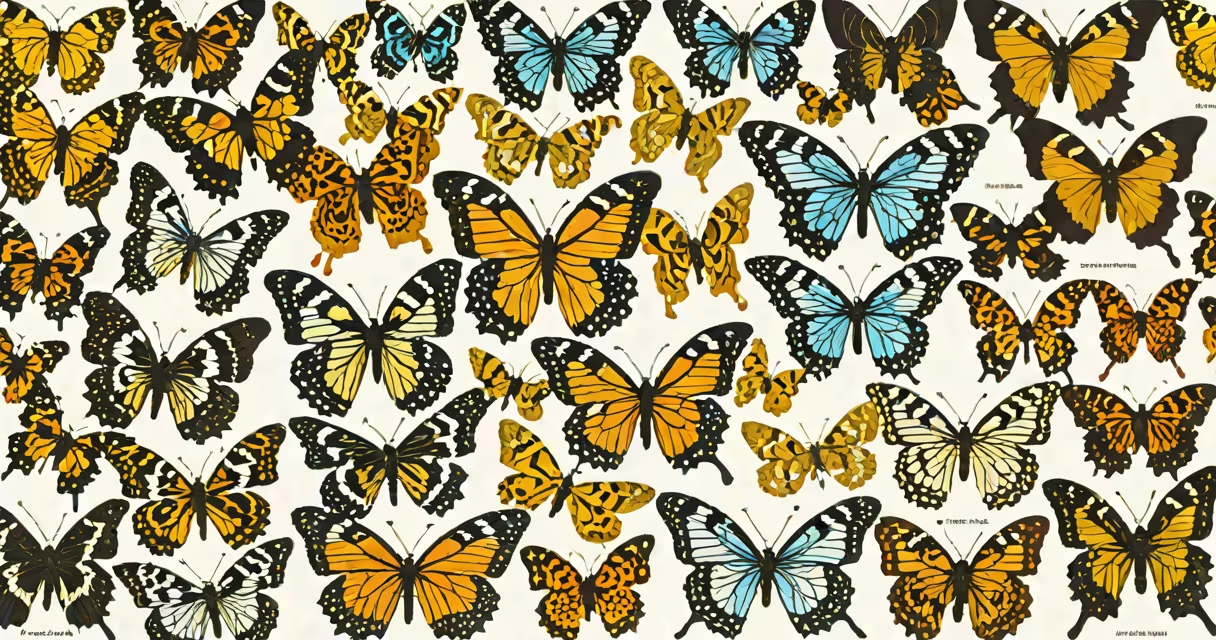
Variation in biology describes measurable differences among individuals within a population in traits such as height, eye color, enzyme activity, or behavioral responses. These differences stem from genetic diversity and environmental influences and form the foundation for evolutionary change.
Genetic variation arises from mutations, gene flow, sexual reproduction, and chromosomal rearrangements. Environmental variation results from factors like nutrition, temperature, or exposure to toxins. Together, they produce the spectrum of traits seen in species-from the stripes on a zebra to the resistance of certain bacteria to antibiotics.
Without variation, natural selection cannot act. Populations with low diversity face higher extinction risk during environmental shifts. High variation increases the chance that some individuals possess traits suited to new conditions, allowing survival and adaptation over time.
Every organism inherits half its genes from each parent. During gamete formation, chromosomes shuffle through meiosis, creating unique combinations. Random mutations-changes in DNA sequence-also introduce new alleles. When two individuals reproduce, their offspring inherit a novel mix of traits.
Environmental effects modify how genes express themselves. For example, two genetically identical plants grown in different soil types may differ in height and leaf size. This is called phenotypic plasticity-the same genotype producing different phenotypes based on surroundings.
A study of Darwin's finches on the Galápagos Islands showed that beak size varied across years depending on seed availability. Larger beaks helped crack tough seeds during droughts. Birds with larger beaks survived better and passed on their genes. This demonstrated variation as a driver of natural selection in real time.
Biological variation falls into two broad categories: genetic and environmental. Genetic variation is heritable and contributes to long-term evolutionary change. Environmental variation affects only the individual and does not alter the gene pool.
| Type | Source | Heritable? | Example |
|---|---|---|---|
| Genetic | Mutation, recombination, gene flow | Yes | Different blood types in humans |
| Environmental | Nutrition, climate, disease | No | Body mass difference between twins raised in different homes |
Within genetic variation, scientists distinguish between quantitative and qualitative traits. Quantitative traits-like human height or crop yield-are influenced by many genes and show continuous distribution. Qualitative traits-such as flower color in peas-are controlled by single genes and fall into discrete categories.
One non-obvious fact: not all variation is adaptive. Some genetic differences have no effect on fitness-neutral variation. These often accumulate in populations due to random processes like genetic drift. Neutral markers, such as certain DNA sequences in non-coding regions, are used in ancestry tracing and forensic science.
Many assume variation means "difference" in a vague sense. But in biology, variation must be measurable and reproducible. A single unusual trait in one animal doesn't count as variation-it's an anomaly. True biological variation appears consistently across groups and can be statistically analyzed.
Another misconception is that variation always leads to improvement. Evolution does not aim toward complexity or perfection. A trait that improves survival in one environment may reduce fitness in another. The sickle cell allele, for example, causes hemoglobin distortion but provides protection against malaria in carriers-offering a survival advantage in malarial regions.
Some confuse variation with mutation. Mutation is a change in DNA sequence. Variation is the observable difference in traits across individuals. All variation originates from mutation, but not all mutations result in visible variation. Many changes occur in non-functional DNA and go unnoticed.
Bacteria evolve rapidly due to short generation times and high mutation rates. When exposed to antibiotics, most die-but rare variants with resistance genes survive. These resistant strains multiply and spread, leading to drug-resistant infections.
In a 2018 study published in Nature Microbiology, researchers tracked antibiotic resistance in E. coli populations over 1,000 generations. They found that resistance emerged in 12 out of 16 replicate cultures. The mutations occurred randomly, but selection favored them in antibiotic-rich environments. This confirmed that variation exists before selection acts-natural selection doesn't create variation, it shapes it.
I observed this phenomenon firsthand while working in a clinical microbiology lab. A single strain of Klebsiella pneumoniae isolated from a patient developed resistance to carbapenems after seven days of treatment. Whole-genome sequencing revealed a point mutation in the blaKPC gene-a known resistance mechanism. The variation was present in a subset of cells before treatment began, proving that selection amplifies existing diversity, not invents it.
Understanding variation enables predictive modeling in ecology, conservation, and public health. In agriculture, breeders select plants with high-yield or pest-resistant traits-traits derived from natural variation. In medicine, pharmacogenomics uses genetic variation to tailor drug dosages and avoid adverse reactions.
The Human Genome Project identified over 10 million single nucleotide polymorphisms (SNPs)-common genetic variations-across human populations. These SNPs correlate with disease susceptibility, drug response, and physical traits. For example, the CYP2D6 gene variant affects how people metabolize antidepressants. Knowing a patient's variation profile prevents ineffective treatments and reduces side effects.
Evolutionary biologists use variation to reconstruct phylogenies-family trees of life. By comparing genetic differences between species, they estimate divergence times and map ancestral relationships. The greater the variation between two species, the longer they've been evolving separately.
Variation in biology is not randomness-it's a structured, measurable phenomenon rooted in genetics and environment. It underpins adaptation, speciation, and biodiversity. Without variation, evolution would stall. With it, life adapts across millennia.