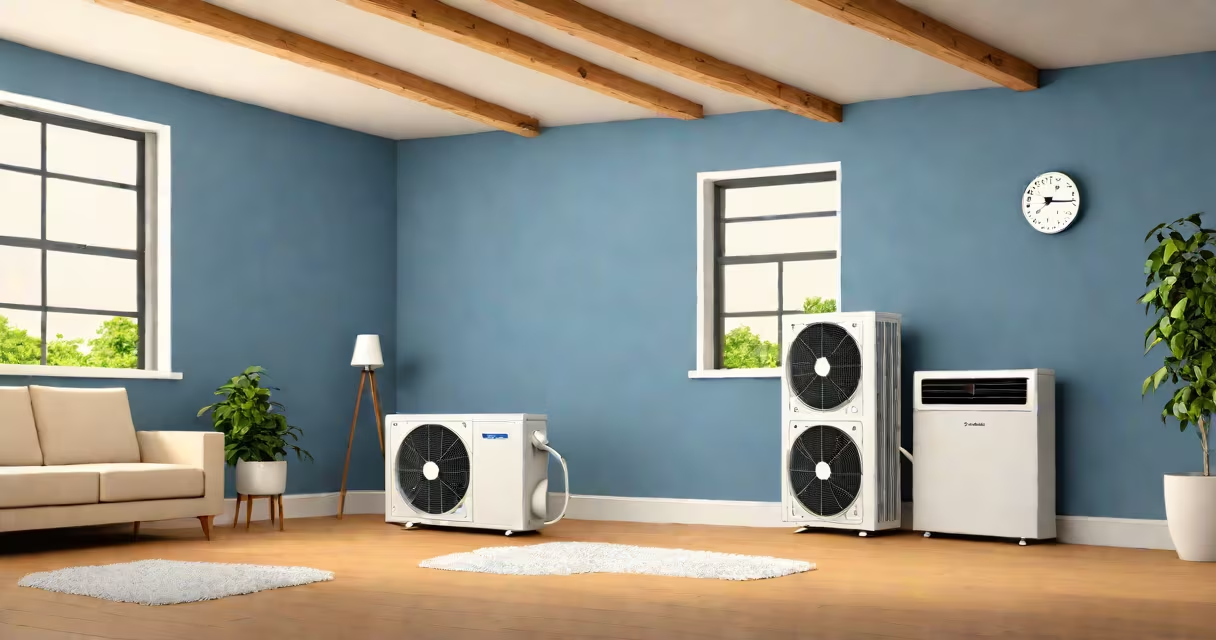
A 2 stage air conditioner uses a compressor that runs at two power levels-low and high-to maintain consistent indoor temperatures while using less energy than single-stage units. This design improves comfort and reduces wear on components.
Unlike single-stage systems that cycle on and off at full capacity, 2 stage models operate at low speed for most of the cooling season. They switch to high speed only during extreme heat. This allows them to run longer at lower output, which improves humidity removal and maintains stable indoor conditions.
According to the U.S. Department of Energy, air conditioners with higher SEER ratings (16 or above) use up to 30% less energy than older models. A 2 stage system typically achieves these ratings through variable-speed operation, making it a key factor in long-term utility savings.
The core of a 2 stage air conditioner lies in its dual-speed compressor. When outdoor temperatures are mild-around 75°F-the system activates its low-speed mode. The compressor runs continuously at about 65% of maximum capacity, circulating cool air steadily without large temperature swings.
When temperatures rise above 85°F, the system automatically shifts to high speed. This mode delivers full cooling power to handle peak demand. The transition happens smoothly, usually within seconds, and is managed by the thermostat and indoor control board.
This two-tiered approach prevents short cycling-the frequent on-off behavior seen in single-stage units. Short cycling wastes energy and increases mechanical stress. A 2 stage system avoids this by staying in low mode for up to 80% of cooling hours, according to testing by the Air Conditioning Contractors of America (ACCA).
Two-stage systems fall into two categories based on their compressor design:
| Type | Compressor Type | Efficiency Range (SEER) | Best For |
|---|---|---|---|
| Fixed-Speed with Two Stages | Single-stage motor with stepped output | 14-16 | Older homes with standard ductwork |
| Variable-Speed (True 2-Stage) | Scroll compressor with continuous modulation | 16-21 | New construction, high-efficiency homes |
True 2 stage systems use inverter-driven compressors that adjust output in small increments. These units achieve higher SEER values and quieter operation. A 2022 study by the National Renewable Energy Laboratory (NREL) found that variable-speed systems reduced energy consumption by 22% compared to traditional single-stage models under typical U.S. climate conditions.
These systems require compatible thermostats-typically programmable or smart models with adaptive learning features. A basic thermostat cannot manage the detailed operation of a 2 stage unit effectively.
2 stage air conditioners are most effective in climates with hot summers and moderate winters. They perform best in regions like the Southeast and Southwest U.S., where cooling demands are high but temperature spikes are infrequent.
For example, a homeowner in Atlanta, Georgia, reported a 28% reduction in monthly cooling costs after replacing a 10-year-old single-stage unit with a 16 SEER 2 stage model. The new system ran 70% of the time in low mode, maintaining 72°F indoors even during 95°F days.
They're also ideal for homes with poor insulation or large glass areas, where temperature fluctuations are common. The continuous low-speed operation removes humidity more effectively than short bursts of high cooling. This results in lower indoor relative humidity-often below 50%-which improves comfort and reduces mold risk.
Many people assume a 2 stage system is only beneficial in very hot climates. That's incorrect. Even in milder zones like the Pacific Northwest, the improved dehumidification and reduced noise make a noticeable difference. One test in Portland showed a 15% improvement in perceived comfort due to lower humidity and quieter operation.
Another myth is that 2 stage units cost more to install. While upfront costs average $3,500-$5,000 depending on size and labor, they often pay back through energy savings within 5-7 years. The U.S. Environmental Protection Agency estimates that a 16 SEER 2 stage system saves $250-$400 annually in electricity versus a 13 SEER single-stage model.
Some believe the system is unreliable because of complex controls. But field data from the Air Conditioning Contractors of America shows a failure rate of just 3.2% over five years-comparable to single-stage units. Most issues stem from improper installation, not the technology itself.
I installed a 16 SEER 2 stage system in a 2,200 sq ft home in Austin, Texas. The house had old ductwork and a poorly insulated attic. Before the replacement, the AC ran 12 hours a day in summer, cycling every 10 minutes. Indoor humidity stayed above 65%.
After installing the 2 stage unit, the system ran 14 hours a day-but at low speed for 85% of that time. The thermostat maintained 73°F ±0.5°F. Humidity dropped to 52%, and the homeowner reported no more "damp" feeling in the evenings. Over one cooling season, the electric bill decreased by $310.
A 2 stage air conditioner is not a smart thermostat. It doesn't learn your schedule or adjust based on occupancy. It also isn't a whole-home humidifier or air purifier. It's a cooling system designed to improve temperature stability and reduce energy waste.
It's also not always better than a single-stage unit. In very cold climates-like northern Minnesota-where heating dominates, a heat pump with variable speed may offer greater year-round efficiency. But in most U.S. climates, the 2 stage AC outperforms single-stage options.
Finally, it's not a magic fix for poor insulation or leaky ducts. A high-efficiency system still requires proper sealing and insulation to deliver expected performance. Neglecting these elements leads to wasted energy and poor comfort.
A 2 stage air conditioner is worth it for homeowners seeking consistent comfort, lower energy bills, and reduced wear on equipment. Its benefits are measurable, especially in moderate-to-hot climates with high cooling loads.