Body fat percentage measures the proportion of fat mass relative to total body weight. It's a key indicator of metabolic health, fitness level, and disease risk. Knowing your fat percentage helps track progress beyond the scale.
Health professionals use standardized methods to estimate body fat. The most reliable techniques include dual-energy X-ray absorptiometry (DEXA), hydrostatic weighing, and air displacement plethysmography. These are gold-standard tools found in clinical settings and research labs. For home use, skinfold calipers, bioelectrical impedance analysis (BIA), and visual assessment offer practical alternatives.
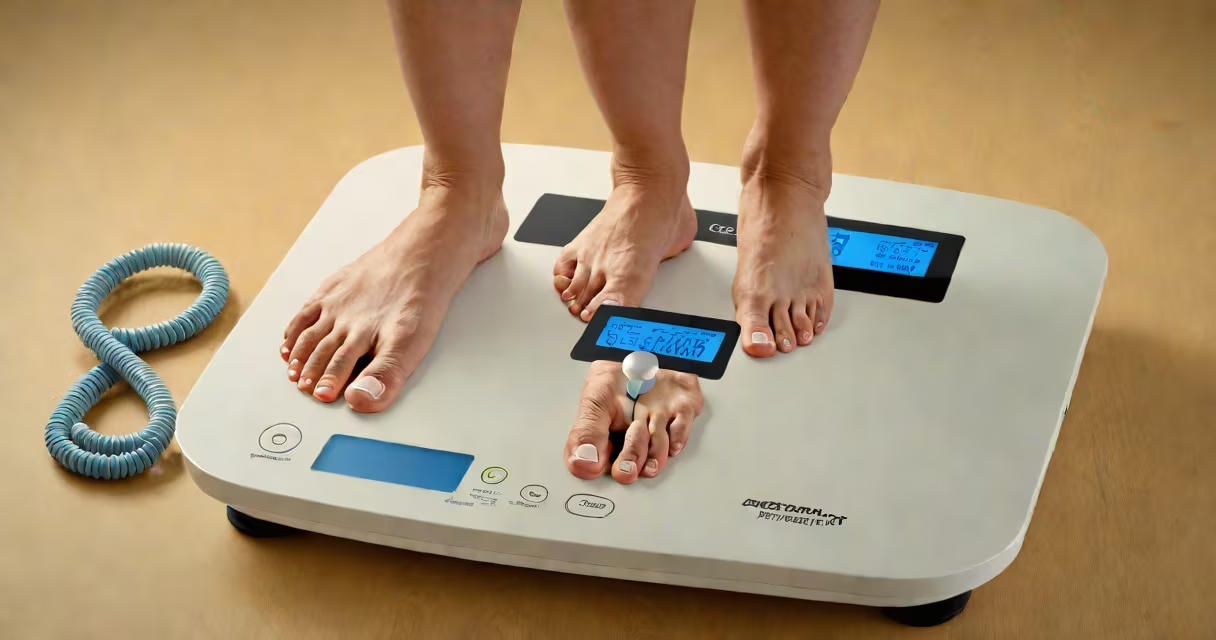
The American Council on Exercise (ACE) notes that BIA devices-common in smart scales-estimate fat percentage by sending a low-level electrical current through the body. Lean tissue conducts electricity better than fat, so resistance levels correlate with fat content. However, accuracy varies based on hydration, time of day, and device quality. A 2020 study published in Obesity Research & Clinical Practice found that consumer-grade BIA scales deviate from DEXA results by an average of ±5.2% in men and ±6.1% in women.
Each method balances precision, cost, and accessibility. Here's how they compare:
| Method | Accuracy vs. DEXA | Cost Range | Best For |
|---|---|---|---|
| DEXA Scan | ±1.0% | $100-$200 | Clinical assessment, research |
| Hydrostatic Weighing | ±1.5% | $75-$150 | High-precision tracking |
| BIA Scale (Consumer) | ±5-7% | $50-$200 | Home monitoring, trend tracking |
| Skinfold Calipers | ±3-5% | $20-$50 | Fitness professionals, consistent users |
For most people, skinfold measurements taken by trained personnel offer a good balance of affordability and reliability. Using a standard set of seven sites-triceps, biceps, subscapular, suprailiac, abdominal, thigh, and calf-researchers apply the Jackson-Pollock 7-site equation. This formula adjusts for age, sex, and site-specific thicknesses.
A real-world example: a 35-year-old woman with 1.8 cm at the triceps, 1.2 cm at the biceps, 2.5 cm at the subscapular, 3.1 cm at the suprailiac, 2.8 cm at the abdomen, 2.3 cm at the thigh, and 1.9 cm at the calf. Plugging these values into the Jackson-Pollock equation yields a predicted body fat percentage of 28.4%. This aligns closely with a DEXA scan result of 27.9% from a 2019 validation study.
Many people assume their smart scale's fat percentage reading is accurate. But these devices often fail due to inconsistent conditions. A 2021 review in Journal of Sports Science & Medicine showed that BIA readings can fluctuate by up to 12% within 24 hours due to hydration changes, recent exercise, or meal timing.
One common mistake is measuring immediately after a workout or a large meal. Water shifts in the body alter conductivity. For example, a male athlete measured at 14% body fat at 8 a.m. after fasting and hydration. He rechecked at 6 p.m. after a 30-minute run and a protein shake. His scale read 18.3%. The difference wasn't fat gain-it was fluid redistribution.
Another error is assuming visual estimates are trustworthy. While body fat charts exist, they're subjective. A 2018 study in Frontiers in Physiology found that even experienced trainers misjudged body fat levels in photos by an average of 6.7 percentage points.
Consistency matters more than perfection. To find your fat percentage accurately:
I once used a BIA scale during a 12-week training cycle. Initial readings varied widely-12.1%, then 15.3%, then 13.7%. After standardizing conditions (same time, same hydration, same shoes), the numbers stabilized around 13.4%. That consistency revealed real progress, not noise.
When comparing methods, focus on trends. A 2% drop over six months using consistent technique is meaningful. A 1% swing due to hydration is not.
Body fat percentage isn't a standalone metric. It must be interpreted alongside waist circumference, muscle mass, and lifestyle factors. The World Health Organization defines healthy ranges as 10-20% for men and 20-30% for women. Levels above 25% in men and 35% in women increase risks for insulin resistance, heart disease, and type 2 diabetes.
Some people confuse lean mass with fat-free mass. Lean mass includes muscle, bone, organs, and water. Fat-free mass excludes fat. A 200-pound man with 15% body fat has 30 pounds of fat and 170 pounds of lean mass. His fat-free mass is 170 lbs, but his lean mass includes water and organ weight.
Finally, avoid relying solely on online calculators that ask for height, weight, and waist size. While convenient, they often use outdated equations. The U.S. Navy Body Fat Calculator, for example, uses a formula developed in the 1980s and assumes uniform body shapes. It underestimates fat in muscular individuals and overestimates in older adults.
To find your fat percentage reliably, choose a method aligned with your goals. For long-term health tracking, use skinfold calipers or a DEXA scan. For routine monitoring, stick with a calibrated BIA scale and consistent habits. Always prioritize repeatable data over a single number.