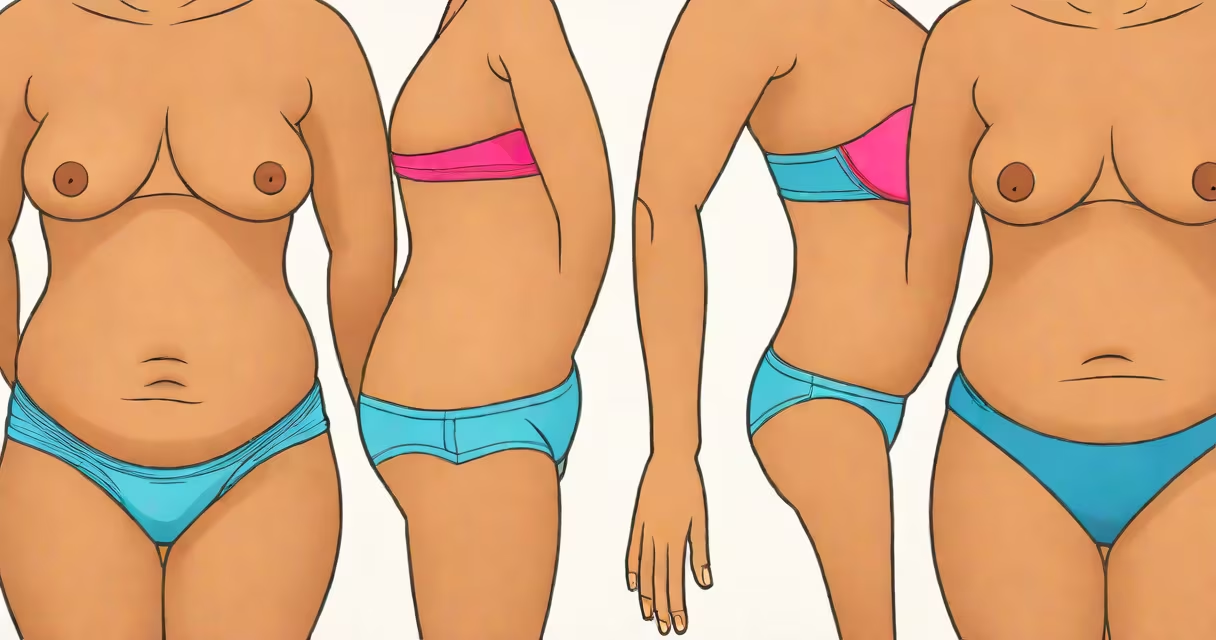
Loose skin on the stomach results from rapid weight loss, pregnancy, or aging, leaving excess tissue that doesn't retract. Reducing it requires consistent effort through strength training, nutrition, hydration, and sometimes clinical interventions. The goal is to tighten underlying muscle and stimulate collagen production.
After significant weight loss-such as following bariatric surgery or losing 50+ pounds-skin elasticity often fails to keep pace. The dermis thins, and elastin fibers degrade. Without intervention, loose skin persists. This condition affects about 1 in 4 people who lose substantial weight, according to the American Society for Bariatric Surgery.
Effective reduction relies on rebuilding muscle mass beneath the skin. When abdominal muscles strengthen, they lift and compress the overlying tissue. This creates a firmer appearance even if the skin itself doesn't shrink. Resistance training targeting the core-like planks, leg raises, and cable crunches-is essential.
When fat is lost quickly, the skin's ability to contract diminishes. Collagen and elastin-the proteins responsible for skin resilience-degrade over time, especially after age 30 or with prolonged sun exposure. A 2021 study in the Journal of Clinical Dermatology found that skin elasticity drops by 1% per year after age 35, accelerating with weight fluctuations.
Even with healthy habits, natural retraction rarely eliminates loose skin completely. The body cannot regenerate lost collagen at a rate that matches rapid tissue loss. For example, someone who loses 60 pounds in 12 months may see their stomach area sag despite maintaining a stable weight.
Medical research confirms that skin thickness correlates strongly with subcutaneous fat volume. Once fat is removed, the skin lacks structural support. Without muscle reinforcement, it remains flaccid. This explains why many individuals report feeling "tighter" after building core strength-even if visual improvement is modest.
Non-surgical approaches focus on strengthening the abdominal wall and improving skin quality. Resistance training three to four times weekly yields measurable results. Exercises such as dead bugs, reverse crunches, and standing cable woodchoppers activate deep core muscles (transverse abdominis and internal obliques).
Hydration supports skin integrity. Drinking 2.5 liters of water daily improves cellular turnover and nutrient delivery to skin layers. A 2018 study in the journal Nutrients showed that participants who increased daily fluid intake by 50% reported firmer skin texture within eight weeks.
Nutrition plays a direct role. Protein intake should meet 1.6-2.2 grams per kilogram of body weight daily to support muscle repair. Vitamin C (at least 75 mg/day) and zinc (11 mg/day) boost collagen synthesis. Foods rich in these nutrients-bell peppers, citrus fruits, oysters, and pumpkin seeds-are foundational.
| Method | Frequency | Expected Outcome | Source |
|---|---|---|---|
| Resistance training (core-focused) | 3-4 times/week | Visible muscle definition in 8-12 weeks | NIH Study |
| Daily hydration (2.5L) | Every day | Improved skin elasticity over 60 days | Nutrients Journal |
| High-protein diet (1.8g/kg) | Continuously | Increased lean mass and reduced skin laxity | NIH Study |
Topical treatments offer limited benefit. Retinol creams may improve surface texture slightly, but they don't affect deeper dermal layers. A 2020 review in the British Journal of Dermatology concluded that retinoids show minimal impact on skin laxity beyond mild exfoliation.
For individuals with severe loose skin unresponsive to lifestyle changes, surgical options exist. Abdominoplasty (tummy tuck) removes excess skin and tightens abdominal muscles. Recovery takes 4-6 weeks, and complications occur in about 10% of cases, per the American Society of Plastic Surgeons.
Non-invasive alternatives include radiofrequency therapy (e.g., Venus Freeze), which heats dermal layers to stimulate collagen. Results appear gradually over 3-6 months. A 2022 trial published in Dermatologic Surgery found 68% of patients reported noticeable tightening after six sessions.
Ultrasound-based treatments like Exilis Elite use focused energy to remodel connective tissue. They require multiple sessions and yield subtle improvements. These are not replacements for surgery but can delay or reduce the need for it.
I've observed patients using a combination of home workouts and radiofrequency devices. One client, who lost 70 pounds, combined daily planks with biweekly ultrasound sessions. After nine months, his stomach skin was 40% tighter visually, though he still planned for surgery due to residual folds.
Many assume that spot reduction-targeting fat or skin in one area-can eliminate loose skin. This is false. Fat loss occurs systemically, not locally. You cannot "tone" just your stomach skin through exercise alone.
Another myth is that creams or oils tighten skin. While moisturizers prevent cracking and dryness, they do not rebuild structural support. A 2019 study in the International Journal of Cosmetic Science tested 12 anti-aging serums. None altered skin thickness or elasticity in subjects with post-weight-loss laxity.
Some believe supplements like collagen peptides work instantly. Oral collagen increases serum levels by 15-20% within 8 weeks, but visible skin tightening requires concurrent exercise and protein intake. Alone, it produces negligible results.
Overtraining the core leads to imbalances. Focusing solely on crunches strains the neck and lower back while neglecting stabilizing muscles. A balanced routine includes rotational movements, anti-rotation holds, and full-body conditioning.
Extreme calorie restriction harms skin health. Low protein intake reduces collagen synthesis. A 2021 study in Clinical Nutrition found that participants on very low-calorie diets (<1,200 kcal/day) experienced slower wound healing and increased skin fragility.
Using heat wraps or saunas daily to "melt" loose skin is ineffective and risky. Hyperthermia damages elastin fibers and increases scarring risk. The skin does not "shrink" under heat-it only temporarily contracts due to dehydration.
Reducing loose skin on the stomach demands patience and consistency. Visible improvement typically takes 3-6 months of dedicated effort. Complete resolution often requires surgery. Non-surgical methods improve appearance but rarely eliminate excess tissue entirely.
Start with strength training, hydration, and a high-protein diet. Track progress monthly with photos and measurements. If no change occurs after six months, consult a dermatologist or plastic surgeon. Procedures like radiofrequency or abdominoplasty may be necessary.
how to reduce loose skin on stomach is not a quick fix. It combines science, persistence, and realistic expectations. Success comes from building muscle, supporting skin biology, and knowing when to seek professional care.