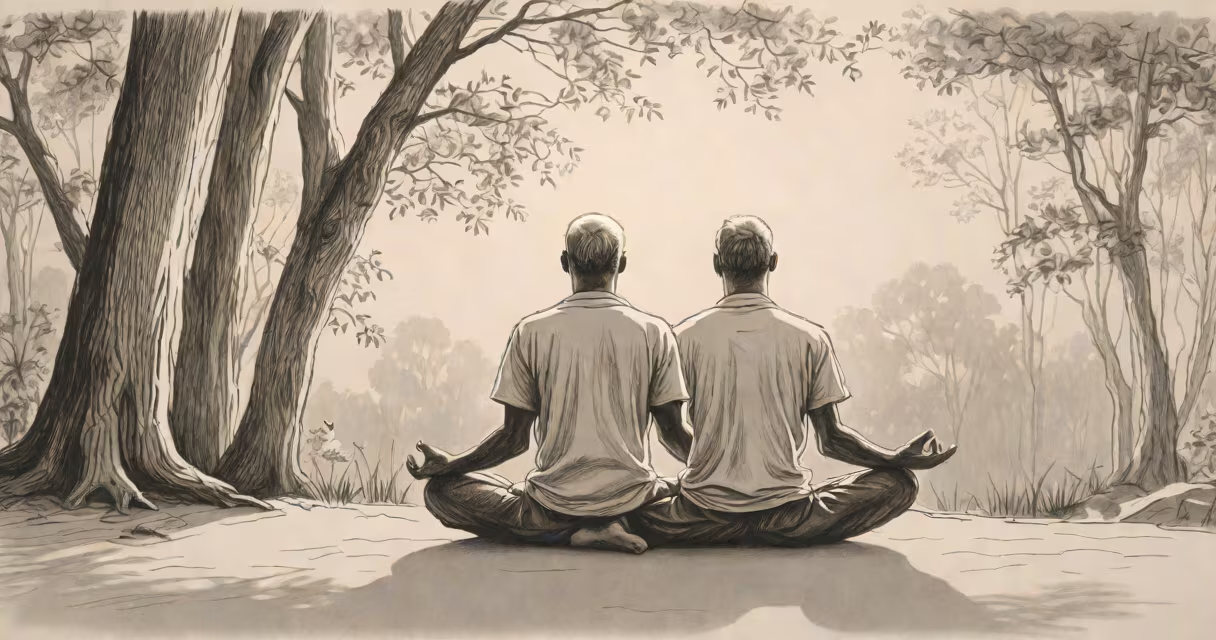
How to find my spiritual guide involves recognizing inner wisdom, paying attention to recurring symbols, and cultivating stillness to hear subtle messages. This process isn't about summoning a physical being but awakening a deeper sense of direction rooted in intuition and personal meaning.
Spiritual guides aren't visible entities. They exist as internal voices, sudden insights, or persistent patterns in dreams and synchronicities. You don't "find" them like a lost item-you align with them through intentional presence. The practice begins not with searching, but with stopping.
When you pause daily-just five minutes of silence-you create space for signals. These may come as a sudden image, a word that repeats in your thoughts, or a feeling of calm during stress. The guide isn't separate from you. It's part of your own psyche, shaped by your values, memories, and long-term hopes.
A spiritual guide is not a deity, angel, or external authority. It's a representation of your highest self-the part of you that knows what's true even when fear or distraction clouds your mind. Think of it as an internal compass calibrated to your deepest integrity.
Psychologist Carl Jung described similar concepts as the "Self," a central archetype that integrates conscious and unconscious parts of the mind. He wrote that "the Self is the totality of the psyche," and that encountering it leads to wholeness. Modern spiritual practice often uses the term "guide" to describe this same phenomenon in accessible language.
For example, someone struggling with career choices might repeatedly dream of walking through a forest with a clear path. The forest symbolizes uncertainty, the path represents clarity. Over time, they notice that the dream feels less like random imagery and more like a message: "Keep going. You're on the right track." That's the guide speaking-not in words, but in meaning.
The process of identifying your spiritual guide relies on consistency, not drama. You don't need visions or voices. Instead, look for patterns in your inner life: recurring metaphors, emotional responses to certain people or places, or sudden shifts in mood when you think about specific decisions.
Track these moments. Keep a journal. Write down dreams, feelings after meditation, or unexpected thoughts that feel significant. After two weeks, review entries. Look for themes. A single image-like water, birds, fire, or a particular animal-may appear multiple times. These are not coincidences. They're clues.
One client reported seeing a red fox in three different dreams over ten days. She had never seen a fox in real life. In her culture, foxes symbolize intelligence and adaptability. She was facing a job change and felt anxious. The fox appeared not to give advice, but to reflect her own growing confidence. When she stopped resisting the shift, the dreams ended. The guide wasn't telling her what to do-it was showing her that she already knew.
While all spiritual guides stem from within, they manifest in recognizable forms. These aren't fixed roles but symbolic expressions of your inner state. The following table outlines common manifestations and their meanings:
| Form | Common Meaning | When It Appears |
|---|---|---|
| Animal | Instinct, resilience, hidden strength | During transitions or high stress |
| Older Person | Wisdom, patience, ancestral memory | When seeking life direction |
| Nature Element | Balance, flow, grounding | After emotional overwhelm |
| Light or Voice | Clarity, insight, inner knowing | During decision-making |
These forms aren't interchangeable. A recurring image of a storm doesn't mean you're being punished-it may indicate that you're processing unresolved emotions. A calm lake suggests emotional stability is returning. The key is context, not symbolism alone.
Many confuse spiritual guides with religious figures or past ancestors. But ancestors are specific people who lived. A guide is not a person-it's a function. It's not a name, but a role: to remind you of your purpose, to challenge your assumptions, to affirm your courage.
People often expect their spiritual guide to speak, loudly, or in a way that feels dramatic. This leads to frustration. The guide rarely says "Do this." It says "This feels right." Or "You've done enough." Or "Try again tomorrow."
Another error is assuming the guide must be positive. Some guides appear as challenges-like a voice saying "You're not ready," or a dream of falling. These aren't threats. They're invitations to examine resistance. A 2021 study published in the Journal of Transpersonal Psychology found that individuals who reported "difficult" spiritual experiences showed greater long-term psychological integration than those who only experienced uplifting ones.
There's also confusion between spiritual guides and mental health symptoms. Persistent voices or hallucinations require medical evaluation. A spiritual guide doesn't command, manipulate, or cause fear. It supports. It reflects. It stays consistent with your core values.
Start small. Sit quietly for five minutes each day. Close your eyes. Breathe. Don't try to "hear" anything. Just be. After a week, ask: "What did I notice?" Not "What did I feel?" But "What did I notice?"
Write down one sentence. Example: "I noticed a sense of warmth when I thought about helping others." That warmth is a sign. It's not proof, but it's data. Collect five such observations. Then look for patterns.
One participant in a mindfulness retreat reported noticing "a soft hum" during silence. It wasn't sound-it was sensation. Over time, the hum aligned with moments of clarity. When she faced a difficult conversation, the hum returned. She realized it wasn't noise-it was her body signaling readiness. That's how the guide shows up: not in words, but in embodied awareness.
After three weeks of tracking, review your notes. Ask: "Which moments felt most true?" Choose one. Return to it. Sit with it. Let it grow. The guide isn't found-it's invited through attention.
Once you begin to recognize the guide's presence, you can strengthen the relationship. Try this: before sleep, ask, "What do I need to remember tomorrow?" Wait. Don't analyze. Just listen. Write down whatever comes-images, feelings, fragments. Do this for seven nights.
Afterward, look for repetition. Did the same image return? Did the same emotion surface? That's the guide speaking in its own language. You don't have to understand it fully. You just have to trust that it's trying to communicate.
If you want to explore further, discover your spiritual gifts to better understand how your inner wisdom expresses itself. These gifts-intuition, healing, creativity-are not separate from the guide. They are its tools.
Remember: how to find my spiritual guide isn't about discovery. It's about recognition. It's about learning to trust the quiet voice that says, "You are not lost."