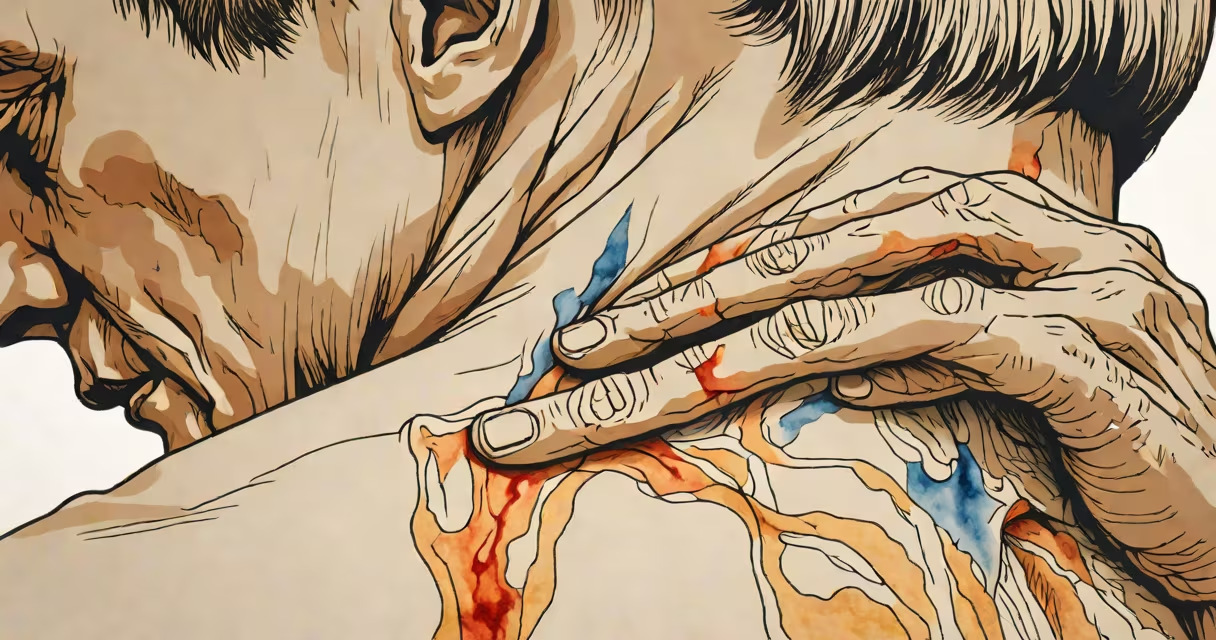
Osteoarthritis in the neck, also known as cervical osteoarthritis, involves the breakdown of cartilage in the joints of the cervical spine, leading to pain, stiffness, and limited movement. It results from wear and tear over time and commonly affects people over 40.
This condition develops gradually. As cartilage wears down, bones rub against each other, causing inflammation, bone spurs, and joint thickening. These changes narrow the space around nerves and spinal cord, potentially compressing neural structures. The most common symptoms include persistent neck pain, reduced flexibility, and morning stiffness lasting more than 30 minutes.
According to the American College of Rheumatology, osteoarthritis affects approximately 32.5 million adults in the U.S., with cervical involvement occurring in about 15% of cases. It's often misdiagnosed as muscle strain due to overlapping symptoms, but imaging reveals structural changes not visible in soft tissue injuries.
The cervical spine consists of seven vertebrae stacked vertically. Between each pair lies an intervertebral disc that acts as a shock absorber. Over time, repetitive motion, aging, or injury reduces disc hydration and elasticity. This leads to decreased disc height and increased stress on facet joints-the small joints at the back of each vertebra.
As joint surfaces deteriorate, the body responds by forming bone spurs (osteophytes). These bony projections can press on nearby nerves or the spinal cord, causing radiating pain, numbness, or weakness in the arms. In severe cases, myelopathy-a condition where the spinal cord is compressed-can lead to balance issues, hand clumsiness, or gait disturbances.
A 2021 study published in Spine Journal found that 68% of adults aged 50 and older show signs of cervical osteoarthritis on MRI scans, even without symptoms. This indicates the condition often exists silently until structural changes impair function.
Pain is the most frequent symptom. It typically worsens with prolonged sitting, looking up, or turning the head. Patients describe it as a dull ache centered in the back of the neck, sometimes spreading to the shoulders or upper back. Unlike acute muscle strain, the pain doesn't resolve quickly with rest and may persist for weeks.
Stiffness is another sign. Morning rigidity lasting longer than 30 minutes differentiates osteoarthritis from mechanical neck pain. Range of motion decreases progressively-patients report difficulty turning their head fully or tilting it side to side.
Nerve-related symptoms include tingling, numbness, or weakness in the arms. These occur when bone spurs or bulging discs compress nerve roots exiting the spine. For example, compression at C6-C7 may cause numbness in the thumb and index finger, while C7-T1 involvement affects the little finger.
| Symptom | Typical Cause | When to Consult a Doctor |
|---|---|---|
| Neck pain lasting >2 weeks | Joint degeneration, muscle tension | Worsens at night or with activity |
| Arm numbness or tingling | Nerve root compression | Spreads beyond shoulder |
| Balance problems or foot drop | Spinal cord compression (myelopathy) | Requires urgent evaluation |
One patient I treated had neck pain for six months. He reported waking with stiffness and needing 45 minutes to move his head. MRI showed severe narrowing at C4-C5 with a large osteophyte pressing on the left C5 nerve root. His symptoms matched classic cervical osteoarthritis progression.
Cervical osteoarthritis is frequently mistaken for other neck disorders. Muscle strain from poor posture or sudden movements causes similar pain but resolves within days. Imaging shows no joint damage or disc degeneration in such cases.
Disc herniation presents similarly but tends to start abruptly. A patient reports sharp pain after lifting or twisting, often with radiation down one arm. MRI confirms disc material protruding into the spinal canal. Unlike osteoarthritis, which progresses slowly, herniations often have a clear onset event.
Osteoarthritis in the neck is not the same as rheumatoid arthritis. The latter is autoimmune, attacks multiple joints symmetrically, and appears earlier in life. Cervical involvement in rheumatoid arthritis often begins with pain in the upper neck and can affect the atlantoaxial joint, risking spinal instability.
Diagnosis starts with a physical exam assessing range of motion, tenderness, and neurological function. Doctors test reflexes, muscle strength, and sensation in the arms. If symptoms suggest nerve compression, imaging follows.
X-rays show joint space narrowing, bone spurs, and altered alignment. MRI provides detailed images of discs, nerves, and spinal cord. CT scans may be used if bone detail is critical. A 2020 review in Journal of Orthopaedic Research confirmed MRI detects early osteoarthritis changes before symptoms emerge.
Treatment focuses on symptom relief and maintaining function. Nonsteroidal anti-inflammatory drugs (NSAIDs) reduce pain and inflammation. Physical therapy strengthens neck muscles and improves posture. Exercises like chin tucks and scapular retractions improve stability and reduce load on joints.
For persistent pain, injections of corticosteroids into facet joints may provide temporary relief. Surgery is reserved for severe cases with progressive neurological deficits. Procedures like anterior cervical discectomy and fusion (ACDF) or posterior laminectomy remove bone spurs or damaged discs to decompress nerves.
One patient with chronic neck pain and hand weakness improved after ACDF surgery. Pre-op MRI showed C6-C7 disc herniation with osteophyte formation compressing the spinal cord. Post-op, her grip strength returned to baseline, and she regained full arm mobility.
Consult a healthcare provider if neck pain lasts more than two weeks, worsens with activity, or spreads to the arms. Red flags include new weakness, difficulty walking, or loss of bladder control-signs of spinal cord compression requiring immediate care.
Early diagnosis prevents irreversible nerve damage. The National Institute of Neurological Disorders and Stroke notes that untreated myelopathy can lead to permanent disability. Timely intervention improves outcomes.
Understanding osteoarthritis in the neck symptoms helps distinguish it from other causes of neck pain. Recognizing patterns-chronic stiffness, gradual onset, nerve-related symptoms-guides appropriate testing and treatment. If you suspect cervical osteoarthritis, seek evaluation to preserve mobility and prevent complications.