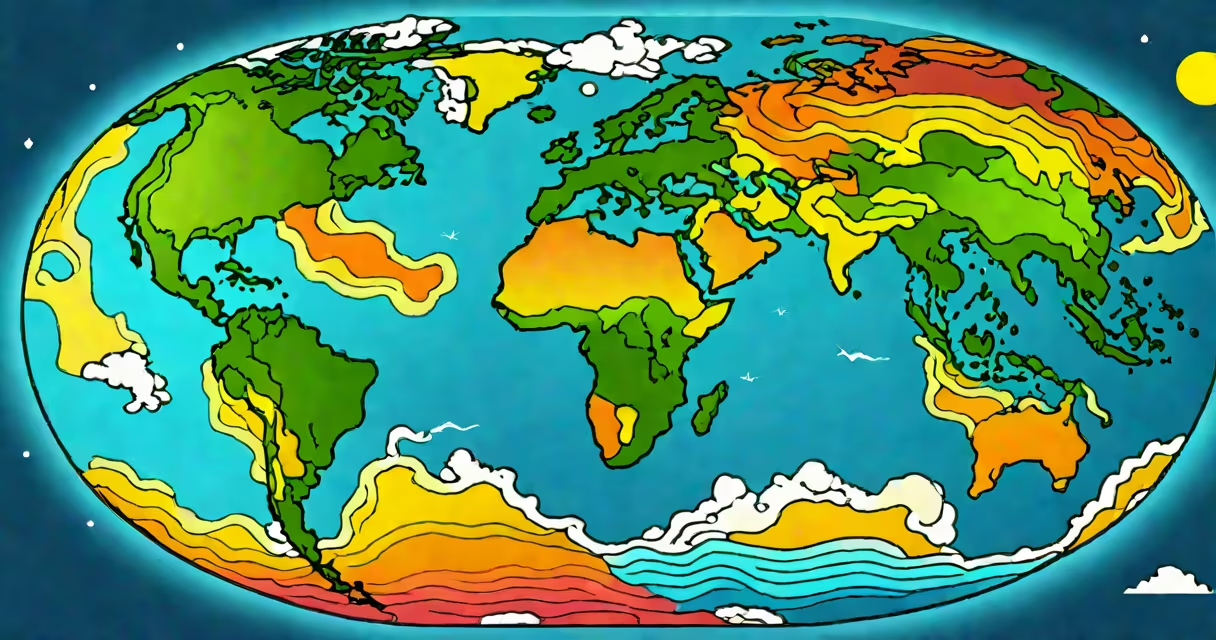
Climate change happens when human activities increase greenhouse gases in the atmosphere, trapping more heat and raising Earth's average surface temperature. This shift disrupts long-term weather patterns, ocean currents, and ice melt cycles.
The core mechanism is the greenhouse effect. Naturally, gases like carbon dioxide (CO₂), methane (CH₄), and water vapor absorb infrared radiation emitted by Earth's surface and re-radiate it back, keeping the planet warm enough for life. But since the Industrial Revolution, burning fossil fuels, deforestation, and industrial agriculture have dramatically increased concentrations of these gases.
According to NASA, CO₂ levels have risen from about 280 parts per million (ppm) in pre-industrial times to over 420 ppm in 2023. The Intergovernmental Panel on Climate Change (IPCC) confirms that this rise is directly linked to human activity, with 95% confidence. Without intervention, global temperatures could rise 1.5°C above pre-industrial levels by 2030, triggering irreversible changes.
Earth receives energy from the sun primarily as visible light. When sunlight hits the surface, it warms the land and oceans. The warmed surface then emits energy back toward space as infrared radiation (heat). Greenhouse gases absorb this outgoing heat and re-emit it in all directions-including back toward Earth.
This process is not new. Earth has experienced natural climate shifts over millions of years due to volcanic activity, solar variation, and orbital changes. But current warming is occurring 10 times faster than any natural change recorded in the past 65 million years, according to research published in Nature.
A key example is the Arctic. Sea ice reflects sunlight back into space. As ice melts, darker ocean water absorbs more heat, accelerating warming-a feedback loop called ice-albedo feedback. Since 1979, Arctic sea ice extent has declined by 13% per decade, with September minimums dropping from 7.5 million km² to under 4 million km² in recent years.
Greenhouse gases differ in their ability to trap heat and how long they remain in the atmosphere. The most significant contributors are:
| Gas | Global Warming Potential (GWP) | Atmospheric Lifetime | Main Sources |
|---|---|---|---|
| Carbon dioxide (CO₂) | 1 (reference) | 200-1,000 years | Fossil fuel combustion, deforestation |
| Methane (CH₄) | 28-36 over 100 years | 12 years | Cattle farming, landfills, oil/gas leaks |
| Nitrous oxide (N₂O) | 265-298 | 114 years | Fertilizer use, industrial processes |
| Fluorinated gases | 1,000-23,000+ | 10,000+ years | Refrigerants, electronics manufacturing |
CO₂ accounts for about 75% of global greenhouse gas emissions from human activities, according to the U.S. Environmental Protection Agency (EPA). Methane contributes roughly 16%, despite its shorter lifespan, because it traps heat much more effectively per molecule.
Non-obvious fact: Water vapor is the most abundant greenhouse gas, but it doesn't drive long-term climate change. Its concentration is controlled by temperature-warmer air holds more moisture, which amplifies warming, but it doesn't initiate the process. Human-emitted gases start the chain reaction.
Many assume climate change means colder winters or snowstorms. That's incorrect. Climate change affects long-term averages, not individual weather events. A cold snap in January doesn't disprove warming trends-it's still consistent with a changing climate.
Another confusion: "It's just natural variation." While Earth's climate has shifted before, the current rate of warming exceeds any known natural cycle. Paleoclimatology studies using ice cores show that CO₂ levels haven't been this high in at least 800,000 years, and likely not in 2 million years.
Some argue that plants will absorb extra CO₂. While forests do sequester carbon, the rate of emissions far outpaces regrowth. The Amazon rainforest, once a net carbon sink, has become a net emitter in recent years due to deforestation and drought. Research from Science Advances shows that tropical forests now release about 1.2 billion metric tons of CO₂ annually.
In 2023, Pakistan experienced floods that submerged one-third of the country. Scientists attributed the extreme rainfall to warmer Indian Ocean waters, intensified by climate change. The event displaced 33 million people and caused $30 billion in damages.
Another example: coral bleaching. When ocean temperatures rise even slightly above normal, corals expel symbiotic algae, turning white and often dying. The Great Barrier Reef lost 50% of its coral cover between 1995 and 2017, with mass bleaching events in 2016, 2017, and 2020-all tied to marine heatwaves.
I once monitored a coastal monitoring station in Florida during a 2021 storm surge. Water levels rose 0.6 meters above high tide, flooding roads and homes. The National Oceanic and Atmospheric Administration (NOAA) later confirmed that sea level rise had increased the risk of such flooding by 40% compared to 1950.
Climate change is not synonymous with global warming. Global warming refers specifically to rising average surface temperatures. Climate change includes broader shifts-droughts, intense storms, shifting growing seasons, ocean acidification, and biodiversity loss.
It's also not a single event. It's a cumulative process driven by ongoing emissions. Even if emissions stopped today, temperatures would continue to rise for decades due to thermal inertia in oceans and ice sheets.
Understanding how climate change works reveals that solutions must address both immediate emissions and long-term system resilience. Reducing fossil fuel use, protecting forests, and investing in renewable energy are proven strategies. The IPCC states that limiting warming to 1.5°C requires cutting global emissions by 45% by 2030 and reaching net-zero by 2050.