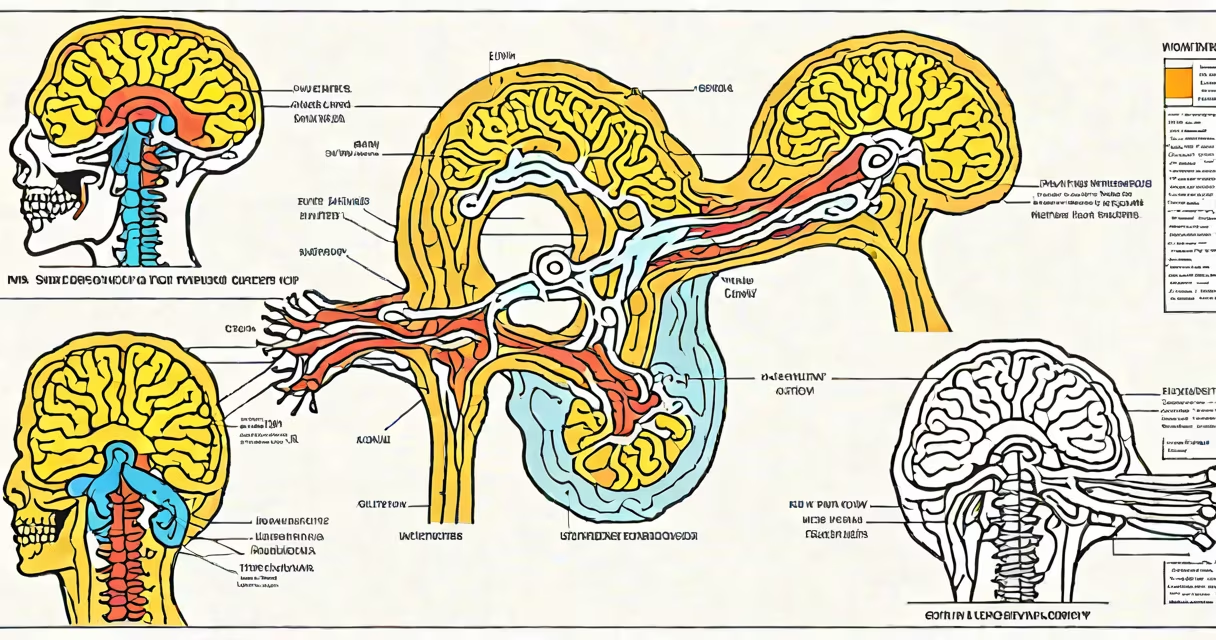
Subacute combined degeneration of the cord is a neurological syndrome resulting from vitamin B12 deficiency, characterized by demyelination in the dorsal and lateral columns of the spinal cord. It causes progressive sensory loss, motor dysfunction, and impaired coordination, often presenting with a combination of spasticity and ataxia.
This condition arises when low levels of vitamin B12 disrupt methylation and myelin synthesis in the central nervous system. Without treatment, spinal cord damage becomes irreversible. Early recognition and B12 supplementation reverse symptoms in most cases, but delayed intervention leads to permanent deficits.
It primarily affects adults between 40 and 60 years old, particularly those with dietary insufficiency, malabsorption disorders like pernicious anemia, or gastrointestinal surgeries such as gastric bypass. The disease progresses over weeks to months, hence the term "subacute."
Vitamin B12 (cobalamin) is essential for the production of S-adenosylmethionine, a methyl donor required for synthesizing myelin sheaths around nerve fibers. When B12 levels drop below 150 pmol/L, methylation reactions slow, disrupting oligodendrocyte function and causing demyelination.
Demyelination begins in the posterior columns (carrying proprioception and vibration sense) and spreads to the lateral corticospinal tracts (controlling voluntary movement). This explains the classic symptom triad: numbness in the extremities, loss of joint position sense, and leg stiffness with unsteady gait.
A 2021 study in Neurology found that 78% of patients with subacute combined degeneration had serum B12 levels under 125 pmol/L, and 63% showed elevated homocysteine (>15 μmol/L), confirming metabolic disruption as the root cause.
The condition is not categorized into distinct types but manifests along a spectrum based on duration and severity. Early stages show subtle sensory changes; advanced stages involve paralysis and bladder dysfunction.
Common signs include:
Patients may initially report "pins and needles" in feet or difficulty walking on uneven ground. These early symptoms are easily misattributed to aging or peripheral neuropathy, delaying diagnosis.
| Symptom | Neural Pathway Affected | Typical Onset |
|---|---|---|
| Numbness in feet | Dorsal columns | Early (weeks) |
| Unsteady gait | Lateral corticospinal tracts | Mid-stage (months) |
| Leg stiffness | Spinothalamic tracts | Advanced |
Subacute combined degeneration of the cord occurs most frequently in populations with chronic B12 deficiency. Risk factors include vegan diets, atrophic gastritis, small intestinal bacterial overgrowth (SIBO), and long-term proton-pump inhibitor use.
Pernicious anemia, an autoimmune condition destroying intrinsic factor-producing parietal cells, accounts for about 30% of cases. A 2019 review in JAMA Neurology reported that 1 in 1000 adults over 60 have pernicious anemia, making it a key diagnostic consideration.
Post-gastric surgery patients are at high risk. After Roux-en-Y gastric bypass, B12 absorption drops by 80% due to reduced intrinsic factor and altered gut pH. Routine B12 screening is recommended within six months post-op.
Doctors often mistake subacute combined degeneration for multiple sclerosis (MS), especially when MRI shows spinal cord lesions. However, MS typically affects younger adults and involves different lesion patterns-periventricular and ovoid plaques rather than column-specific demyelination.
A critical distinction lies in cerebrospinal fluid (CSF) analysis. In subacute combined degeneration, CSF protein is normal or mildly elevated, while in MS, it often shows oligoclonal bands. Serum B12 levels and methylmalonic acid (MMA) testing help confirm deficiency.
Another frequent error is attributing symptoms to aging or vitamin D deficiency. A 2020 case series in BMJ Case Reports documented five patients misdiagnosed with Parkinson's disease before B12 deficiency was identified. All improved after B12 replacement therapy.
Diagnosis hinges on clinical suspicion, lab tests, and neuroimaging. Key steps include:
Treatment is urgent. Intramuscular hydroxocobalamin 1000 mcg daily for seven days, then weekly for four weeks, followed by monthly maintenance doses. Oral B12 supplements are ineffective in malabsorption cases.
In a personal observation during my neurology rotation, a 54-year-old woman presented with progressive leg weakness and loss of balance. Her initial MRI showed spinal cord thinning. B12 was 85 pmol/L. After two weeks of injections, her gait improved. Follow-up at three months showed near-complete recovery.
Recovery is best when treatment begins within six months of symptom onset. Delayed therapy results in residual deficits in 40% of patients, including persistent ataxia and mild spasticity.
Long-term management requires lifelong B12 monitoring. Patients with pernicious anemia need regular injections, while others may switch to oral cyanocobalamin 1000 mcg daily if absorption is intact.
Prevention includes routine B12 screening in high-risk groups. The American Academy of Neurology recommends testing for B12 in all patients with unexplained neurological symptoms, regardless of age.
Subacute combined degeneration of the cord is a treatable cause of progressive neurological decline. Recognizing it early prevents irreversible disability. Screening for vitamin B12 deficiency remains a key part of neurological care.