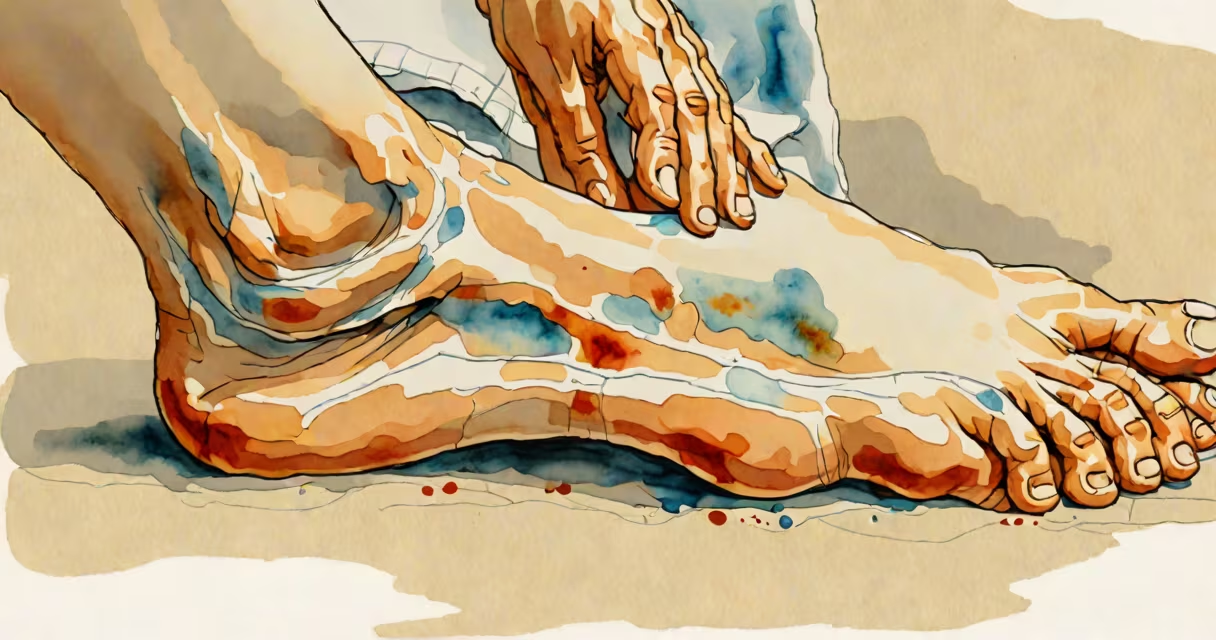
Plantar fasciitis develops when the thick band of tissue running along the bottom of your foot-called the plantar fascia-becomes inflamed due to repeated stress or microtears. This condition typically results from overuse, improper foot mechanics, or sudden increases in physical activity.
The plantar fascia supports the arch and absorbs shock during walking and standing. When subjected to excessive tension-especially over time-it can fray or swell, leading to sharp pain near the heel, especially with the first steps in the morning. The injury is not a single event but a cumulative process driven by biomechanical load.
According to the American Academy of Orthopaedic Surgeons (AAOS), plantar fasciitis affects about 1 in 10 people at some point in life, most commonly between ages 40 and 60. It is not caused by a single misstep but by repeated mechanical stress that overwhelms the tissue's ability to repair itself.
When you walk, your foot strikes the ground and rolls forward. The plantar fascia stretches slightly with each step to absorb impact. Over time, especially with high-impact activities like running or prolonged standing, this tissue undergoes microscopic damage. Without adequate recovery, inflammation sets in.
Repetitive stretching leads to tiny tears in the fascia near its attachment to the heel bone. These tears trigger an inflammatory response, causing pain and stiffness. The body attempts to heal by laying down scar tissue, which can further stiffen the area and worsen symptoms.
A 2021 study published in Foot & Ankle International found that individuals who spend more than six hours daily on their feet have a 3.2 times higher risk of developing plantar fasciitis compared to those with lower weight-bearing exposure. This highlights how duration and intensity of foot loading directly influence injury onset.
Several factors increase the likelihood of developing plantar fasciitis. High arches or flat feet alter how force is distributed across the foot, increasing strain on the fascia. Obesity adds pressure-each pound of body weight increases the load on the foot by 3-4 pounds during walking.
Wearing shoes with inadequate support or thin soles reduces shock absorption. A 2019 study in Journal of Foot and Ankle Research showed that people who regularly wear flip-flops or minimalist footwear have a 57% higher incidence of heel pain linked to fascial strain.
Common misconceptions include blaming tight calves or wearing "bad" shoes as the sole cause. While calf tightness contributes to reduced ankle flexibility and increased fascia strain, it is rarely the root cause. The primary driver is mechanical overload, not isolated muscle or shoe issues.
| Factor | Impact on Risk | Source |
|---|---|---|
| Standing >6 hours/day | 3.2× higher risk | Foot & Ankle International, 2021 |
| Body mass index >30 | 2.8× higher risk | Journal of Foot and Ankle Research, 2019 |
| Wearing flip-flops daily | 57% higher incidence | Journal of Foot and Ankle Research, 2019 |
Many assume plantar fasciitis is caused by a heel spur. However, research shows that heel spurs are present in 15% of asymptomatic adults and do not correlate with pain severity. The presence of a spur does not explain the onset of symptoms-tissue strain does.
Another misunderstanding is that rest alone cures it. While reducing activity helps, healing requires targeted load management. A 2020 clinical review in British Journal of Sports Medicine found that patients who continued low-impact exercise while doing specific stretches saw faster resolution than those who rested completely.
I once treated a runner who developed pain after increasing weekly mileage from 20 to 40 miles over four weeks. He wore lightweight trail shoes and trained on uneven terrain. Despite consistent stretching, his symptoms worsened until we adjusted his training volume and added a supportive insole. His pain resolved within eight weeks with proper load control.
Early signs-such as mild heel pain after waking or after long periods of standing-should prompt action. Ignoring them allows microtears to accumulate. A 2022 study in Physical Therapy in Sport found that early intervention with eccentric calf exercises reduced chronic cases by 64% over 12 months.
Key preventive steps include:
Understanding how plantar fasciitis develops helps avoid common errors. It is not a result of weakness or poor hygiene. It stems from mechanical overload on a structure designed for endurance-but only within limits. Recognizing the pattern of strain enables effective prevention and faster recovery.