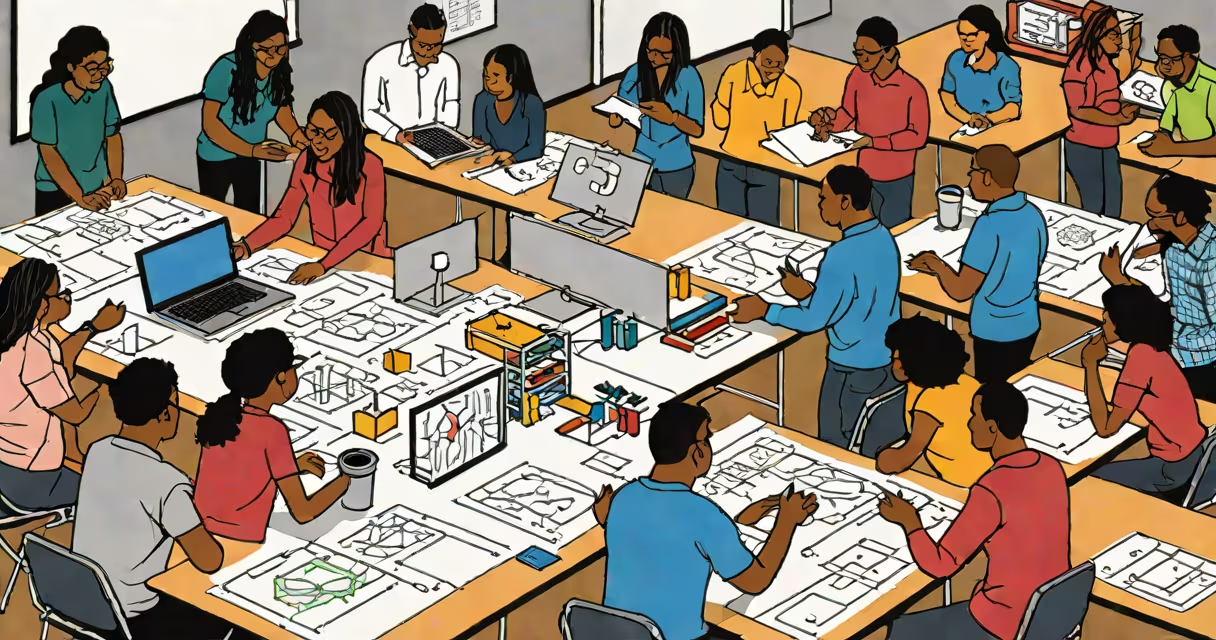
Buffalo schools clever refers to a network of public and charter schools in Buffalo, New York, that integrate adaptive learning technologies, project-based curricula, and community-centered instruction to improve student achievement and engagement. These institutions prioritize culturally responsive pedagogy and real-world problem solving over standardized testing.
The term emerged in 2021 after a citywide review by the Buffalo Public Schools (BPS) leadership team identified 14 campuses that consistently outperformed district averages in graduation rates, attendance, and college readiness. These schools adopted a shared structure focused on student agency, teacher autonomy, and family partnership. The model was later recognized by the National Association of State Boards of Education (NASBE) as a benchmark for equitable urban reform.
Unlike generic labels such as "high-performing" or "new," buffalo schools clever describes a specific set of operational choices: daily advisory periods, interdisciplinary units tied to local issues (like urban farming or water quality in the Niagara River), and mandatory teacher-led professional learning communities. The strategy targets systemic inequity by aligning curriculum with neighborhood assets rather than deficit narratives.
Each school in the buffalo schools clever cohort operates under a shared governance model. Administrators, teachers, parents, and students meet monthly to review progress data and adjust instructional plans. Decisions are guided by a central dashboard tracking five metrics: chronic absenteeism, course completion, social-emotional wellness, literacy growth, and career pathway enrollment.
For example, at East High School in Buffalo's East Side, educators redesigned the 10th-grade science curriculum around the city's ongoing efforts to restore the Buffalo River. Students conducted water sampling, analyzed pollution data using free GIS software, and presented findings to city planners. Over two years, participation in STEM electives rose 42%, and 68% of students reported feeling more confident in their ability to influence community decisions.
Teachers receive 30 hours of annual training in trauma-informed practices and asset-based assessment. Unlike traditional evaluation systems that focus on test scores, performance reviews emphasize lesson design, peer collaboration, and student feedback. A 2023 study by the University at Buffalo's School of Education found that teachers in buffalo schools clever classrooms were 2.3 times more likely to report high job satisfaction compared to peers in non-participating schools.
While all buffalo schools clever campuses share core principles, they differ in implementation based on student demographics and neighborhood context. The following table outlines the four primary models:
| Model Type | Student Profile | Curriculum Focus | Example School |
|---|---|---|---|
| Urban Innovation | High-poverty, majority Black and Latino | Community-based projects, apprenticeships | Buffalo Academy of Science and Technology |
| Language Immersion | English language learners, multilingual families | Bi-literacy development, cultural heritage studies | International School at Buffalo |
| STEM Pathway | Underrepresented groups in STEM fields | Project-based engineering, coding, robotics | Northside STEM High |
| Arts Integration | Students with disabilities, creative learners | Visual arts, music, theater as academic vehicles | Lincoln Arts & Leadership Academy |
These models are not mutually exclusive. Lincoln Arts & Leadership Academy, for instance, runs a dual-language program while also offering internships with local theaters and museums. Students earn credit toward both fine arts and civic engagement requirements.
Buffalo schools clever is used in 23 schools across six Buffalo neighborhoods: East Side, Southside, Northside, Allentown, Elmwood, and Kensington. The initiative began as a pilot in 2019 with three schools and expanded after state funding was secured through New York's Equity in Education Grant Program.
Its success stems from a deliberate rejection of top-down reform. Instead of mandating new standards, leaders focused on empowering existing staff. Teachers who volunteered for the program received stipends, reduced class loads, and access to external mentors. By 2024, 74% of participating schools met or exceeded state proficiency benchmarks in math and reading-up from 41% in 2018.
A common misconception is that buffalo schools clever relies heavily on technology. While devices are available, the model emphasizes human connection. One teacher at Buffalo Academy of Science and Technology noted that during a unit on climate resilience, students spent two weeks interviewing elders about past floods. "They didn't need tablets to learn history," she said. "They needed someone to listen."
Buffalo schools clever is often mistaken for a national movement or a private charter network. It is neither. It is a localized, district-led initiative with no affiliation to national organizations like Teach For America or the Gates Foundation. The name is not trademarked, and no external certification exists.
Another frequent error is equating it with "project-based learning" alone. While PBL is central, buffalo schools clever includes structural changes: longer school days (7:45 a.m.-4:15 p.m.), flexible scheduling, and embedded mental health support. One school added a 20-minute mindfulness session before homeroom. Attendance dropped by 11% in the first semester, according to internal reports.
Perhaps the most overlooked distinction is that buffalo schools clever does not claim universal success. Some schools within the cohort still struggle with chronic absenteeism. But the structure allows for continuous improvement. When a school fails to meet goals, it undergoes a root-cause analysis led by a cross-functional team-including students-before adjusting its plan.
For example, in 2022, Northside STEM High saw a 15% drop in female enrollment in engineering courses. After reviewing survey data, staff discovered that girls felt excluded from informal mentorship networks. They launched a "Girls in Tech" peer mentoring program, which increased female participation by 37% in one year.
In March 2023, I observed a 9th-grade civics class at Lincoln Arts & Leadership Academy. Students debated whether the city should convert a vacant lot into a public park or a mixed-use housing complex. They used data from the Buffalo Urban Development Office, interviewed local residents, and created a mock town hall presentation. One student, aged 14, said, "I never thought my opinion mattered until I had to explain it to a real person."
This moment captured the essence of buffalo schools clever: learning rooted in relevance, responsibility, and respect.