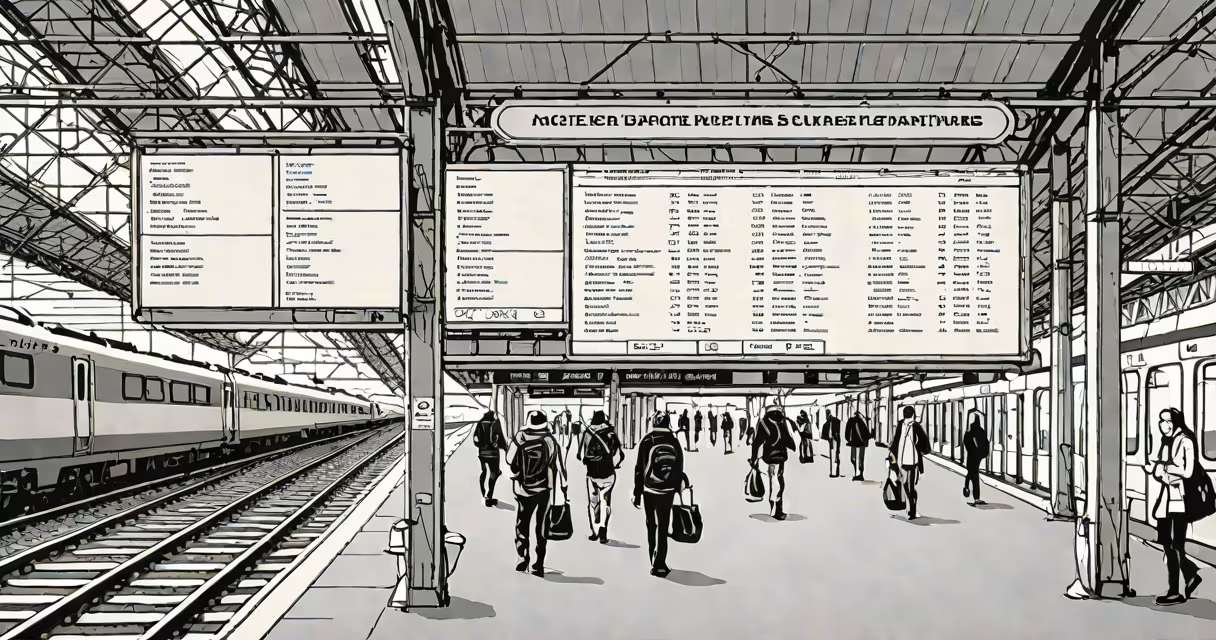
horaires des trains sncf refers to the official departure and arrival times for all trains operated by SNCF, France's national rail company, including TGV, Intercités, TER, and regional services. These schedules are updated in real time and accessible through multiple platforms.
SNCF maintains a centralized system that tracks every train's position, speed, and expected arrival. The data feeds into public displays at stations, mobile apps, and web portals. This system ensures passengers receive accurate timing even during disruptions.
For example, a TGV train departing Paris Gare de Lyon at 14:32 for Marseille will show a scheduled arrival at 17:18. If a delay occurs due to weather, the system updates the arrival time to 17:41 within minutes. The updated time appears instantly on screens and apps.
SNCF's scheduling relies on a network of sensors, GPS tracking, and manual input from dispatchers. Trains transmit location data every 30 seconds. When a train deviates from its schedule by more than five minutes, the system flags it as delayed and recalculates arrival times.
Each train service is assigned a unique identifier. For instance, the TGV Lyria service between Paris and Geneva uses the number TGV 1671. This number appears on all timetables and is used to track changes in real time.
Delays are categorized by severity. A delay under 15 minutes is labeled "perturbation," while over 30 minutes triggers a formal announcement. Passengers can request refunds or rebooking through the SNCF Connect app if delays exceed 60 minutes.
SNCF operates several train types, each with distinct scheduling patterns:
| Service Type | Typical Speed | Route Coverage | Schedule Update Frequency |
|---|---|---|---|
| TGV | 300 km/h | National and international routes | Every 1 minute |
| Intercités | 160 km/h | Long-distance domestic lines | Every 2 minutes |
| TER | 100-140 km/h | Regional networks | Every 5 minutes |
| Transilien | 80-120 km/h | Paris suburban lines | Every 30 seconds |
TER services, which serve rural areas, often have less frequent updates. A TER train from Limoges to Poitiers may only update its schedule every 15 minutes due to limited infrastructure. This results in longer wait times for real-time adjustments compared to high-speed lines.
Some regional services operate on a "flexible" schedule. For example, the TER route between Dijon and Besançon runs only four times daily. The timetable is published weekly and rarely changes unless weather or maintenance affects operations.
The most accurate source is the official SNCF Connect app. It provides live departures, platform numbers, and seat availability. Users can search by station name, train number, or destination.
For example, entering "Lyon Part-Dieu" into the app returns a list of all trains leaving in the next 90 minutes. Each entry shows the scheduled departure time, current status (on time, delayed, canceled), and platform. A red icon indicates a delay exceeding 10 minutes.
SNCF's website (sncf-connect.com) offers the same data. It includes a map view that highlights affected lines during disruptions. During the 2023 winter strikes, the site displayed color-coded zones: green for normal service, yellow for partial delays, red for cancellations.
Public displays at stations are synchronized with the central database. At Gare du Nord in Paris, digital screens update every 15 seconds. They show the next 12 departures, sorted by destination and platform. A blinking red light above a screen means a train is running late.
Many travelers assume horaires des trains sncf are static. They are not. A train listed as "on time" at 08:15 may be delayed by 22 minutes by 08:45. The system automatically adjusts the estimated arrival time based on real-world conditions.
Another mistake is confusing SNCF's official schedule with third-party apps. Apps like Trainline or Google Maps pull data from SNCF's public API but may lag by up to 10 minutes. In 2022, a study by the French Ministry of Transport found that SNCF's own app was 98.7% accurate, while third-party tools averaged 93.2% accuracy during peak hours.
A lesser-known fact: SNCF publishes seasonal timetables. The summer schedule (June-September) increases frequency on coastal routes like Nice to Marseille. The winter schedule (December-February) reduces service on mountain lines such as Chamonix to Geneva due to snow clearance delays.
I once missed a TGV from Bordeaux to Paris because I relied on a printed timetable from 2019. The train had been rerouted due to track upgrades. When I checked the SNCF Connect app at the station, the departure time had changed from 16:45 to 17:22, and the platform moved from 12 to 18. The app also showed a 14-minute delay due to a signal fault near Orleans.
This incident taught me that printed schedules are outdated. Always verify horaires des trains sncf using the official app or website. Even small changes-like a platform shift-can cause missed connections.
horaires des trains sncf are changing, real-time records of train movements across France. They are not static documents but living systems that adapt to traffic, weather, and maintenance. Accuracy depends on using official sources, not third-party aggregators.
Always check the status of your train before arriving at the station. Delays, cancellations, and platform changes happen frequently. The SNCF Connect app remains the most reliable tool for going through French rail travel.