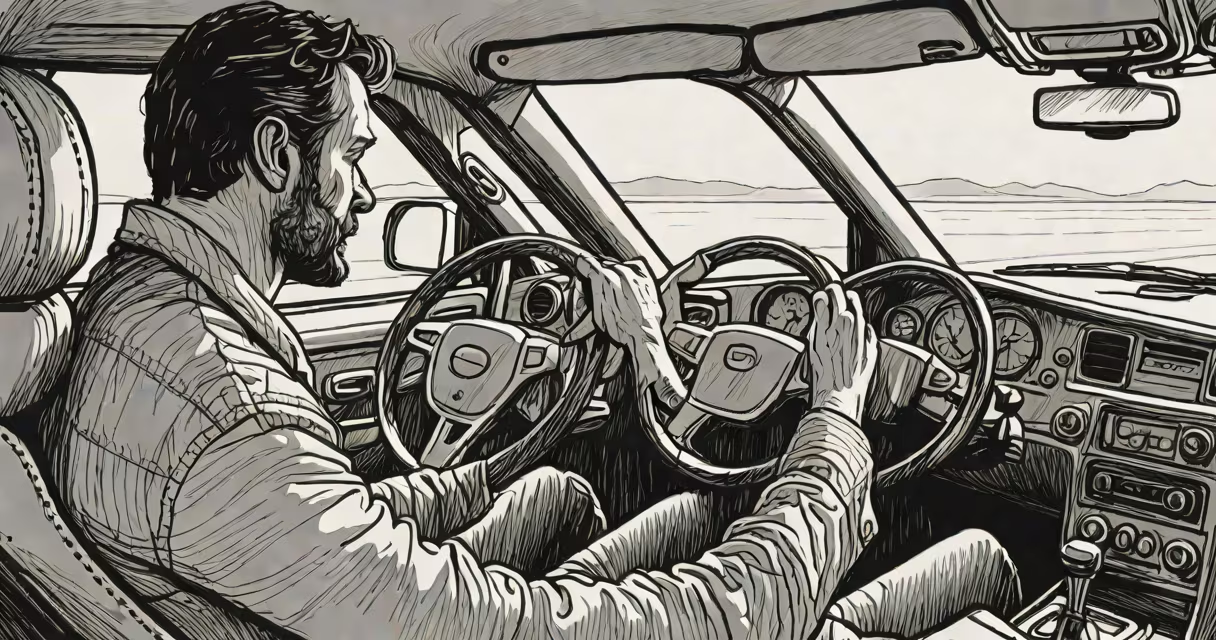
drowsiness while driving occurs when a person's alertness declines due to lack of sleep, extended wakefulness, or untreated sleep disorders, leading to slowed reaction times, reduced attention, and increased risk of accidents. The National Highway Traffic Safety Administration (NHTSA) estimates that drowsy driving contributes to approximately 72,000 crashes annually in the United States.
Drowsiness impairs cognitive function similarly to alcohol intoxication. A study published in the journal Sleep found that being awake for 18 hours produces performance deficits equivalent to a blood alcohol concentration (BAC) of 0.05%. After 24 hours without sleep, impairment reaches levels comparable to a BAC of 0.10%, which exceeds the legal limit in most states.
Even brief lapses in attention-microsleeps lasting 4 to 6 seconds-can result in loss of vehicle control. During such episodes, drivers may drift out of their lane, fail to respond to traffic signals, or collide with obstacles. These moments often go unnoticed until after the incident.
The brain's prefrontal cortex, responsible for decision-making and focus, becomes less active during sleep deprivation. This leads to slower processing speed, poor judgment, and diminished ability to detect hazards. Drivers may misjudge distances, fail to brake in time, or ignore warning signs.
Physiological changes include drooping eyelids, head nodding, yawning, and difficulty maintaining lane position. Some drivers report feeling "spaced out" or experiencing memory gaps during trips. These symptoms are not subtle-they are measurable indicators of declining alertness.
A 2021 NHTSA report analyzed crash data from 2018 to 2020 and found that 16% of fatal crashes involved a driver who reported being fatigued. In 43% of those cases, the driver had fallen asleep at the wheel. The majority of incidents occurred between midnight and 6 a.m., when circadian rhythms naturally suppress alertness.
Chronic sleep restriction is the primary cause. Adults need 7 to 9 hours of sleep per night. When they consistently get less than six hours, cognitive performance drops. Shift workers, long-haul truckers, and people with undiagnosed sleep apnea are especially vulnerable.
Medications also contribute. Antihistamines (like diphenhydramine), muscle relaxants, and certain antidepressants carry warnings about drowsiness. Even over-the-counter cold remedies can impair driving ability.
Alcohol consumption increases drowsiness. Combining alcohol with fatigue creates a dangerous synergy. Research from the University of Michigan Transportation Research Institute shows that drivers who consume alcohol and are sleep-deprived have a 2.3 times higher crash risk than those who are only fatigued.
| Factor | Impact on Alertness | Example |
|---|---|---|
| Lack of 7+ hours sleep | Severe decline in reaction time | Driver misses stop sign after 16 hours awake |
| Driving between 2 a.m. - 6 a.m. | Circadian low point increases microsleep risk | 37% of drowsy crashes occur during this window |
| Use of antihistamines | Impairs motor coordination and focus | Driver swerves after taking allergy medication |
Drowsiness while driving is not the same as distraction. While both reduce situational awareness, distraction involves divided attention-such as texting or adjusting the radio-whereas drowsiness results from internal mental fatigue. A driver can be distracted but alert; a drowsy driver may be unaware of their own declining state.
It's also not synonymous with boredom. Boredom stems from lack of engagement, while drowsiness reflects physiological exhaustion. A driver may feel bored during a long stretch of highway but remain attentive. Drowsiness, however, leads to involuntary shutdowns of consciousness.
Many people mistake mild fatigue for normal tiredness. They assume they can "push through." But the brain doesn't adapt to sleep loss-it accumulates debt. After 17 hours without sleep, performance drops below baseline. After 24 hours, the decline is irreversible until rest is obtained.
In 2014, a Metro-North train derailed in New York after the engineer fell asleep at the controls. The National Transportation Safety Board (NTSB) concluded that chronic sleep deprivation was a key factor. The engineer had worked multiple shifts with insufficient rest and failed to respond to warnings.
This case illustrates how drowsiness can override even trained professionals. The same principles apply to commercial drivers and everyday motorists. Fatigue doesn't discriminate based on experience or skill level.
I once observed a semi-truck drift into the median on a rural stretch of I-95 during early morning hours. The driver was asleep at the wheel. The vehicle didn't crash because a passing car honked repeatedly, waking him. He pulled over, visibly shaken. That moment confirmed how quickly alertness can vanish-even in experienced operators.
If you feel drowsy while driving, stop immediately. Pull over in a safe location. Do not attempt to "power through." The safest action is to take a 20-minute nap. Research from the FAA shows that naps under 30 minutes improve alertness and reduce crash risk by up to 50%.
Consuming caffeine can help temporarily. A 200-milligram dose (about two cups of coffee) reduces fatigue for up to 3 hours. However, caffeine does not replace sleep. It masks symptoms, not the underlying problem.
Long-distance drivers should follow the "Rule of 2": never drive more than 2 hours without a break. Take a 15-minute walk every 2 hours. Eat light snacks, avoid heavy meals, and stay hydrated. Avoid driving during your natural sleep window-typically 1 a.m. to 6 a.m.
For recurring drowsiness, consult a sleep specialist. Sleep apnea affects an estimated 18 million Americans and is linked to excessive daytime sleepiness. Diagnosis and treatment with CPAP therapy can eliminate fatigue-related driving risks.
When fatigue strikes, the solution isn't willpower-it's planning. Schedule rest breaks, adjust routes, and recognize early warning signs. Driving while drowsy is preventable. The cost of ignoring it is measured in lives lost.