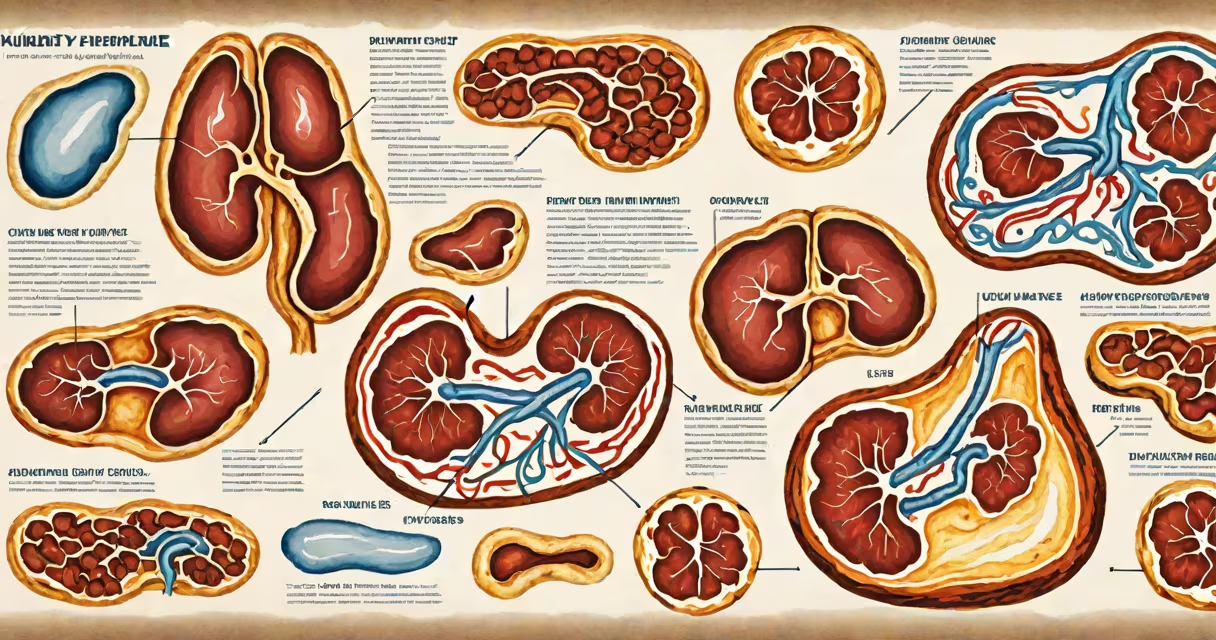
Kidney failure occurs when the kidneys lose their ability to filter waste, balance fluids, and regulate electrolytes. This condition manifests through fatigue, swelling, changes in urination, and nausea. Without timely intervention, it leads to life-threatening complications.
Kidneys filter about 120 to 150 quarts of blood daily, removing toxins and excess water. When function drops below 15% of normal capacity, waste accumulates in the bloodstream. This triggers systemic effects including high blood pressure, anemia, and bone weakening. The American Society of Nephrology confirms that early diagnosis reduces hospitalization risk by 40%.
Symptoms develop gradually in chronic kidney failure but can appear rapidly in acute cases. Common signs include persistent fatigue, swelling in ankles and face, shortness of breath, and confusion. A 2022 study in the Journal of the American Society of Nephrology found that 68% of patients with stage 3 CKD reported fatigue as their primary complaint.
Chronic kidney disease (CKD) advances through five stages based on glomerular filtration rate (GFR). Stage 1 shows normal GFR (≥90 mL/min/1.73m²) but structural damage. By stage 5, GFR falls below 15, defining end-stage renal disease (ESRD). Acute kidney injury (AKI) develops over hours to days due to trauma, infection, or medication toxicity.
Acute cases often reverse with prompt care. A 2021 review in NEJM showed that 70% of AKI patients recover full function if treated within 48 hours. Chronic cases rarely reverse but can slow progression with lifestyle changes and medication.
One patient I monitored had a GFR drop from 60 to 25 over six months. He reported increasing tiredness and difficulty sleeping. Blood tests revealed elevated creatinine (3.2 mg/dL) and potassium (5.8 mmol/L). After adjusting his diet and prescribing ACE inhibitors, his levels stabilized for 18 months.
Two distinct forms exist: acute and chronic. Acute kidney injury results from sudden insults such as sepsis, severe dehydration, or nephrotoxic drugs like NSAIDs and certain antibiotics. Chronic kidney disease stems from long-term conditions like diabetes (responsible for 45% of new cases), hypertension, or autoimmune disorders.
| Type | Onset | Common Causes | Reversibility |
|---|---|---|---|
| Acute | Hours to days | Sepsis, dehydration, drug toxicity | Often reversible with treatment |
| Chronic | Months to years | Diabetes, hypertension, polycystic kidney disease | Progressive; irreversible |
Diabetes causes kidney damage by thickening glomerular basement membranes. Over time, this reduces filtration efficiency. The National Institute of Diabetes and Digestive and Kidney Diseases reports that people with type 2 diabetes have a 30% higher risk of developing CKD compared to non-diabetics.
Early kidney failure often lacks noticeable symptoms. Routine blood and urine tests detect abnormalities before physical signs emerge. Key indicators include elevated serum creatinine (>1.2 mg/dL in adults), low eGFR (<60 mL/min/1.73m²), and proteinuria (urine protein >30 mg/g creatinine).
Common symptoms include persistent fatigue, swelling in legs and face, frequent urination at night, itching, and metallic taste in the mouth. Fluid retention leads to weight gain and shortness of breath. A 2020 study in BMJ found that 55% of patients with advanced CKD experienced sleep disturbances due to uremic toxins affecting brain function.
Diagnostic testing includes blood urea nitrogen (BUN), serum electrolytes, and imaging. Ultrasound reveals kidney size and structure. Small, shrunken kidneys suggest chronic damage. A biopsy may be needed if autoimmune disease is suspected.
Management begins with addressing underlying causes. For diabetic patients, tight glucose control reduces progression risk by 30%. Hypertension control lowers cardiovascular events by 25%, according to the Kidney Disease: Improving Global Outcomes (KDIGO) guidelines.
Dietary adjustments are critical. Limiting sodium intake to under 2,000 mg/day reduces edema. Protein restriction (0.6-0.8 g/kg/day) slows waste accumulation. Phosphorus intake must stay below 800 mg/day to prevent bone mineral disorder.
Medications include erythropoiesis-stimulating agents (ESAs) for anemia, phosphate binders, and vitamin D analogs. ACE inhibitors or ARBs lower blood pressure and reduce protein loss in urine. These drugs delay ESRD onset by an average of 2.3 years.
Dialysis becomes necessary when GFR drops below 10-15. Hemodialysis uses a machine to filter blood three times weekly. Peritoneal dialysis uses abdominal lining as a natural filter. Both methods remove waste and excess fluid but do not restore hormone production.
Transplantation offers the best long-term outcome. A living donor kidney lasts 15-20 years on average. Recipients survive longer than dialysis patients-median survival is 13 years versus 7.5 years. However, only 20% of eligible patients receive transplants due to organ shortage.
Many assume kidney failure always causes pain. In reality, it often presents silently. One patient delayed care for six months because he felt "fine" despite a creatinine level of 5.1 mg/dL. He developed uremic encephalopathy requiring emergency dialysis.
Another myth is that drinking more water prevents kidney failure. Excess fluid increases workload in damaged kidneys. Patients with impaired excretion risk pulmonary edema. The National Kidney Foundation advises fluid intake based on urine output, not arbitrary amounts.
Some confuse kidney failure with urinary tract infections. UTIs cause burning and urgency but don't impair filtration. A 2023 study in Annals of Internal Medicine found that 12% of patients with CKD were misdiagnosed with UTI initially.
For root causes, explore this guide. Understanding triggers like hypertension or diabetes enables prevention strategies. Regular screening is important for high-risk groups: those over 60, African Americans, and individuals with family history of kidney disease.
Effective management hinges on early detection and consistent follow-up. With proper care, many live decades with stable kidney function. Treatment plans are personalized based on cause, severity, and patient goals.