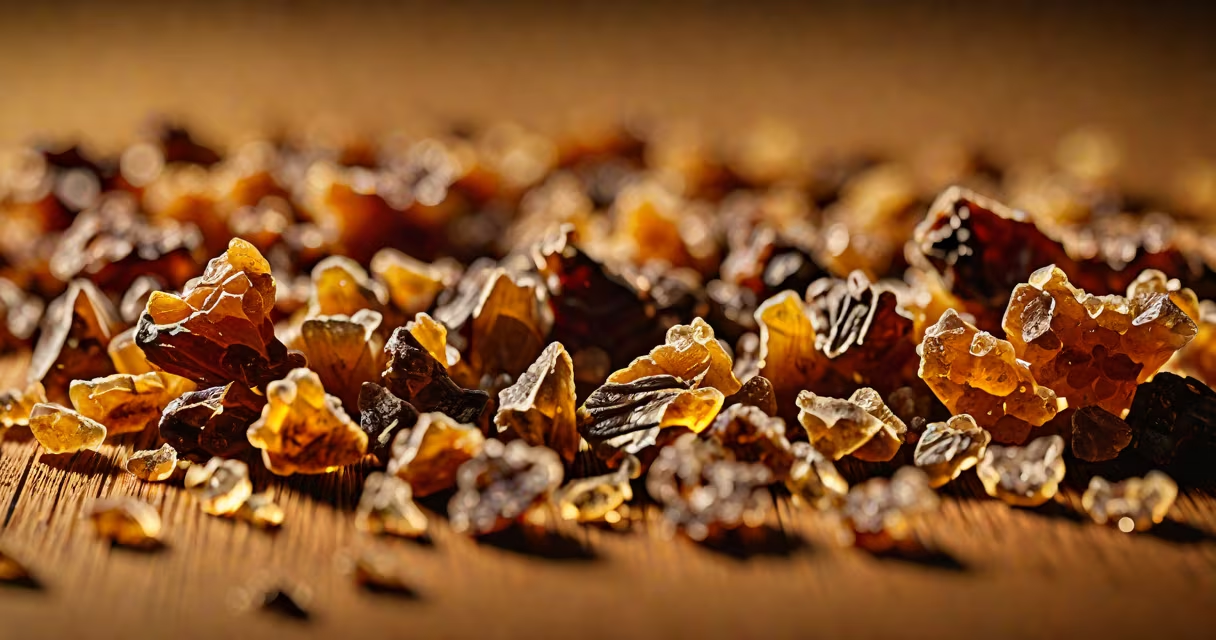
Frankincense is a fragrant resin exuded by trees in the genus Boswellia, primarily harvested from species native to the Horn of Africa and the Arabian Peninsula. It has been used for over 3,000 years in religious ceremonies, traditional medicine, and luxury perfumery.
The resin forms when the bark of a Boswellia tree is scored, releasing a milky sap that hardens into translucent beads upon exposure to air. These beads are collected, cleaned, and often burned as incense. The scent is sharp, woody, and slightly sweet-often described as earthy with hints of citrus and pine.
Historical records show frankincense was traded along the Incense Route, connecting southern Arabia to Egypt and the Mediterranean. Roman and Egyptian elites used it in temples and tombs. The Bible references it as one of the gifts brought to Jesus by the Magi, underscoring its sacred status.
Boswellia trees grow in arid regions where rainfall is limited and soil is poor. The most valuable species include Boswellia sacra, Boswellia carterii, and Boswellia papyrifera. Harvesting begins during dry seasons when resin flow is highest.
Harvesters make small cuts in the bark using curved knives. The resin oozes out and solidifies within hours. After 2-3 days, workers collect the hardened droplets. A single tree yields about 100-200 grams annually, depending on age and environmental conditions.
Resin is sorted by color and clarity. High-grade frankincense is pale yellow or clear, while lower grades appear darker due to oxidation or contamination. The best quality is used in perfumery and ritual burning; lower grades are processed into essential oils or sold for industrial use.
Not all frankincense is equal. Differences in species, region, and processing affect aroma, potency, and price. The following table outlines major types:
| Type | Source Region | Key Species | Aroma Profile | Use Case |
|---|---|---|---|---|
| Arabian frankincense | Oman, Yemen | Boswellia sacra | Citrus, balsamic, clean | Rituals, high-end perfumes |
| East African frankincense | Somalia, Ethiopia | Boswellia carterii | Woody, sweet, slightly fruity | Incense, aromatherapy |
| Indian frankincense | India (rare) | Boswellia serrata | Sharp, medicinal, pine-like | Traditional Ayurvedic medicine |
Arabian frankincense from Oman is considered the most prized. Its resin is harvested from wild trees growing in mountainous terrain, where altitude and climate improve terpenoid content-the compounds responsible for its complex scent. In contrast, Indian frankincense is used more for therapeutic applications than fragrance.
Frankincense appears in religious practices across Judaism, Christianity, Islam, and Hinduism. In Christian liturgy, it symbolizes divinity and sacrifice. During Mass, it is burned in censers to purify space and improve prayer. The Church of St. John in Jerusalem still uses frankincense in daily services.
In traditional medicine, frankincense has been studied for anti-inflammatory properties. A 2016 study published in *Phytomedicine* found boswellic acids-active compounds in frankincense-reduced inflammation in human cells. Another trial in *Journal of Ethnopharmacology* showed patients with osteoarthritis reported reduced pain after 90 days of supplementation.
Modern perfumery uses frankincense as a base note. It stabilizes volatile scents and adds depth. Brands like Tom Ford and Maison Margiela incorporate it in signature fragrances. For example, Tom Ford's *Black Orchid* features frankincense to balance floral and animalic notes.
Frankincense is often confused with myrrh, another resin from the Burseraceae family. While both come from similar trees and were traded together in antiquity, they differ in scent and chemical makeup. Myrrh is more bitter and medicinal, with a smoky, camphorous aroma. Frankincense is sweeter and more uplifting.
Another myth is that frankincense is extracted from the roots or leaves. It is not. Only the bark produces resin. Cutting too deeply damages the tree. Sustainable harvesting limits cuts to no more than three per year per tree, and harvesters avoid young trees under 10 years old.
Some commercial products labeled "frankincense" contain synthetic substitutes or diluted resins. True frankincense must be derived from Boswellia species. The International Organization for Standardization (ISO) sets standards for purity: ISO 11952 specifies that frankincense essential oil must contain at least 50% monoterpenes and sesquiterpenes.
I once attended a traditional Sufi ceremony in Morocco where frankincense was burned in a copper censer. The smoke curled slowly upward, carrying a warm, resinous scent that filled the room. Attendees closed their eyes and recited prayers in unison. The atmosphere felt suspended-time slowed. This wasn't just smell; it was sensory ritual.
Later, I compared three samples: one from Oman (pure, clear beads), one from Somalia (amber-colored, stronger scent), and a synthetic blend. The synthetic version had a harsh, artificial edge. The natural ones varied in intensity but shared a depth that synthetic formulas couldn't replicate. The difference was immediate and undeniable.
Authentic frankincense is available through specialty suppliers. Look for certifications such as Fair Trade or Organic. Reputable vendors list the species name, country of origin, and harvest date. Avoid products that don't specify sourcing.
When purchasing, verify that the product is not adulterated with fillers like sawdust or synthetic fragrances. A simple test: burn a small piece. Natural frankincense produces a steady, clean flame with little ash. Synthetic versions char quickly and leave black residue.
Frankincense is a sacred resin from Boswellia trees, valued for millennia in worship, healing, and scent. Its production requires careful harvesting, and its quality varies by species and region. Understanding the definition for frankincense includes recognizing its botanical origin, cultural role, and physical characteristics. Authentic frankincense remains rare and meaningful-far beyond a mere fragrance.