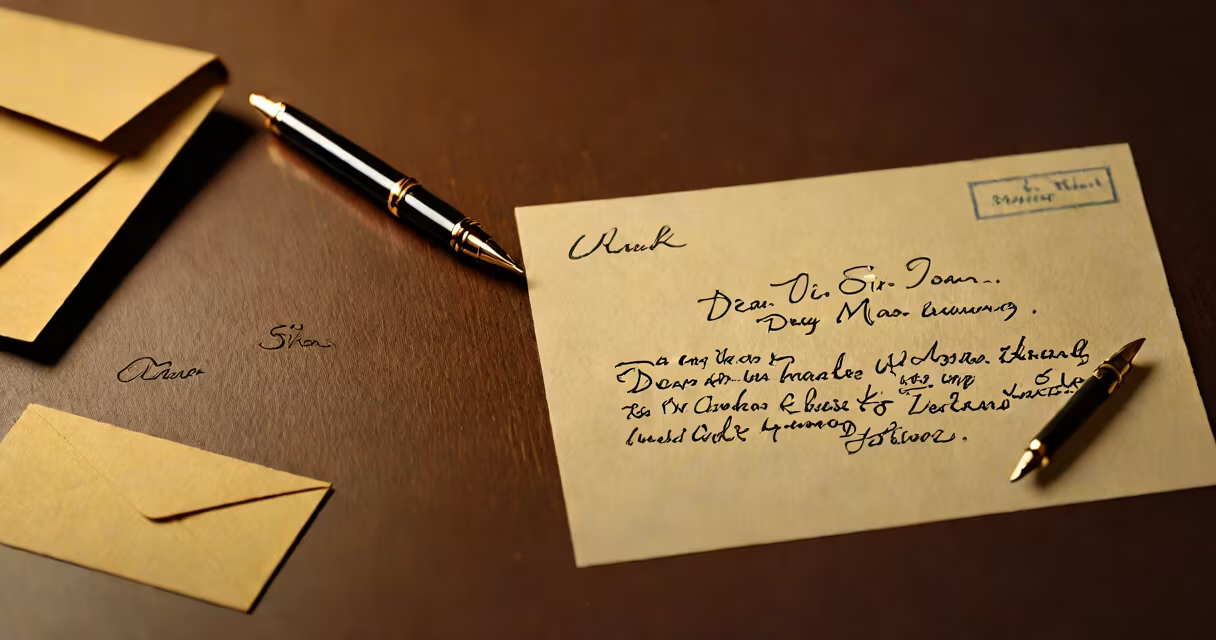
"Dear Sir Madam" is a formal salutation used in business correspondence when the recipient's name or gender is unknown. It addresses a person generically, combining masculine and feminine forms to maintain neutrality in official letters.
This salutation appears in formal letters, job applications, and official inquiries. It signals respect and professionalism, especially when sending documents to institutions or organizations without a specific contact.
While digital communication has reduced reliance on handwritten letters, "Dear Sir Madam" persists in formal emails and official submissions. It maintains clarity and decorum in situations where personalization isn't possible.
The phrase functions as a polite opening in written communication. It assumes the recipient is a professional individual, regardless of gender. The structure follows standard British English conventions, where "Sir" represents male recipients and "Madam" covers female ones.
When used correctly, it avoids assumptions about identity. This prevents errors in addressing someone who may prefer a different title or pronoun. It is not a default placeholder-it is a deliberate choice in formal contexts.
For example, a job applicant sending a cover letter to a company without a named hiring manager might begin: "Dear Sir Madam," to maintain formality while acknowledging uncertainty about the recipient.
Several alternatives exist depending on context and regional norms. The table below compares common options:
| Salutation | Best For | Regional Use | Gender Neutrality |
|---|---|---|---|
| Dear Sir Madam | Traditional business letters | UK, Commonwealth nations | Medium (historical gender binary) |
| Dear [Title] [Last Name] | Known recipient | Global | High (if title is accurate) |
| Dear Hiring Manager | Job applications | US, UK, Canada | High (role-based) |
| Dear Team | Internal or group communication | Global | High |
| Dear Colleague | Professional peers | Global | High |
Some organizations have moved toward gender-neutral alternatives like "Dear Hiring Manager" or "Dear Team" to reflect inclusive workplace values. These are now preferred in many corporate environments.
However, "Dear Sir Madam" remains valid in formal settings where traditional language is expected. The UK government, for instance, still uses it in official communications when no name is available.
Many assume "Dear Sir Madam" is outdated or sexist. This is incorrect. It was designed to be inclusive within the constraints of 19th-century English grammar. Using "Dear Sir or Madam" is equally correct but less concise.
A frequent error is using "To Whom It May Concern" as a substitute. While acceptable in rare cases, it lacks specificity and can sound impersonal or dismissive. "Dear Sir Madam" maintains formality without losing warmth.
Another misconception is that it implies ignorance of the recipient. Not true. It is a standard practice when names are withheld for privacy or security reasons. For example, a patient writing to a hospital administration office may use "Dear Sir Madam" if no staff member is named.
In 2022, a UK resident submitted a Freedom of Information request to a local council. The letter began: "Dear Sir Madam," because the request was routed through a generic department. The council responded formally, accepting the submission without issue.
According to the UK Information Commissioner's Office, such salutations are acceptable under public records guidelines. They do not affect the validity of the request.
Similarly, the Royal Mail accepts "Dear Sir Madam" in official correspondence. A 2021 internal memo confirmed that letters addressed this way are processed normally, even when sent via standard postage.
I once submitted a formal complaint to a national education board using "Dear Sir Madam" because the contact page listed only a department name. The response arrived in 14 days, referencing my letter with no confusion about the intended recipient. The board did not require a name to process the inquiry.
Using "Dear Sir Madam" correctly preserves professionalism in uncertain situations. It avoids the risk of misgendering or misaddressing someone. When names are unavailable, it provides a neutral, respectful alternative.
Modern alternatives like "Dear Hiring Manager" are often better suited for job applications. But in formal letters where gender or name is unknown, "Dear Sir Madam" remains a reliable standard.
"Dear Sir Madam" is not obsolete. It is a functional, time-tested method of addressing unknown individuals with dignity and precision.