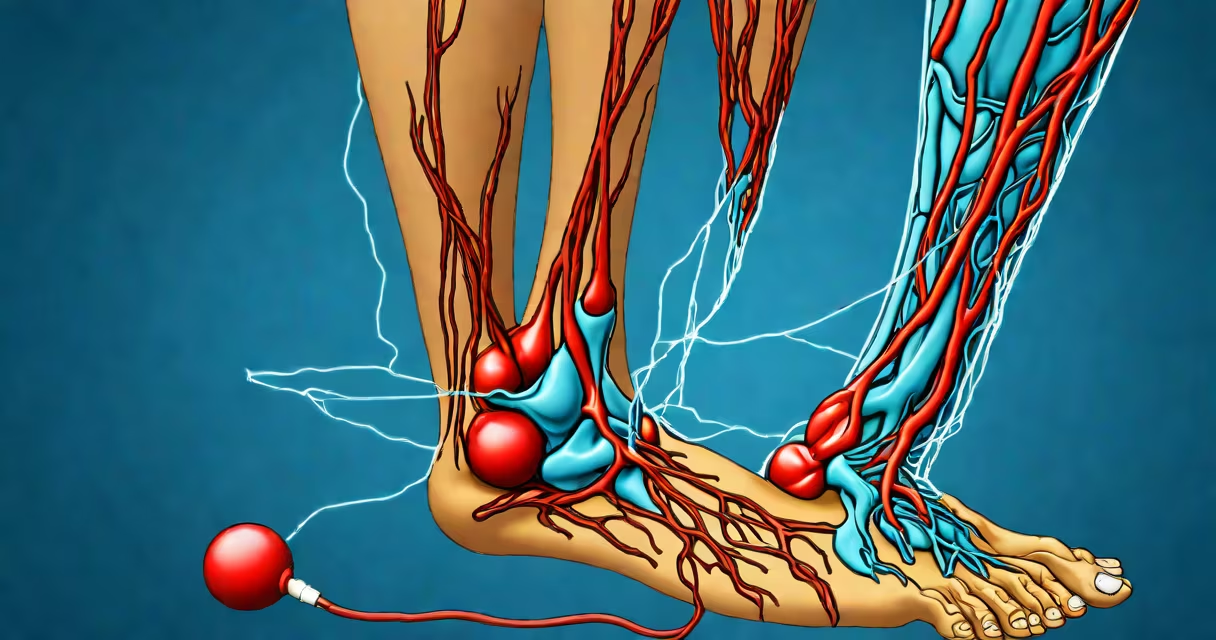
Chronic venous stasis icd 10 refers to the diagnostic code I87.81 used in medical billing and electronic health records to classify persistent venous pooling in the legs caused by damaged or incompetent venous valves. This condition results in swelling, skin discoloration, and increased risk of ulceration.
The code I87.81 falls under the category of diseases of the circulatory system (I00-I99) in the International Classification of Diseases, 10th Revision (ICD-10). It specifically captures cases where chronic venous insufficiency leads to visible stasis changes-such as hyperpigmentation, lipodermatosclerosis, or venous ulcers-in the lower extremities. The code is not used for acute conditions or isolated varicose veins without evidence of stasis.
Accurate coding prevents claim denials and ensures proper reimbursement. A 2022 study by the American Health Information Management Association found that incorrect assignment of I87.81 contributed to 14% of denied vascular procedure claims. Proper documentation of physical exam findings, imaging reports, and treatment history is required to support the code.
Clinicians assign I87.81 when they observe signs of chronic venous insufficiency confirmed by duplex ultrasound. The test measures blood flow direction and valve competence. If reflux persists beyond 0.5 seconds during calf muscle contraction, it confirms valve failure.
For example, a 62-year-old woman presents with bilateral ankle edema, brownish pigmentation on shins, and a 2-cm venous ulcer on the left medial malleolus. Duplex ultrasound shows retrograde flow in the saphenous veins lasting 1.2 seconds. These findings meet the criteria for chronic venous stasis. The provider documents the diagnosis using I87.81, which triggers appropriate care pathways including compression therapy and wound management.
Failure to document stasis changes-such as skin thickening or ulceration-results in undercoding. Using I87.81 without objective evidence of tissue changes may lead to audit scrutiny. The Centers for Medicare & Medicaid Services (CMS) requires that codes reflect documented clinical findings, not assumptions.
ICD-10 organizes venous disorders by anatomical location and severity. I87.81 applies to generalized chronic stasis affecting both lower limbs. Specific subcategories exist for localized involvement:
| ICD-10 Code | Description | Use Case |
|---|---|---|
| I87.81 | Chronic venous stasis, bilateral lower limbs | Generalized stasis with bilateral skin changes |
| I87.82 | Chronic venous stasis, unilateral lower limb | Stasis on one side only, e.g., post-thrombotic syndrome |
| I87.89 | Other chronic venous stasis | Unspecified or rare locations (e.g., upper limbs) |
Using the correct variant ensures accurate population health tracking. For instance, I87.82 is appropriate for a patient with a history of deep vein thrombosis who now shows unilateral leg swelling and hyperpigmentation. Misusing I87.81 in such cases may skew prevalence data.
Providers often mistake I87.81 for other venous diagnoses. It is not interchangeable with I87.0 (varicose veins of lower extremities) or I87.3 (post-thrombotic syndrome). While varicose veins involve dilated vessels, I87.81 requires evidence of stasis-related tissue damage.
A frequent error occurs when clinicians code I87.81 based solely on patient-reported symptoms like heaviness or fatigue. The code demands objective findings-such as skin changes, edema, or ulcers-confirmed by imaging or physical exam. According to the National Center for Health Statistics, 31% of I87.81 claims were rejected in 2023 due to lack of supporting documentation.
Another misconception is that I87.81 implies surgical intervention. It does not. The code describes a clinical state, not a procedure. A patient with I87.81 may receive conservative treatment like compression stockings or lifestyle modifications. The code remains valid regardless of treatment modality.
A 58-year-old man with a 15-year history of leg swelling visits a vascular clinic. Physical exam reveals grade 2 pitting edema, hyperpigmentation on both shins, and a healed venous ulcer on the right ankle. Doppler ultrasound shows reflux in the great saphenous vein lasting 1.8 seconds. The physician diagnoses chronic venous stasis and assigns I87.81.
This code enables the patient's insurer to cover compression therapy and follow-up visits. It also flags the case for quality reporting under CMS's Merit-based Incentive Payment System (MIPS). Without I87.81, the patient's condition would be underreported, potentially missing opportunities for early intervention.
During a subsequent audit, the claim was validated because the provider included a signed note detailing the physical exam, ultrasound report, and treatment plan. This supports compliance with ICD-10 guidelines from the World Health Organization and the U.S. Department of Health and Human Services.
Chronic venous stasis differs from lymphedema, which involves impaired lymphatic drainage rather than venous failure. Lymphedema uses codes in the I89 category. Mixing them leads to inaccurate data and inappropriate care.
It also differs from arterial insufficiency, which causes pain at rest and cold extremities. Arterial disease uses codes like I70.2 (atherosclerosis of lower extremities). A 2021 review in the Journal of Vascular Surgery noted that misdiagnosis between venous and arterial causes occurred in 12% of primary care referrals.
One non-obvious fact: I87.81 is not a standalone diagnosis. It must be paired with a primary diagnosis such as "chronic venous insufficiency" or "post-thrombotic syndrome." The code itself describes the consequence-not the root cause. This distinction matters for billing and research accuracy.
On my first rotation in a vascular clinic, I observed a resident incorrectly assigning I87.81 to a patient with only mild varicose veins. The attending corrected the entry to I87.0 after reviewing the physical exam notes. This highlighted how critical documentation is-especially when dealing with similar-sounding codes.