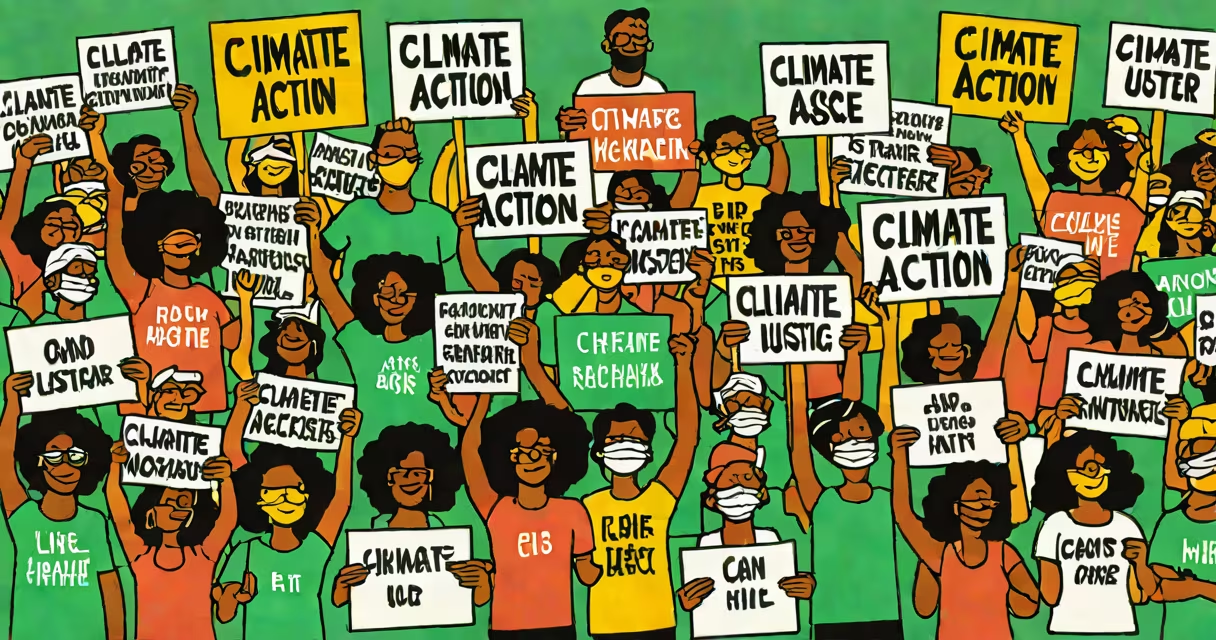
The typical liberal in contemporary American politics advocates for expanded government roles in ensuring economic fairness, protecting civil liberties, and advancing social equity through policy reform. This position emphasizes collective responsibility, evidence-based governance, and systemic change over individualism or tradition.
Liberalism in the U.S. emerged from the New Deal coalition of the 1930s and evolved through the Civil Rights Movement and the rise of identity politics. Today's typical liberal prioritizes policies that reduce inequality, such as progressive taxation, universal healthcare, climate regulation, and protections for marginalized groups. They often support federal oversight to correct market failures and ensure basic rights are upheld regardless of geography or income.
According to the Pew Research Center, 56% of Americans who identify as liberal say they believe the government should do more to improve living standards, compared to 25% of conservatives. Liberals are more likely to support government-funded programs like public transit, subsidized childcare, and student debt relief. These positions reflect a belief that structural barriers-like race, gender, and class-require targeted solutions rather than relying solely on personal effort.
The typical liberal operates on a structure that values both individual dignity and institutional accountability. They assume markets alone cannot deliver equitable outcomes, especially in areas like healthcare, education, and housing. As a result, they favor regulations and public investment to level the playing field.
For example, a typical liberal supports Medicare for All-not because they distrust private insurance, but because they see health as a human right, not a privilege. The Congressional Budget Office estimated that a single-payer system could reduce national healthcare spending by $450 billion annually while covering all currently uninsured Americans. This reflects a preference for efficiency and inclusion over profit-driven models.
Another key principle is intersectionality-the idea that overlapping identities (race, gender, disability, sexuality) create unique forms of oppression. A liberal policy response might include targeted funding for Black women-owned businesses or expanded mental health services in low-income neighborhoods. These approaches aim to address root causes, not just symptoms.
Modern liberalism draws from several intellectual traditions: classical liberalism (individual rights), social democracy (welfare state), and critical theory (analysis of power structures). The fusion of these strands defines the typical liberal stance today.
There are distinct subtypes within the liberal umbrella:
| Type | Core Focus | Policy Example | Source |
|---|---|---|---|
| Social Liberal | Civil rights, reproductive freedom, LGBTQ+ protections | Support for the Equality Act (2021) | Pew Research Center, 2022 |
| Economic Liberal | Progressive taxation, labor rights, wealth redistribution | Backing for the Build Back Better Act | Brookings Institution, 2021 |
| Environmental Liberal | Climate action, green infrastructure, clean energy mandates | Advocacy for the Inflation Reduction Act (2022) | Union of Concerned Scientists, 2023 |
These subtypes often overlap. A person supporting universal childcare may also back carbon taxes and police reform. The typical liberal doesn't hold rigid ideological purity-they prioritize results and moral consistency over doctrinal adherence.
Liberal principles shape legislation, court decisions, and cultural norms across the U.S. For instance, the Supreme Court's 2015 Obergefell v. Hodges ruling-which legalized same-sex marriage nationwide-was grounded in liberal jurisprudence emphasizing equal protection under the law.
In practice, liberals push for reforms that redistribute opportunity. Consider the Affordable Care Act (2010), which expanded Medicaid eligibility and created health insurance exchanges. The Kaiser Family Foundation reported that 20 million previously uninsured Americans gained coverage by 2016. This outcome illustrates how liberal policy aims to make essential services accessible, not optional.
A non-obvious distinction: the typical liberal does not oppose capitalism outright. Instead, they seek to regulate it. As economist Paul Krugman wrote in *The New York Times* (2020), "Liberals don't want to abolish markets-they want them to serve people, not the other way around." This nuance separates them from socialist or anarchist movements.
Many people equate "liberal" with "radical" or "anti-American." This misrepresents the typical liberal's actual views. According to a 2023 Gallup poll, 62% of self-identified liberals say they believe in American ideals like freedom and democracy-just as strongly as conservatives do. Their disagreement lies in how those ideals are implemented.
Another frequent error is conflating liberalism with progressivism. While many liberals are progressive, not all progressives are liberal. Progressives often advocate for more sweeping changes-such as abolishing ICE or ending fossil fuel subsidies-while the typical liberal favors incremental, legislatively achievable reforms.
Some assume liberals reject religion or patriotism. But surveys show that 43% of Americans who identify as liberal attend religious services at least monthly, according to the Pew Research Center. The typical liberal sees faith and civic duty as compatible with secular governance.
I once attended a town hall in Portland, Oregon, where residents debated a proposed rent control measure. A man in his 60s, identifying as liberal, spoke about his wife's medical bills and how rising rents were forcing seniors out of their homes. He didn't call for abolishing property rights-he asked for a cap on annual increases. His argument was rooted in fairness, not ideology. That moment clarified something: the typical liberal isn't defined by slogans. They're shaped by lived experience and a desire to reduce suffering through practical policy.
The typical liberal is not a monolith. There is no single "correct" liberal viewpoint. But across demographics, regions, and generations, a consistent pattern emerges: support for inclusive institutions, skepticism of unchecked power, and a commitment to measurable improvement in quality of life.
Understanding the typical liberal requires moving beyond caricature. They are not anti-work, anti-family, or anti-tradition. They are pro-equality, pro-opportunity, and pro-systemic change that benefits everyone-not just the wealthy or well-connected.