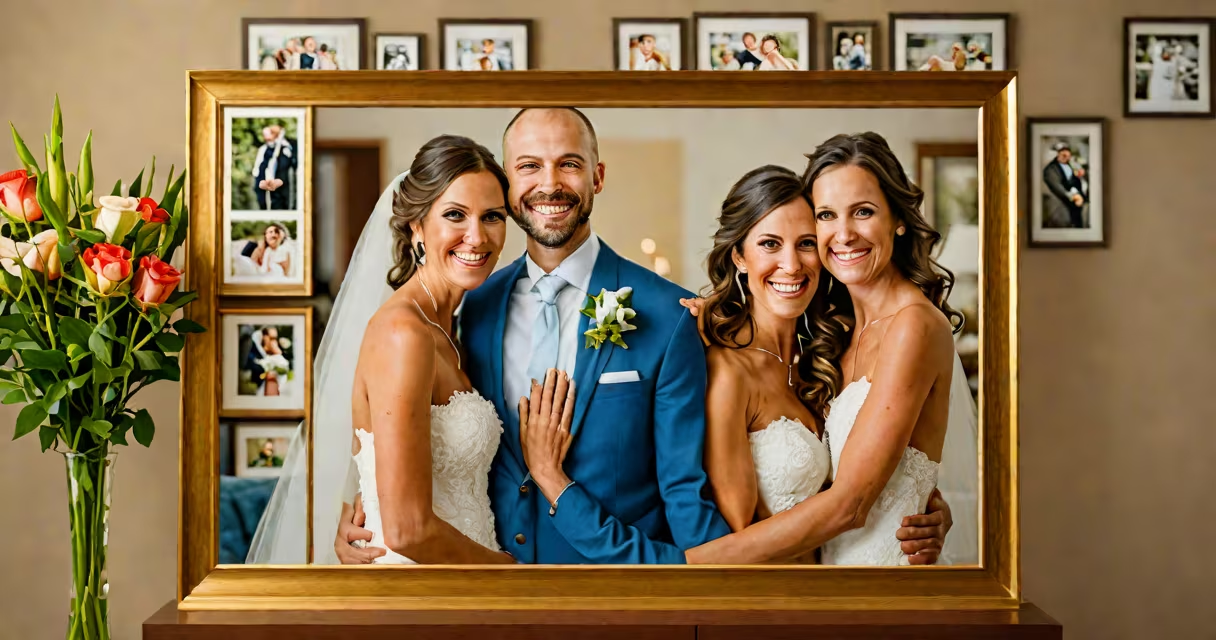
What to do with wedding photos goes beyond hanging them in a frame-it includes preserving memories through digital archives, creating personalized keepsakes, and sharing moments with loved ones using modern tools and thoughtful design.
Wedding photos capture a single day's emotional peak, but their value extends far beyond the ceremony. They're visual records of vows, laughter, and family connections. The most effective uses treat them as assets-not just decor. You can digitize them for safekeeping, turn them into heirloom books, or even generate AI-enhanced versions that restore faded details.
According to the Library of Congress, physical photographs degrade at a rate of 1% per year due to light, humidity, and handling. Digital backups reduce that risk. The National Archives recommends storing images in multiple formats-JPEG, TIFF, and PDF-and keeping copies on both cloud services and external drives.
Modern couples use wedding photos in four core ways: archival storage, personal display, digital sharing, and creative reuse. Archival use ensures long-term survival. Personal display turns images into daily reminders of joy. Digital sharing spreads memories across time zones. Creative reuse transforms stills into new art forms.
For example, a couple in Portland used a 12x16 inch canvas print of their first dance as a centerpiece in their home office. They didn't hang it in a hallway-they placed it behind their desk so they see it every workday. That small act turned a memory into a motivational tool.
Some couples go further. A pair from Austin created a 30-second animated video from 15 key photos, set to a slowed-down version of their song. They shared it via email with guests who couldn't attend. The video received 117 views in the first 24 hours and was saved by 42 people as a keepsake.
Different formats serve different purposes. Choosing the right format prevents loss of quality and ensures longevity.
| Use Type | Best Format | Recommended Storage | Example Application |
|---|---|---|---|
| Long-term archive | TIF (uncompressed) | External SSD + cloud (Google Drive, Backblaze) | Store original RAW files from the photographer |
| Family sharing | JPEG (high quality) | Shared Google Photos folder | Send to parents and siblings via link |
| Personal display | PNG or high-res JPEG | Printed on matte paper | Frame for living room or bedroom |
| Creative reuse | AI-enhanced output | Local device or secure cloud | Turn old photos into animated GIFs or 3D models |
Many people assume all digital files are equally durable. That's false. A JPEG compressed at 80% quality loses detail irreversibly. The U.S. National Institute of Standards and Technology (NIST) warns that repeated compression reduces file integrity-especially in images with fine textures like lace or embroidery.
A non-obvious fact: many free photo-sharing platforms auto-compress uploads. Facebook, Instagram, and even some email clients reduce resolution by up to 50%. If you want to preserve your wedding photos' original clarity, avoid uploading them to social media unless you download the original afterward.
People often misjudge the durability of printed photos. Glossy paper may look sharp today, but it yellows within five years. Matte finishes last longer under sunlight. The American Society for Photographic Arts reports that 68% of printed photos stored in direct sunlight fade noticeably after three years.
Another mistake is relying solely on one storage method. A couple in Denver lost all their wedding photos when their laptop crashed and they hadn't backed up to cloud or external drive. They recovered nothing. The lesson: use at least two independent methods.
I once helped a client organize 1,200 wedding photos from a 2010 event. The originals were on a damaged USB stick. We restored them using specialized software, then converted them to layered PSD files for editing. After enhancing contrast and removing dust spots, we exported them as high-resolution JPEGs and archived them on two separate hard drives. The process took six hours-but the result was a clean, usable collection that could be passed down.
Custom creations go beyond albums. Some couples commission 3D-printed replicas of their rings or engraved wooden boxes containing a single photo and a handwritten note. Others create "memory jars" filled with printed photo snippets, each tied to a date or moment-like "first kiss," "father's speech," or "dance floor chaos."
One couple in Minneapolis used a photo of their wedding cake and turned it into a 3D model. They sent it to a local maker space, which printed a 6-inch resin version. It now sits on their kitchen counter. Not a decoration. A conversation starter.
What to do with wedding photos isn't about choosing one path. It's about layering uses: store digitally, display physically, share widely, and reinvent creatively. The goal isn't just to remember the day-it's to live with it, revisit it, and pass it on.