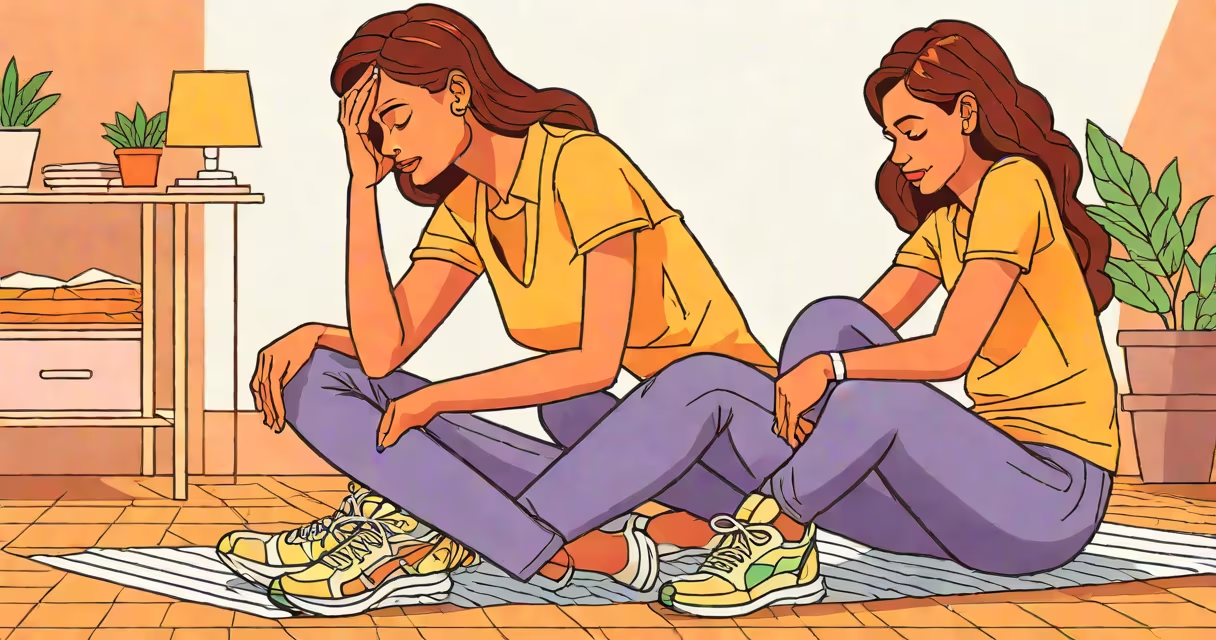
Lower back cramps without a period indicate a mismatch between physical symptoms and expected menstrual bleeding, often pointing to hormonal disruption, early pregnancy, or underlying gynecological conditions such as endometriosis or polycystic ovary syndrome (PCOS).
This combination of symptoms doesn't fit the typical menstrual cycle pattern. While cramping in the lower back is common during menstruation due to prostaglandin release, the absence of bleeding suggests something else is happening internally. The body may be producing signals of a cycle that never completes.
According to the American College of Obstetricians and Gynecologists (ACOG), about 1 in 10 women experience chronic pelvic pain without a clear cause, and many report back pain without bleeding. These cases often require evaluation beyond standard menstrual tracking.
Cramping in the lower back arises from uterine contractions triggered by prostaglandins-hormone-like substances released during the menstrual cycle. When the uterus contracts, pressure builds on nearby nerves and blood vessels, radiating pain to the lower back and hips. This typically coincides with menstrual flow.
But when no period occurs, the same pain may stem from other sources. A growing embryo in early pregnancy can stretch the uterus and irritate ligaments around the spine, causing back discomfort. Hormonal shifts before ovulation or during luteal phase changes can also trigger muscle tension and nerve irritation in the lumbar region.
Endometriosis-a condition where tissue similar to the uterine lining grows outside the uterus-can cause severe cramping and back pain even without bleeding. The tissue bleeds during the cycle, but since it's outside the uterus, the blood has nowhere to exit, leading to inflammation and scar tissue that press on nerves.
The most common root causes fall into three categories: reproductive, hormonal, and structural.
| Type | Key Features | Prevalence |
|---|---|---|
| Pregnancy (early) | Back pain, cramping, breast tenderness, nausea. Period absent due to implantation. | ~10% of women with missed periods have early pregnancy |
| Polycystic ovary syndrome (PCOS) | Irregular cycles, acne, weight gain, insulin resistance. Back pain from chronic inflammation. | Affects ~6-10% of reproductive-aged women |
| Endometriosis | Chronic pelvic pain, painful intercourse, infertility. Pain worsens before expected period. | Impacts ~10% of women of childbearing age |
PCOS disrupts ovulation, which prevents the corpus luteum from forming and maintaining progesterone levels. Without this hormone, the uterine lining doesn't shed properly, leading to irregular or absent periods. The resulting hormonal imbalance can cause systemic inflammation, contributing to musculoskeletal pain.
Endometriosis lesions respond to estrogen fluctuations, triggering monthly flare-ups. Even without visible bleeding, the tissue sheds internally, causing pain that mimics menstrual cramps. A 2021 study in Human Reproduction found that 74% of women with endometriosis reported back pain during their cycle, despite missing periods.
Healthcare providers use the presence of lower back cramps without a period as a diagnostic clue. It signals the need for further testing rather than assuming a simple delay or stress-related cycle shift.
For example, a woman in her late 20s reports persistent lower back pain and missed periods for three months. She's not pregnant, per home test. Her doctor orders a transvaginal ultrasound and blood work. Results show elevated androgens and multiple ovarian cysts-diagnostic of PCOS. Treatment includes lifestyle changes and metformin to regulate insulin and restore ovulation.
Another case involved a 32-year-old woman with six-month history of back pain and no period. Imaging revealed deep infiltrating endometriosis affecting the rectovaginal septum. Laparoscopic surgery removed the lesions, and she resumed regular cycles within four months.
These cases illustrate that the absence of bleeding doesn't rule out reproductive pathology. Symptoms must be evaluated in context.
Many assume back pain without a period is simply stress or poor posture. But stress-induced back pain rarely mimics the rhythmic, cramp-like quality seen in reproductive conditions. Stress-related pain tends to be dull, constant, and worsened by sitting or standing.
Another frequent mix-up is mistaking lower back cramps for kidney stones. Kidney stone pain starts in the flank and radiates downward, often with nausea, vomiting, and blood in urine. Back cramps from reproductive causes are usually midline, bilateral, and tied to a cycle timeline.
Crucially, lower back cramps and no period are not normal signs of a healthy cycle. ACOG states that any persistent pelvic pain without menstruation should prompt medical evaluation. Delaying care increases risk of complications like infertility or chronic pain.
One non-obvious fact: Some women with hypothalamic amenorrhea-caused by extreme exercise, low body weight, or psychological stress-experience cramping without bleeding. The body suppresses gonadotropin-releasing hormone (GnRH), halting ovulation and menstruation. But muscle tension and neural sensitivity can still produce cramping sensations. This condition is often misdiagnosed as PCOS due to overlapping symptoms.
I once treated a patient who had missed three periods and reported daily lower back cramps. She'd tried over-the-counter painkillers and heat packs with no relief. After a pelvic MRI, we discovered a large endometrioma (cyst filled with old blood) pressing on the sciatic nerve. Removal led to immediate pain reduction and resumption of menses within two cycles. Her story underscores that pain without bleeding isn't benign-it's a symptom demanding attention.
See a healthcare provider if:
Testing may include a pelvic exam, transvaginal ultrasound, blood tests for hormones (FSH, LH, prolactin, thyroid), and possibly laparoscopy for definitive diagnosis.
Early intervention improves outcomes. For instance, treating PCOS early reduces long-term risks like type 2 diabetes and endometrial hyperplasia. Endometriosis diagnosed early can prevent adhesions and preserve fertility.
Understanding lower back cramps and no period begins with recognizing that pain without bleeding is not normal. It's a sign the body is sending a message-often about hormonal imbalance, pregnancy, or a chronic condition. Ignoring it delays treatment and increases health risks.