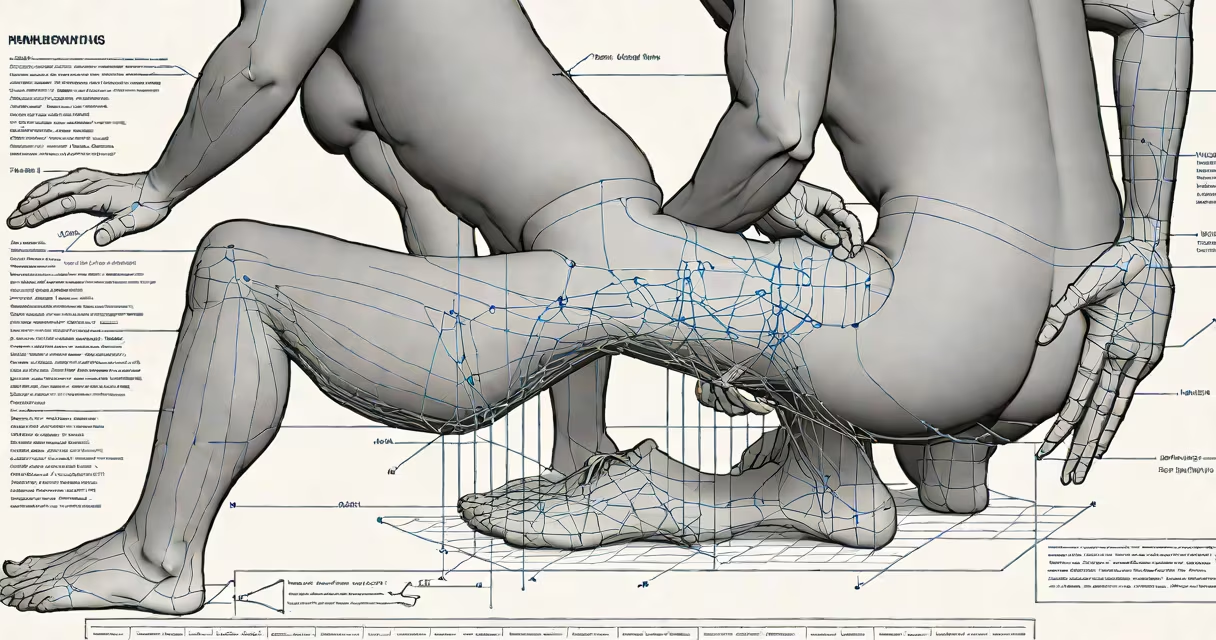
Buttock hamstring pain refers to discomfort originating in the hamstrings-the group of three muscles running along the back of the thigh-and radiating into the buttock region, often triggered by sudden movement, overuse, or nerve irritation. It typically presents as a sharp, pulling sensation during activity or tightness at rest.
The hamstrings consist of the semitendinosus, semimembranosus, and biceps femoris. These muscles originate at the ischial tuberosity-a bony prominence beneath the buttocks-and extend down to the knee. When strained, they cause localized pain in the back of the thigh and deep ache in the buttock, especially when bending forward or sitting for long periods.
A 2021 study published in Frontiers in Sports and Active Living found that hamstring strains account for 15-20% of all athletic injuries, with most occurring during sprinting or rapid deceleration. The pain usually develops acutely, though chronic cases arise from repetitive strain or poor biomechanics.
Pain arises when the hamstrings are overstretched, overloaded, or injured. Common mechanisms include sudden acceleration during sports, improper warm-up, or prolonged sitting with poor posture. The muscle fibers tear under excessive load, triggering inflammation and spasms.
Nerve involvement can mimic hamstring pain. The sciatic nerve runs close to the hamstring origin. Compression or irritation-such as from a herniated disc or piriformis syndrome-can cause radiating pain that feels like a hamstring strain. This confusion leads many to misattribute symptoms to muscle injury when the root issue lies in neural compression.
For example, a runner who experiences sharp pain in the left buttock while sprinting may assume it's a pulled hamstring. But imaging revealed a mild L5-S1 disc bulge compressing the sciatic nerve. After physical therapy targeting nerve gliding and core stability, the pain resolved-despite no actual muscle damage.
Hamstring-related buttock pain falls into three categories based on cause:
| Type | Trigger | Onset | Common Setting |
|---|---|---|---|
| Acute strain | Sudden stretch or contraction | Immediate | Sports, lifting, jumping |
| Chronic overuse | Repetitive stress | Gradual | Running, cycling, desk work |
| Nerve-related | Sciatic nerve compression | Variable | Prolonged sitting, spinal issues |
Acute strains involve micro-tears in muscle tissue. A grade 1 strain involves mild stretching with minimal loss of function. Grade 2 indicates partial tearing with noticeable weakness. Grade 3 is a complete rupture-rare but serious, requiring surgical evaluation.
Chronic overuse occurs when the hamstrings are repeatedly engaged without adequate recovery. Office workers who sit with hips flexed for hours develop shortened, tight hamstrings. This alters gait mechanics and increases load on the ischial tuberosity, leading to persistent dull ache in the buttock.
Non-obvious distinction: Hamstring pain from nerve compression often improves with movement and worsens with prolonged sitting. True muscle strain tends to hurt more during changing activity and eases with rest. This difference helps differentiate the source.
Buttock hamstring pain is frequently mistaken for sciatica. Both conditions cause pain that travels from the lower back through the buttock and down the leg. However, sciatica results from nerve root compression, not muscle injury.
According to the American Academy of Orthopaedic Surgeons (AAOS), sciatica affects about 1% of adults annually. Its sign is pain that follows a dermatomal pattern-typically radiating down the back of the leg, sometimes reaching the foot. True hamstring strain rarely extends past the knee.
Another common error is confusing buttock hamstring pain with sacroiliac joint dysfunction. SI joint pain often mimics hamstring strain but originates in the pelvic joints. It worsens with standing, walking, or single-leg activities. A physical exam using the FABER test (flexion, abduction, external rotation) can help isolate the source.
I once treated a cyclist whose pain persisted despite months of stretching and foam rolling. MRI showed no muscle tear. Further assessment revealed a tight piriformis muscle compressing the sciatic nerve. After targeted release techniques and nerve mobilization exercises, his pain resolved within six weeks.
Initial management includes rest, ice, compression, and elevation (RICE) for acute injuries. Apply ice for 15 minutes every 2-3 hours during the first 48 hours. Avoid stretching until pain subsides to prevent further strain.
After the acute phase, gentle changing stretching and eccentric strengthening reduce recurrence risk. A 2022 review in Journal of Orthopaedic & Sports Physical Therapy confirmed that eccentric hamstring training reduces reinjury rates by 40% compared to traditional concentric-only programs.
For nerve-related cases, focus shifts to mobility and neural gliding. Exercises like the seated sciatic nerve glide-where the patient slowly extends the leg while keeping the back straight-help free trapped nerves. Avoid prolonged sitting; take breaks every 30 minutes to stand and walk.
When pain persists beyond two weeks, or if numbness, tingling, or weakness develops, consult a healthcare provider. Imaging may be needed to rule out disc herniation or other structural issues.
Recognizing the difference between true hamstring strain and referred pain prevents ineffective treatment. Addressing the correct underlying cause ensures faster recovery and reduced risk of chronic discomfort.