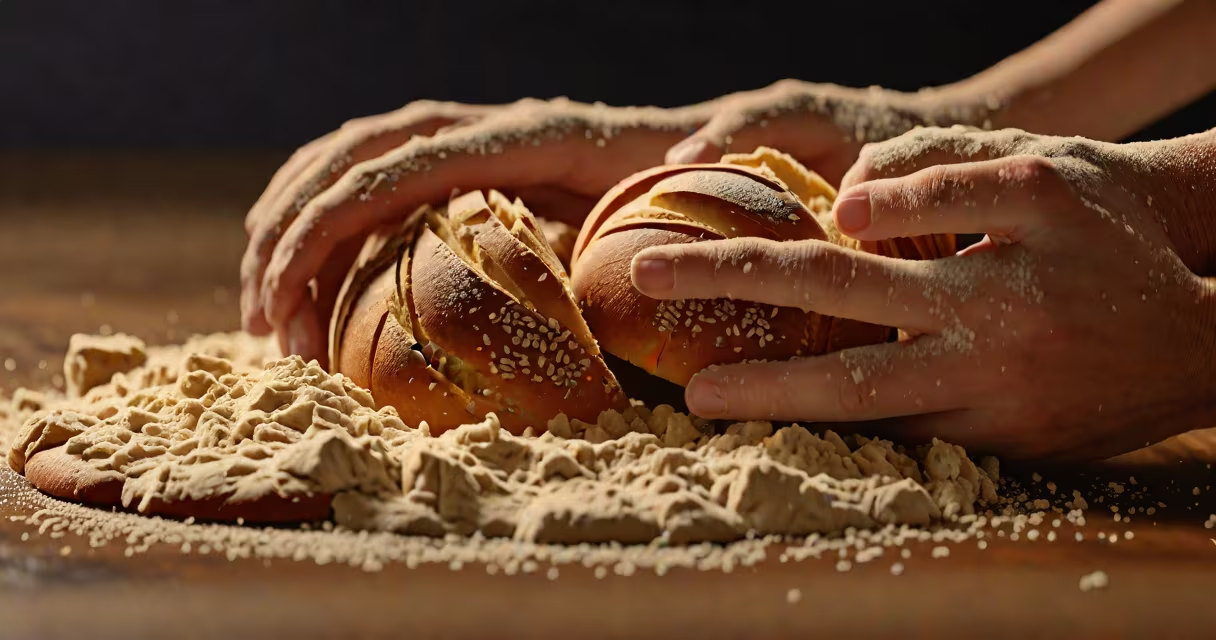
bread make it with you is a practical, experiential method of baking bread from scratch using basic ingredients and manual techniques. It emphasizes personal involvement in every stage-from mixing flour and water to shaping, proofing, and baking. The phrase reflects a philosophy of cooking as a tactile, mindful act rather than following rigid instructions.
The core idea behind bread make it with you is that bread isn't just food-it's a process shaped by your hands, timing, and attention. You don't need a stand mixer or commercial yeast. A simple mix of flour, water, salt, and a natural leavening agent like a sourdough starter or wild yeast captured from the air can produce a loaf with complex flavor and chewy texture. This method prioritizes understanding over speed.
According to the U.S. Department of Agriculture, homemade bread retains more nutrients than store-bought versions due to minimal processing and absence of preservatives. The American Bakers Association notes that home bakers who engage in full-process methods report higher satisfaction and better retention of skills compared to those using pre-made mixes.
At its heart, bread make it with you relies on fermentation and mechanical manipulation. You begin by combining flour and water to form a sticky dough. Over time, naturally occurring yeasts and bacteria in the environment-especially in flour and on kitchen surfaces-start breaking down starches into sugars. These microbes feed on the sugars and release carbon dioxide, which causes the dough to rise.
After mixing, you stretch and fold the dough every 30 minutes for 2-3 hours. This builds gluten structure without kneading. Then, you let it rest overnight in the refrigerator-a technique called cold fermentation. This slows microbial activity, allowing flavors to develop deeply. After shaping, the dough proofs at room temperature for 2-4 hours before going into a hot oven.
A 2021 study published in the Journal of Food Science found that cold fermentation increased bread's digestibility by 18% compared to warm-fermented loaves. The slower rise allows enzymes to break down phytic acid, reducing its interference with mineral absorption.
Basic ingredients for bread make it with you are flour, water, salt, and a leavening agent. Flour provides structure through gluten formation. Water activates the enzymes and hydrates the starch. Salt controls fermentation and enhances flavor. The leavening agent-either a sourdough starter or wild yeast-drives the rise.
| Type | Leavening Agent | Fermentation Time | Flavor Profile | Best For |
|---|---|---|---|---|
| Sourdough | Live culture of wild yeast and lactobacilli | 12-48 hours | Tangy, complex, slightly acidic | Artisanal loaves, long shelf life |
| Wild Yeast | Spontaneously captured from air and surfaces | 6-12 hours | Mild, earthy, variable | Beginner experiments, low maintenance |
| Commercial Yeast | Lab-cultured Saccharomyces cerevisiae | 1-2 hours | Neutral, sweet, predictable | Quick results, consistent texture |
Many home bakers start with wild yeast because it requires no purchased starter. To create one, mix equal parts flour and water in a jar, leave it uncovered at room temperature, and feed it daily with more flour and water. After 3-5 days, bubbles appear-proof of microbial activity. Once active, it can leaven dough.
One common misconception is that bread make it with you demands perfection. In reality, even failed loaves teach you about hydration levels, fermentation cues, and oven spring. I once baked a dense, flat loaf because I skipped the bulk fermentation step. The crust cracked under pressure, but the interior had a rich, nutty aroma. I learned that skipping steps alters texture more than ingredients.
bread make it with you is used in homes, community kitchens, and educational programs focused on food literacy. Schools in California and Oregon have adopted it in nutrition curricula to teach students about fermentation, microbiology, and sustainable eating. The National Farm to School Network reports that 68% of participating schools saw improved student engagement in science classes after introducing bread-making projects.
It's also popular among people seeking alternatives to processed foods. The average supermarket loaf contains additives like calcium propionate and mono- and diglycerides. Homemade bread eliminates these. According to the Center for Science in the Public Interest, removing preservatives reduces exposure to potentially allergenic compounds.
Another reason for its popularity is resilience. During the early months of the pandemic, searches for "how to make bread" spiked 300% in the U.S., according to Google Trends. People turned to bread make it with you as a way to regain control during uncertainty. The act of creating something tangible from four ingredients offered psychological comfort.
People often mistake bread make it with you for sourdough exclusively. While sourdough is a major form, the method applies to any hand-based, fermentation-driven bread. Wild yeast breads, though less stable, are valid expressions of the practice.
Another error is assuming high hydration means failure. A dough with 80% hydration (800g water per 1000g flour) is challenging but manageable. It requires patience and proper technique. The key is not avoiding wet doughs, but learning how to handle them. A well-developed gluten network supports high-hydration doughs.
Some believe you need special tools. You don't. A bowl, spoon, and clean countertop suffice. A Dutch oven or cast iron pot improves oven spring but isn't essential. I baked my first loaf in a regular baking sheet using a home-made oven thermometer to monitor heat. The crust was uneven, but the crumb was open and airy-proof that results come from process, not equipment.
Bread make it with you is not a single recipe. It's a mindset: that food can be made with care, intuition, and presence. capturing wild yeast from your kitchen window, the act of making bread becomes a ritual of connection-to ingredients, to time, and to yourself.