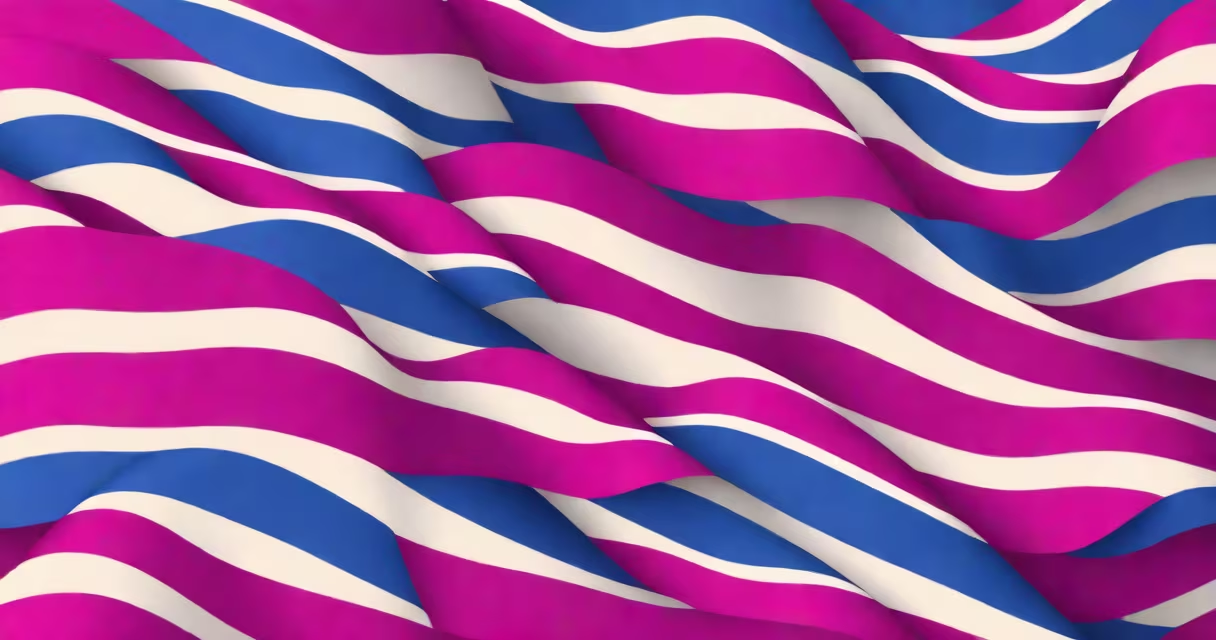
The bisexual flag color backgrounds consist of magenta, pink, and blue horizontal stripes, representing attraction to more than one gender. The design was created in 1998 by Michael Page and has since become a recognized symbol of bisexual identity.
Each color holds symbolic meaning. Magenta represents same-gender attraction, pink represents opposite-gender attraction, and blue represents attraction to both or all genders. The overlapping center stripe, often pink, blends the outer colors to reflect the fluidity of bisexual identity.
These color combinations are used in digital and physical contexts - on websites, social media profiles, clothing, and event signage. They appear as solid blocks, gradients, or layered patterns. The most common format uses three equal horizontal bands, though variations exist in design and application.
The arrangement of the bisexual flag's colors follows a specific sequence: magenta at the top, pink in the middle, and blue at the bottom. This layout ensures visual consistency across platforms and materials.
Magenta and blue are primary colors in the RGB model. When mixed, they produce purple - a hue sometimes associated with bisexuality in informal contexts. However, the official flag uses magenta (not red), which is a distinct shade close to fuchsia. Using the correct color prevents misrepresentation.
A common mistake is replacing the central pink stripe with white or gray. This alters the flag's intended message. The pink stripe is not a neutral space - it actively connects the other two colors, symbolizing the intersection of attractions.
Bisexual flag color backgrounds appear in several forms, depending on context and platform:
| Type | Use Case | Color Application | Example |
|---|---|---|---|
| Solid Bands | Website headers, profile pictures | Three horizontal stripes in exact flag colors | Profile banner on Twitter using magenta-pink-blue bands |
| Gradient Overlap | Artwork, posters, merchandise | Smooth blending between adjacent colors | Printed t-shirt with gradient from magenta to blue |
| Pattern Overlay | Background textures, website themes | Repeating small flag segments or diagonal lines | Website background with rotated flag tiles |
Some designers use the flag colors in abstract ways - such as diagonal splits or circular arrangements - but these versions are not officially recognized. The standard remains the three horizontal stripes.
Bisexual flag color backgrounds serve visibility and affirmation purposes. They appear during Pride Month, on LGBTQ+ advocacy websites, and in community events. Their presence signals inclusion and recognition of bisexual individuals.
On social media, users apply the flag as profile picture backgrounds to express identity. Platforms like Instagram and TikTok see frequent use of the flag in posts about mental health, coming out stories, and relationship experiences.
A notable example occurred in 2022 when a major tech company updated its internal communication tool to allow employees to set the bisexual flag as a desktop background option. The move was part of a broader diversity initiative and received coverage in Human Rights Campaign and Pride.com.
One widespread error is equating the bisexual flag with the pansexual flag. While both use magenta, cyan, and yellow, the pansexual flag features cyan instead of pink and blue. Confusing them undermines accurate representation.
Another misconception is that the flag's colors represent emotional states or romantic preferences. The colors do not stand for feelings like love or loneliness. They specifically denote patterns of attraction - not emotions.
A less obvious point: the flag's colors are not chosen arbitrarily. The original design document by Michael Page specifies that magenta and blue were selected because they are "distinct yet complementary," avoiding hues that might blend too closely or clash visually.
In 2021, a nonprofit in Portland launched a public art installation called "Visibility Wall." The project invited local artists to create murals using the bisexual flag color backgrounds. One mural used a 12-foot-wide canvas with a gradient effect transitioning from magenta to blue across the center.
The artist, Maya Tran, reported that viewers frequently stopped to ask about the meaning of the colors. She noted that people unfamiliar with the flag assumed the pink band represented "femininity" or "romance." She corrected them by explaining the symbolism of attraction.
Using bisexual flag color backgrounds correctly supports authentic representation. Avoid altering the official color sequence or substituting colors. When applied accurately, these backgrounds affirm identity and promote understanding.