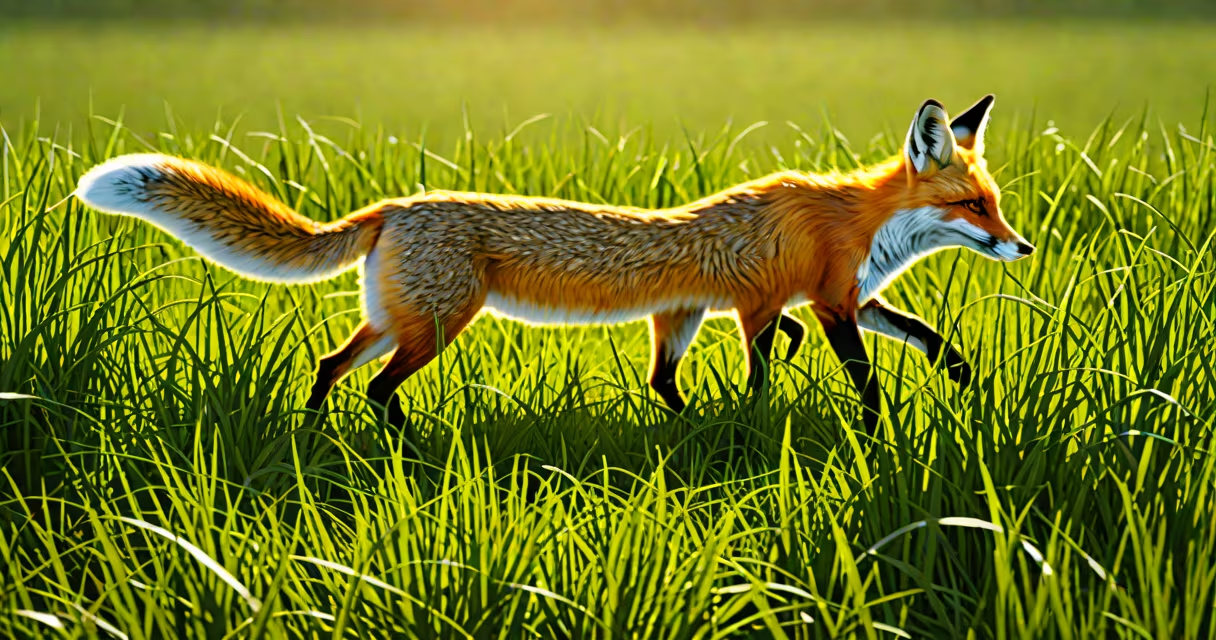
A secondary consumer is a predator that feeds on primary consumers-organisms that eat plants. These animals occupy the second trophic level above producers in a food chain and play a key role in energy transfer within ecosystems.
Secondary consumers are typically carnivores or omnivores. They consume herbivores such as rabbits, insects, or small rodents. Examples include frogs, snakes, birds of prey, and small mammals like foxes. Their position in the food web helps regulate populations of primary consumers and maintains balance in ecological systems.
According to the U.S. Geological Survey, energy flows through ecosystems in predictable steps: producers (plants) capture solar energy, primary consumers (herbivores) convert it into biomass, and secondary consumers obtain energy by consuming those herbivores. This flow supports biodiversity and system resilience.
Energy transfer between trophic levels is inefficient. Only about 10% of energy from one level moves to the next-a principle known as the 10% rule. A rabbit eating grass stores roughly 10% of the grass's energy as body mass. When a fox eats that rabbit, it gains only about 10% of the rabbit's stored energy. The rest is lost as heat, waste, or used for metabolic processes.
This inefficiency limits the number of top predators in any system. For example, in a forest food web, a single owl may require dozens of field mice annually. Without sufficient mouse populations, the owl cannot survive. This interdependence underscores the importance of secondary consumers in maintaining stable food webs.
When secondary consumers decline due to habitat loss or overhunting, primary consumer populations often surge. This can lead to overgrazing and plant depletion. In Yellowstone National Park, the reintroduction of wolves-the apex predators-helped restore balance by reducing elk numbers, which allowed vegetation to recover.
Secondary consumers fall into two broad categories based on diet:
| Type | Diet | Examples | Ecological Role |
|---|---|---|---|
| True carnivores | Exclusively meat-based | Frogs, snakes, owls | Regulate herbivore populations |
| Omnivores | Meat and plant matter | Some birds, raccoons, bears | Flexible feeders; adapt to changing food availability |
While true carnivores rely solely on animal prey, omnivorous secondary consumers can switch between plant and animal sources. This flexibility allows them to persist during seasonal changes or resource scarcity. For instance, American crows eat insects in spring but scavenge berries and carrion in winter.
Many secondary consumers are opportunistic. A red-tailed hawk may hunt mice in open fields but switch to birds or reptiles depending on availability. This adaptability enhances survival in variable environments.
One widespread error is equating secondary consumers with apex predators. Apex predators-like lions, eagles, or sharks-are at the top of the food chain and have no natural predators. However, many secondary consumers are themselves prey. A snake may be a secondary consumer when it eats a frog, but it becomes a tertiary consumer when eaten by a hawk.
Another misunderstanding is assuming all secondary consumers are large or aggressive. Not true. Many are small and inconspicuous. A praying mantis, for example, is a secondary consumer that hunts aphids and other insects. Its size belies its role in controlling pest populations in agricultural fields.
Secondary consumers do not directly consume plants. While some species may incidentally ingest plant material (e.g., seeds in a rodent's stomach), their primary energy source is animal tissue. Confusing them with omnivores that eat both plants and animals requires careful attention to diet composition.
Consider a freshwater pond system. Algae and aquatic plants form the base-producers. Water fleas and mosquito larvae feed on them, making them primary consumers. Frogs, which eat these small invertebrates, are secondary consumers.
In a study published by the Nature Portfolio, researchers found that ponds with healthy frog populations had lower densities of disease-carrying mosquitoes. By consuming mosquito larvae, frogs reduced the risk of West Nile virus transmission to humans and wildlife.
When pesticides or pollution eliminate frogs, mosquito numbers spike. This disrupts the entire food web and increases disease risk. The presence of secondary consumers like frogs is therefore not just biological trivia-it's essential for public health and environmental stability.
I once helped students at a local school set up a wildlife observation station near a wooded edge. Over six weeks, they recorded 14 species of birds, including blue jays and robins. Field guides confirmed these were secondary consumers-they fed primarily on caterpillars, beetles, and earthworms.
When the students noticed fewer insects and bird sightings during a dry summer, they correlated this with reduced frog activity. The absence of amphibians disrupted the food chain. This hands-on project showed how even small ecosystems depend on secondary consumers to maintain function.
Recognizing secondary consumers helps explain system dynamics, conservation priorities, and human impacts. Habitat fragmentation, invasive species, and climate change affect these animals disproportionately. For example, rising temperatures reduce insect abundance, which then starves insectivorous birds.
Conservation efforts must account for multi-level interactions. Protecting a single species is insufficient if the food web remains unstable. Restoring habitats often involves reintroducing secondary consumers to rebalance ecosystems.
Understanding what is a secondary consumer isn't academic-it's practical. It reveals how life connects across species, seasons, and landscapes. From forest floors to urban parks, these animals are important links in Earth's living network.
Secondary consumers are not just predators-they are regulators, stabilizers, and indicators of system health. Their presence signals balance. Their absence warns of imbalance.