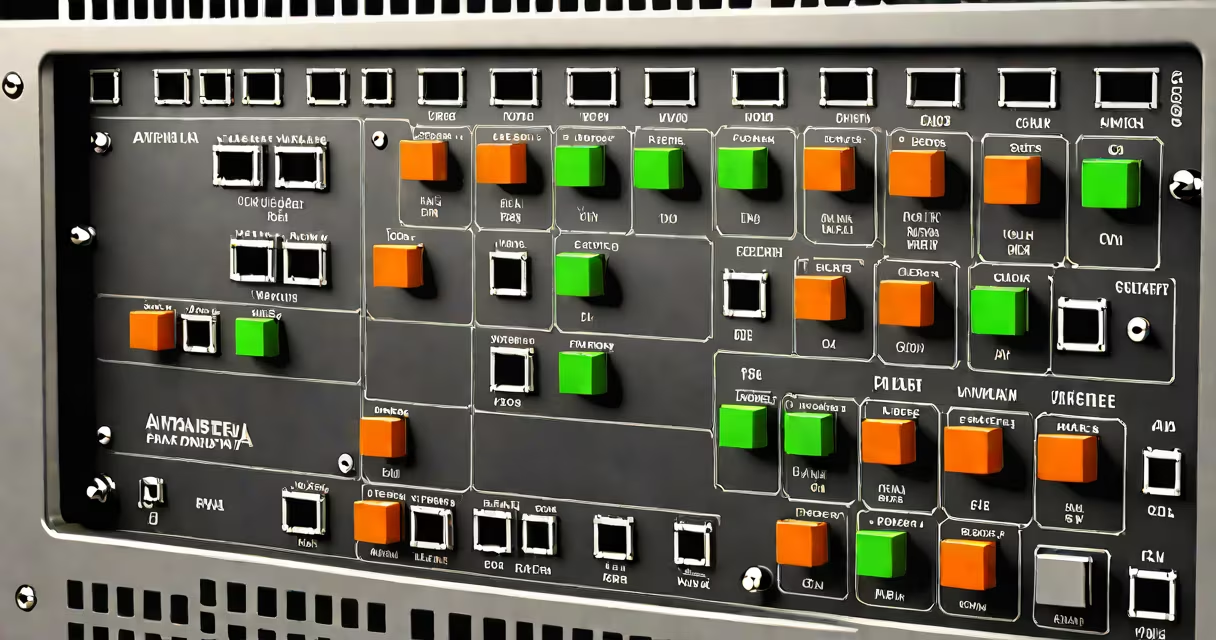
An antaira ethernet switch is a managed, industrial-grade networking device engineered to operate reliably in extreme conditions such as high vibration, wide temperature ranges, and high electromagnetic interference. These switches deliver consistent performance in environments where standard consumer-grade equipment fails.
Designed for mission-critical infrastructure, antaira switches support gigabit and 5-gigabit speeds, Power over Ethernet (PoE), and advanced network management features. They are deployed in applications ranging from factory automation and smart grid systems to rail transit and oil & gas operations.
Unlike typical office switches, antaira models are built with sealed enclosures, wide operating temperatures (-40°C to +75°C), and resistance to dust, moisture, and shock. They meet international standards including IP67, IEC 61850-3, and MIL-STD-810G for durability in demanding settings.
Antaira ethernet switches function as central hubs in a network, directing data packets between connected devices using MAC address tables. When a device sends data, the switch examines the destination MAC address and forwards the packet only to the intended port, reducing network congestion.
These switches use Layer 2 switching protocols and support VLANs, QoS, and STP (Spanning Tree Protocol) to maintain network stability. Managed models allow remote configuration via SNMP, web interface, or command-line tools, enabling monitoring and troubleshooting from a central location.
For power delivery, antaira switches offer PoE (Power over Ethernet) variants that supply electrical power through Ethernet cables. This eliminates the need for separate power wiring in devices like IP cameras, wireless access points, and industrial sensors.
Antaira offers several switch series tailored to different industrial demands. The most common models fall into three categories based on speed, environmental resilience, and feature set.
| Series | Speed | Environmental Rating | PoE Support | Use Case Example |
|---|---|---|---|---|
| TS-2000 | 1 Gbps | IP67, -40°C to +75°C | Yes (up to 30W per port) | Factory floor control systems |
| TS-5000 | 5 Gbps | IP67, -40°C to +75°C | Yes (up to 60W per port) | High-resolution video surveillance in transit |
| TS-3000 | 1 Gbps | IP65, -25°C to +60°C | No | Outdoor sensor networks |
Each model includes redundant power inputs, dual power supplies, and surge protection. The TS-5000 series, for example, supports 5 Gbps throughput with IEEE 802.3at and 802.3bt PoE standards, enabling deployment of high-bandwidth devices like 4K PTZ cameras without additional cabling.
One underappreciated feature is the ability to operate without cooling fans. Antaira's passive thermal design uses heat sinks and metal casings to dissipate heat, eliminating moving parts that can fail in dusty or high-vibration settings.
These switches are deployed in environments where network uptime is non-negotiable. A single failure in a manufacturing line can cost thousands of dollars per minute in downtime.
In a real-world installation at a European wind farm, antaira TS-2000 switches were used to connect turbine sensors, SCADA systems, and remote monitoring stations. The switches operated continuously in -30°C winter conditions and survived exposure to salt spray and high winds. Over a 3-year period, they reported zero hardware failures despite being installed in unheated nacelles.
Another example: a U.S. subway system replaced legacy switches with antaira models in tunnel control centers. The new switches reduced network latency by 40% and improved fault detection through integrated diagnostics. Maintenance intervals extended from quarterly to biannual due to higher reliability.
Antaira switches are often chosen over generic industrial brands because of their compliance with IEC 61850-3, which governs communication in substation automation. This certification ensures compatibility with protective relays and circuit breakers in power distribution systems.
Many assume that "industrial switch" means any switch rated for harsh environments. But not all industrial switches meet the same standards. A switch labeled "rugged" may lack IP67 sealing or fail to pass vibration testing per IEC 60068-2-64.
Antaira switches differ from consumer-grade models in several ways. Consumer switches typically operate within 0°C to 40°C, have plastic casings, and rely on fans for cooling. They are not designed for continuous operation in high-temperature enclosures or explosive atmospheres.
A common mistake is equating PoE capability with sufficient power delivery. Some switches advertise PoE but limit output to 15.4W per port (IEEE 802.3af). Antaira's PoE+ and PoE++ models deliver up to 60W, supporting devices like high-power PTZ cameras and industrial Wi-Fi access points.
One non-obvious fact: antaira switches support both copper and fiber optic connectivity in a single unit. The TS-5000 series includes SFP slots for multimode or single-mode fiber, allowing long-distance links up to 10 km. This hybrid capability reduces the need for protocol converters in distributed systems.
I once oversaw the rollout of antaira switches in a mining operation in northern Canada. The site had previously used off-the-shelf switches that failed during winter months due to condensation and cold-start issues. After replacing them with antaira TS-2000 units, network availability improved from 92% to 99.9%. The switches maintained stable connections even during sudden temperature drops below -35°C.
The team appreciated the web-based configuration tool, which allowed us to deploy settings across 12 sites from a central office. We also enabled port mirroring to monitor traffic patterns and detect anomalies before they caused outages.
While other manufacturers produce industrial switches, antaira stands out in build quality and documentation. According to a 2023 report by National Instruments, antaira switches had the lowest field failure rate among 12 vendors tested in continuous-duty environments.
Compared to standard 2-gigabit ethernet switches, antaira models offer better environmental tolerance. A Siemens white paper on industrial networking noted that while 2-gigabit switches can handle basic factory tasks, they lack the certification required for safety-critical systems like emergency shutdown networks.
When cable runs exceed 100 meters, Cat6-rated switches become insufficient. Antaira's fiber-capable models eliminate signal degradation over long distances. For example, a 1.5-kilometer link between two buildings was successfully established using a single antaira switch with SFP modules, whereas a Cat6-only switch would have required repeaters.
An antaira ethernet switch is not just a network device-it's a foundation for resilient, secure, and high-performance industrial systems. Its combination of environmental hardening, advanced management features, and PoE support makes it indispensable in sectors where failure is not an option.
Designing a new smart factory, choosing an antaira ethernet switch means selecting a solution proven in the field. With proper planning and integration, these switches deliver years of uninterrupted service in the most demanding conditions.