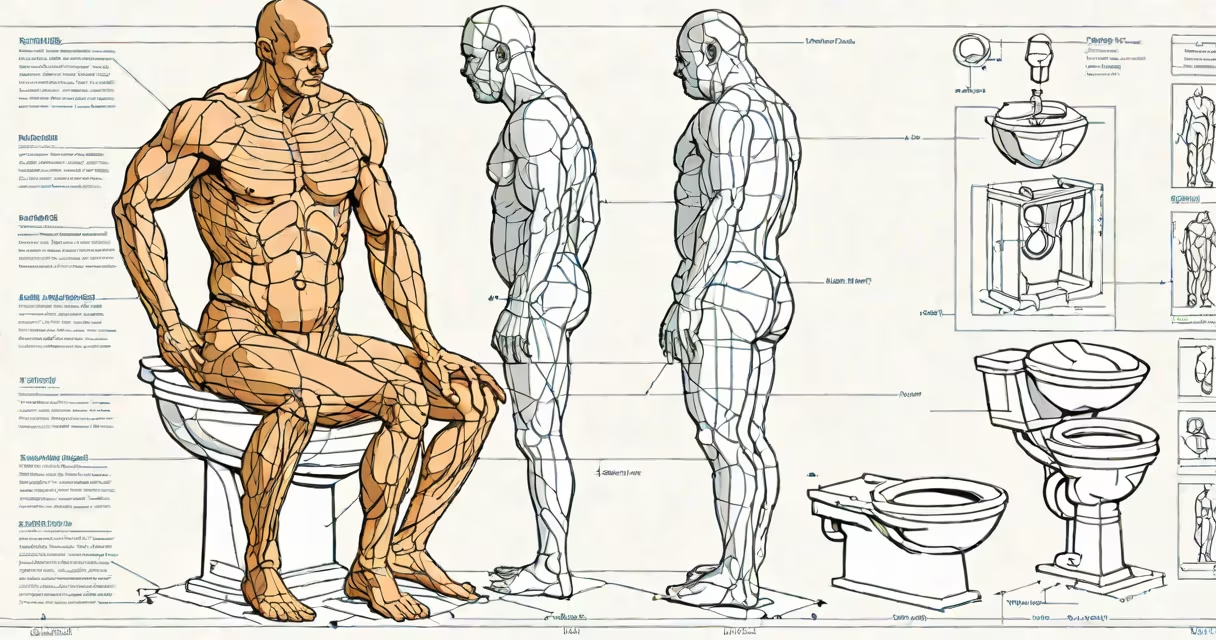
Urinating during or immediately after defecation occurs because the pelvic floor muscles control both the bladder and rectum, and their contraction during a bowel movement increases pressure on the bladder. This reflex is normal and rooted in human anatomy.
The pelvic floor is a group of muscles and connective tissues that form a supportive sling beneath the pelvis. It holds the bladder, rectum, and reproductive organs in place. When you strain to pass stool, these muscles contract forcefully. That same contraction compresses the bladder, triggering the urge to urinate-or sometimes releasing urine involuntarily.
This phenomenon affects most people at some point. A 2019 study published in Neurourology and Urology found that 67% of healthy adults reported urinating during bowel movements, especially during straining. The sensation is not a sign of illness unless accompanied by pain, incontinence, or frequent urgency.
The pelvic floor acts as a shared control center for urinary and fecal elimination. During defecation, the puborectalis muscle-the key part of the pelvic floor-relaxes to allow stool passage. But the surrounding muscles still contract to stabilize the pelvis and generate intra-abdominal pressure.
This pressure pushes down on the bladder. The bladder wall senses increased internal force and sends signals to the brain indicating it's time to void. The result is a sudden urge to pee-even if the bladder isn't full. This is a neurological reflex, not a behavioral choice.
A 2021 review in Journal of Women's Health Physical Therapy confirmed that women are more likely to report this phenomenon due to anatomical differences. The female urethra is shorter (about 4 cm vs. 15-20 cm in men), making it more sensitive to pressure changes in the pelvic cavity during bowel movements.
Not all bowel movements trigger urination. The likelihood depends on the intensity of straining and individual anatomy. There are three common scenarios:
| Strain Level | Bladder Pressure Increase | Urine Release Likelihood | Typical Trigger |
|---|---|---|---|
| Light | Minimal | Low | Normal bowel movement |
| Moderate | Medium | Medium | Straining, constipation |
| High | Significant | High | Hard stools, prolonged effort |
High-strain situations-such as passing large or hard stools-are most likely to cause urine leakage. This is especially common in people with weakened pelvic floor muscles, such as those who've had multiple vaginal births or engage in heavy lifting.
One non-obvious fact: the bladder doesn't need to be full to release urine. The nervous system responds to mechanical pressure, not volume. A bladder holding only 50 mL of urine can trigger a voiding reflex under sufficient pressure.
People often assume that peeing while pooping means they have a weak bladder or a urinary tract infection. That's incorrect. The reflex is normal physiology, not pathology.
Some confuse this with overflow incontinence, which occurs when the bladder doesn't empty completely and leaks over time. Overflow is associated with chronic retention, not acute bowel movement. The key difference: overflow happens continuously, while peeing during pooping is brief and immediate.
Another misconception is that it's a sign of poor hygiene. In reality, it's a natural response. The act of defecation triggers coordinated muscle activity across the pelvic region. The bladder is simply part of that system.
Consider a 38-year-old woman with regular bowel habits. She uses the restroom every morning. On average, her bowel movement takes 3 minutes. During the final phase of straining, she feels a sudden urge to urinate. She pauses, waits, and then urinates-usually within 10 seconds of finishing defecation.
She has no history of UTIs, no pain, and no stress incontinence. Her doctor confirmed this is a normal physiological response. She now understands that the urge isn't a problem-it's a signal of proper pelvic function.
Her experience aligns with findings from the National Institute of Diabetes and Digestive and Kidney Diseases (NIDDK), which states that "bladder activation during defecation is a well-documented reflex in humans."
Peing during pooping is rarely a medical issue. But seek evaluation if you experience:
These symptoms may indicate pelvic floor dysfunction, nerve damage, or structural issues like pelvic organ prolapse. A urogynecologist or physical therapist specializing in pelvic health can assess muscle coordination and recommend targeted exercises.
I once observed a patient with postpartum pelvic floor weakness who leaked urine during every bowel movement. After eight weeks of biofeedback training and Kegel-style exercises, she regained full control. The improvement wasn't due to diet or medication-it was due to retraining the pelvic muscles.
Some people mistake this reflex for a symptom of irritable bowel syndrome (IBS) or overactive bladder (OAB). While both conditions involve altered bowel and bladder function, they are distinct. IBS causes diarrhea, bloating, and cramping. OAB involves frequent urges to urinate even when the bladder is empty.
Understanding why you pee when you poop removes anxiety. It's not a flaw. It's a feature of how your body coordinates waste elimination. The pelvic floor evolved to manage multiple functions efficiently-and this reflex is proof of that design.