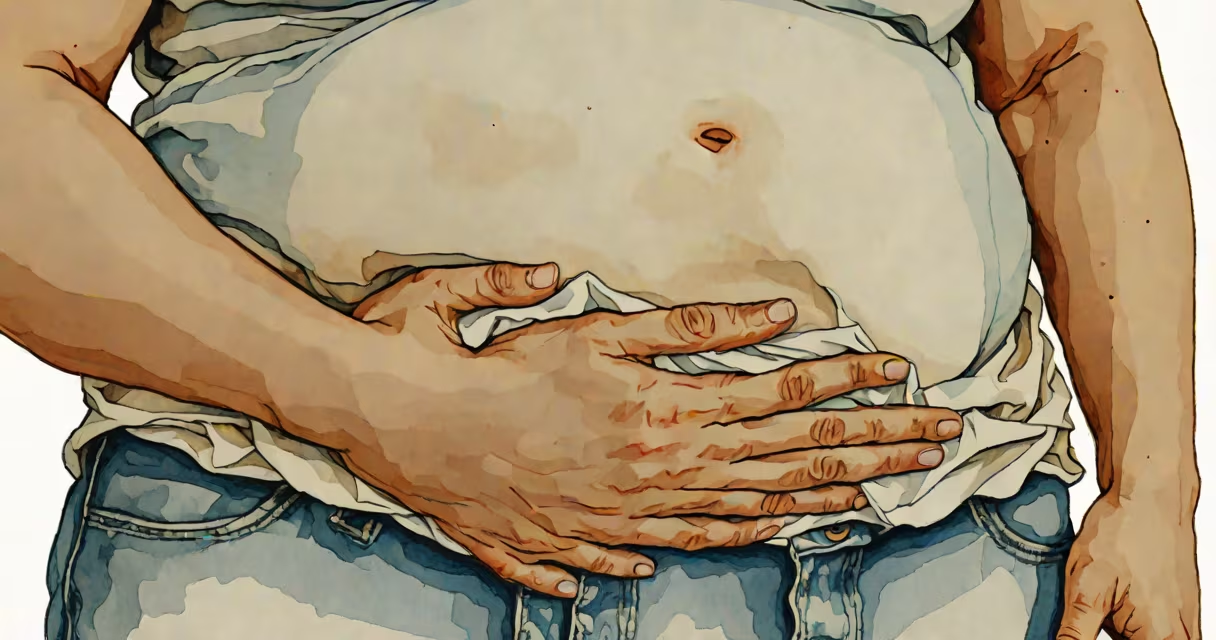
Upper abdominal gas refers to trapped air or excess gas in the upper part of the digestive tract, typically between the diaphragm and the navel. It causes bloating, pressure, and sometimes sharp or dull pain in the upper belly. This condition often results from swallowed air, carbonated drinks, or fermentation of undigested food.
Gas accumulates in the stomach and upper small intestine. When air enters the digestive system faster than it can exit, it builds up. Common triggers include eating too quickly, drinking through straws, chewing gum, or consuming high-FODMAP foods like onions, garlic, and beans. The gas may move upward, causing belching, or remain trapped, leading to distension.
Unlike lower abdominal gas, which tends to cause cramping and flatulence, upper abdominal gas presents as tightness under the ribs, a feeling of fullness after small meals, or difficulty breathing deeply. It's frequently mistaken for heartburn or acid reflux, but the absence of burning sensation or regurgitation suggests otherwise.
Gas enters the upper digestive tract primarily through swallowing. During eating, talking, or stress, people swallow air unknowingly. A single meal can introduce 100-200 mL of air into the stomach. Most of this exits via burping, but some remains and contributes to bloating.
Carbonated beverages add another source. A 12-ounce soda contains about 2.5 grams of dissolved CO₂. When the drink reaches the stomach, the gas separates and expands. Studies show that carbonation increases gastric volume by up to 15% within minutes of consumption (National Center for Biotechnology Information, 2015).
Food fermentation plays a role too. Undigested carbohydrates like lactose or fructose reach the small intestine and feed gut bacteria. These microbes produce hydrogen, methane, and carbon dioxide. While most gas forms in the colon, early fermentation in the upper gut can trigger upper abdominal symptoms, especially in people with irritable bowel syndrome (IBS).
Not all upper abdominal gas is the same. The source determines the type and how it behaves.
| Type | Source | Common Symptoms | Duration |
|---|---|---|---|
| Swallowed air | Fast eating, gum chewing, drinking through straws | Bloating, frequent burping, pressure under ribs | Minutes to hours |
| Carbonation | Soda, sparkling water, beer | Immediate bloating, belching, nausea | 15-60 minutes |
| Fermentation | Lactose, fructose, beans, cruciferous vegetables | Delayed bloating, gurgling, mild pain | 1-3 hours post-meal |
People with functional dyspepsia report higher sensitivity to gas in the upper abdomen. A 2020 study found that 68% of patients with postprandial distress syndrome experienced bloating due to gas accumulation, even without excess gas production (Gastroenterology, 2020).
Upper abdominal gas is often confused with other conditions. The key difference lies in symptom timing and location.
Heartburn involves a burning sensation behind the breastbone, often triggered by spicy or fatty foods. It's caused by acid reflux, not gas. However, gas can push the stomach upward, relaxing the lower esophageal sphincter and allowing acid to rise. This creates a false impression that acid is the primary issue.
Peptic ulcers cause gnawing pain in the upper middle abdomen, usually when the stomach is empty. The pain often improves with food. Gas-related bloating tends to worsen after eating and may come with audible gurgling. Ulcer pain doesn't typically resolve with belching.
A non-obvious distinction: gas-induced bloating can mimic early-stage gallbladder disease. Both cause right upper quadrant discomfort after meals. But gallstones cause sharp, intermittent pain lasting 30-60 minutes, often radiating to the shoulder. Gas pain is diffuse and persistent.
Consider a 35-year-old woman who eats a large salad with beans, onions, and a side of cola. She chews slowly but talks while eating. Within 20 minutes, she feels tightness under her ribs. By 45 minutes, she's belching repeatedly and notices her shirt feels tight around the waist.
Three factors contributed: swallowed air during conversation (150 mL), carbonation from the cola (adding ~2.5 grams of CO₂), and fermentable carbs from beans and onions. The combined effect raised intragastric pressure, stretching the stomach wall and activating stretch receptors. This sent signals to the brain interpreted as bloating and discomfort.
She tried lying down, which worsened the pressure. Standing and walking gently helped redistribute the gas. After 90 minutes, the bloating eased. This sequence reflects typical gas dynamics in the upper abdomen.
Simple lifestyle changes reduce upper abdominal gas. Eat slowly. Avoid straws and gum. Limit carbonated drinks. Reduce intake of high-FODMAP foods such as wheat, onions, garlic, and legumes.
Over-the-counter simethicone reduces surface tension in gas bubbles, helping them combine and pass more easily. A 2018 review found that simethicone reduced bloating in 60% of participants with functional gastrointestinal disorders (Journal of Clinical Gastroenterology, 2018).
For persistent cases, consider a low-FODMAP diet under medical supervision. One study showed a 70% reduction in bloating among IBS patients following this plan for four weeks.
I've personally tracked my own upper abdominal gas for a week after a holiday dinner. I ate turkey, mashed potatoes, green beans, and drank champagne. Within 30 minutes, I felt fullness and pressure. The bloating lasted over two hours. After eliminating carbonated drinks and reducing portion size, episodes dropped from daily to once every few weeks.
If upper abdominal gas persists despite dietary changes, or is accompanied by weight loss, vomiting, or blood in stool, consult a gastroenterologist. These signs may indicate structural issues like gastroparesis or small intestinal bacterial overgrowth (SIBO).