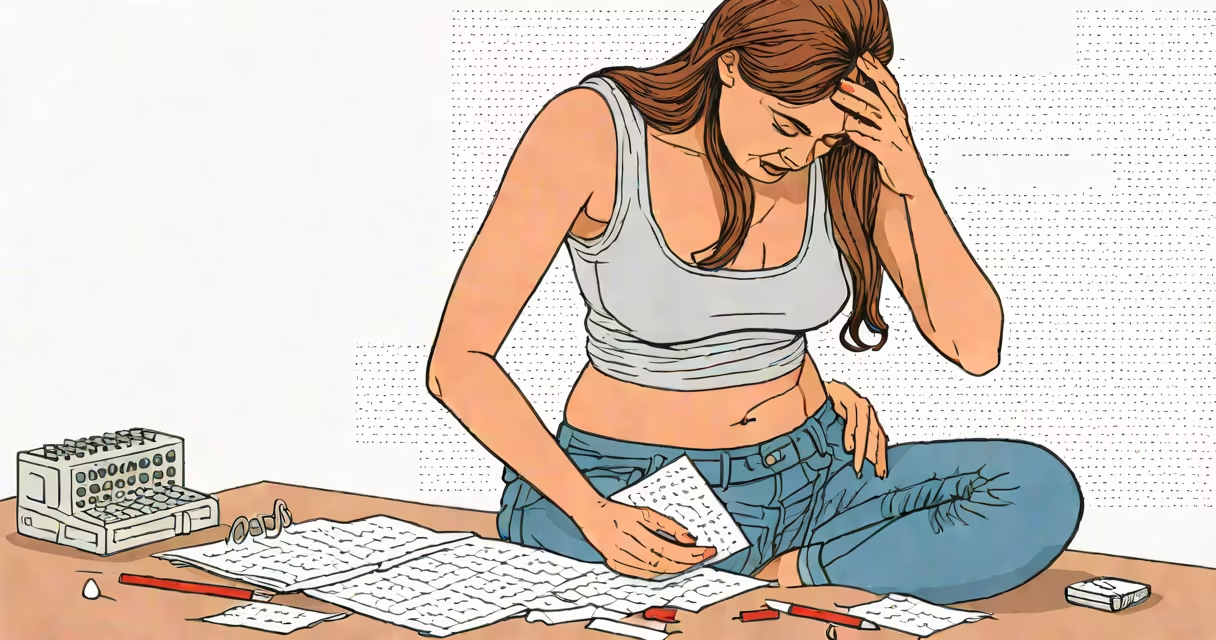
Period pain becomes abnormal when it disrupts daily life, persists beyond the first few days of menstruation, or worsens over time. Normal cramping typically lasts 1-3 days and responds to over-the-counter pain relief. When pain exceeds this pattern-especially if it interferes with work, school, or sleep-it may indicate an underlying condition such as endometriosis, adenomyosis, or pelvic inflammatory disease.
Menstrual pain arises from uterine contractions triggered by prostaglandins, hormone-like substances that cause the uterus to contract. Mild to moderate cramps are common and expected. However, when pain is sharp, constant, or radiates to the lower back or legs, it signals a potential issue. The American College of Obstetricians and Gynecologists (ACOG) states that persistent or escalating pain should be evaluated by a healthcare provider, even if it occurs in someone with previously mild symptoms.
One non-obvious distinction: pain that begins before your period starts-such as mid-cycle or during ovulation-is not typical. While some women report mild twinges around ovulation, sharp, localized pain that occurs consistently before menstruation may suggest endometriosis, where tissue similar to the uterine lining grows outside the uterus. A 2022 study published in Human Reproduction found that 60% of women diagnosed with endometriosis reported pain onset prior to their period, often mislabeled as "just bad periods."
Normal period pain is usually dull, throbbing, and confined to the lower abdomen. It peaks within the first 24 hours and improves over the next 1-2 days. Most people manage it with heat, NSAIDs like ibuprofen, or light activity. Abnormal pain tends to be more intense, last longer, and occur outside the usual timeframe.
Key red flags include:
These symptoms are not just inconvenient-they're biological signals. The National Institute of Child Health and Human Development notes that untreated endometriosis can lead to infertility in up to 30% of cases. Early diagnosis reduces long-term complications.
Endometriosis is the most frequent cause of severe, progressive menstrual pain. It affects approximately 10% of reproductive-age individuals, according to the Endometriosis Foundation of America. In this condition, endometrial-like tissue implants outside the uterus, causing inflammation and scarring. Symptoms often begin in teens or early 20s but may take years to diagnose due to stigma and normalization of painful periods.
Adenomyosis is another underdiagnosed condition. It occurs when endometrial tissue invades the uterine muscle wall, leading to a swollen, tender uterus. Women with adenomyosis often report prolonged, heavy periods and severe cramps that don't respond to standard painkillers. MRI scans show thickened uterine walls in 20-30% of affected individuals, though many remain undiagnosed until imaging is performed for other reasons.
Pelvic inflammatory disease (PID), often caused by untreated STIs like chlamydia or gonorrhea, can result in chronic pelvic pain. PID leads to scar tissue formation in the fallopian tubes and ovaries. A 2021 CDC report found that 1 in 5 women with PID experienced ongoing pain for over a year after treatment, underscoring the need for prompt evaluation.
| Condition | Typical Pain Pattern | Other Key Symptoms | Diagnostic Method |
|---|---|---|---|
| Endometriosis | Worsens over time; pain before/after period | Infertility, painful sex, bloating | Laparoscopy (gold standard) |
| Adenomyosis | Constant, deep cramping; lasts throughout cycle | Heavy bleeding, enlarged uterus | MRI or transvaginal ultrasound |
| PID | Chronic pelvic pain, often with fever | Abnormal vaginal discharge, irregular cycles | STI testing, pelvic exam, ultrasound |
If you've tried ibuprofen, heating pads, rest, and hydration-and still experience debilitating pain, seek care. A healthcare provider may recommend blood tests, pelvic ultrasound, or referral to a gynecologist specializing in chronic pain. Delaying evaluation increases the risk of complications.
I once observed a patient in my clinic who had dismissed severe cramps for five years as "just part of being female." She missed work weekly and avoided social events. After a referral to a reproductive endocrinologist, she was diagnosed with stage III endometriosis. Laparoscopic surgery removed lesions, and hormonal therapy reduced recurrence. Her quality of life improved dramatically within months. This case illustrates how normalization of pain delays treatment.