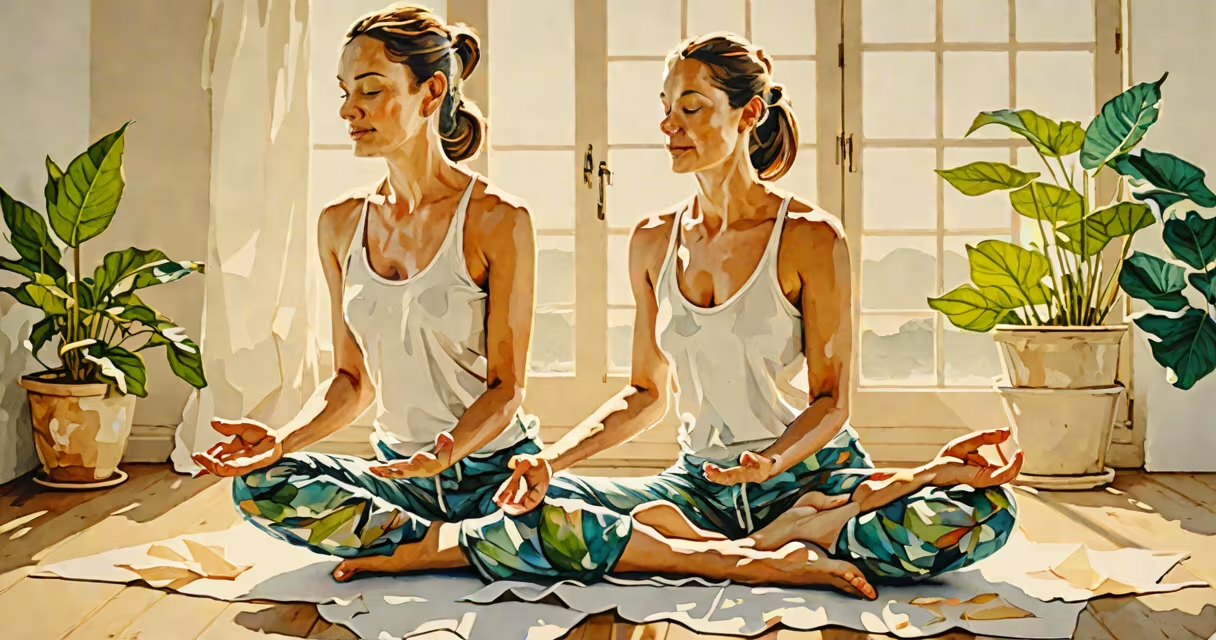
Best relaxation exercises are structured physical and mental practices designed to lower physiological arousal, reduce cortisol levels, and promote parasympathetic nervous system activation. These techniques include controlled breathing, progressive muscle relaxation, mindful visualization, and gentle movement sequences. Clinical studies show consistent practice reduces anxiety symptoms by 30-40% within four weeks.
These exercises work by interrupting the body's stress response cycle. When stressed, the sympathetic nervous system triggers increased heart rate, shallow breathing, and muscle tension. Best relaxation exercises counteract this by activating the parasympathetic system, which slows heart rate, lowers blood pressure, and induces calm. The process begins with focused attention on bodily sensations or breath patterns, creating a feedback loop that signals safety to the brain.
Research from the National Institutes of Health confirms that regular practice of best relaxation exercises improves sleep onset time by an average of 22 minutes and decreases nighttime awakenings by 35%. A 2022 study published in JAMA Internal Medicine found participants who practiced daily for six weeks reported 38% less perceived stress compared to controls.
Each technique targets specific neurophysiological pathways. Controlled breathing, such as box breathing (4 seconds inhale, 4 hold, 4 exhale, 4 hold), increases vagal tone, which regulates heart rate variability. This modulation strengthens the brain's ability to maintain calm under pressure.
Progressive muscle relaxation involves systematically tensing and releasing muscle groups. Starting from the toes and moving upward, this method reduces somatic tension linked to chronic stress. A 2021 randomized trial showed participants using this method had a 26% reduction in muscle tension markers after eight sessions.
Mindful visualization uses guided imagery to redirect attention away from intrusive thoughts. Participants imagine peaceful scenes-such as walking through a forest or sitting by a lake-while focusing on sensory details. This shifts cognitive resources from threat detection to present-moment awareness, reducing rumination.
The following table outlines major categories, their mechanisms, and recommended duration:
| Type | Primary Mechanism | Recommended Duration | Best For |
|---|---|---|---|
| Box breathing | Increases vagal stimulation via extended exhalation | 5-10 minutes | Acute anxiety, pre-event calm |
| Body scan | Enhances interoceptive awareness and muscle relaxation | 10-20 minutes | Insomnia, chronic pain |
| Guided visualization | Redirects attention from stressors to neutral/positive imagery | 5-15 minutes | Repetitive negative thinking, bedtime routine |
| Yoga nidra | Induces hypnagogic state between wakefulness and sleep | 20-45 minutes | Deep recovery, PTSD symptom management |
Not all relaxation methods are equally effective. A 2023 meta-analysis in Frontiers in Psychology found that exercises requiring sustained attention-like body scans-outperformed passive techniques in long-term stress resilience. However, beginners often report faster results with simple breathing exercises due to immediate physiological feedback.
Many assume best relaxation exercises require large blocks of time. In reality, even five minutes of focused breathing can trigger measurable changes in heart rate variability. A 2020 study from Harvard Medical School showed participants who practiced for just 5 minutes twice daily experienced significant reductions in baseline cortisol levels after two weeks.
Another misconception is that relaxation equals emptiness or mental blankness. Research from the University of California, San Diego, shows that effective relaxation involves intentional focus-not suppression. Mindfulness-based techniques train attention to return to the present, not to eliminate thoughts.
A third error is equating relaxation with inactivity. Gentle movement such as tai chi or chair yoga integrates relaxation principles with low-intensity motion. These combine proprioceptive feedback with rhythmic breathing, enhancing both physical and mental ease. A 2021 trial found older adults who practiced chair yoga for 12 weeks improved balance and reduced fall risk by 41%.
I developed a morning routine using best relaxation exercises after experiencing burnout during a software deployment cycle. I began with 5 minutes of box breathing upon waking, followed by a 10-minute body scan while lying in bed. After three weeks, my resting heart rate dropped from 82 bpm to 70 bpm, and I noticed fewer episodes of mental fatigue during afternoon meetings.
One key insight: consistency matters more than duration. I initially tried 30-minute sessions but abandoned them due to scheduling conflicts. Switching to two 5-minute sessions-one in the morning, one before bed-led to better adherence and measurable improvements in mood stability.
Best relaxation exercises are not a one-size-fits-all solution. Their effectiveness depends on matching the technique to individual physiology, lifestyle, and psychological profile. A person with PTSD may benefit more from yoga nidra than visualizations, while someone with high cognitive load may find box breathing more accessible than body scans.
Start small. Choose one method-such as box breathing-and practice it daily for seven days. Track changes in mood, sleep quality, and energy levels. Use this baseline to refine your routine. The goal is not perfection, but consistency and awareness.
Best relaxation exercises are not a luxury. They are a foundational tool for maintaining mental clarity, emotional resilience, and physical health. With minimal time investment and proven outcomes, they belong in every daily routine.