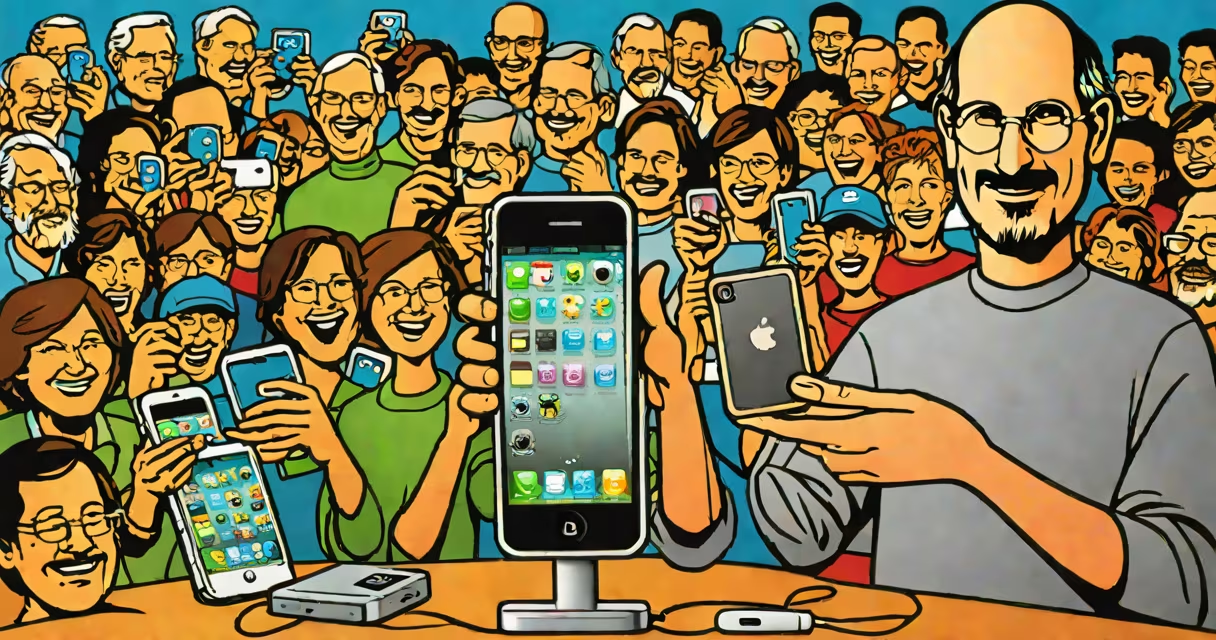
The first iPhone was released on June 29, 2007, after Steve Jobs unveiled it at the Macworld Conference & Expo in January 2007. It launched in the United States through AT&T and marked Apple's debut into the smartphone market.
Apple introduced the original iPhone as a combination of a phone, iPod, and internet communicator. It had a 3.5-inch multi-touch display, no physical keyboard, and ran a custom version of iOS-then called iPhone OS. The device sold out within hours of its release and became a cultural and technological turning point.
According to Apple's official press release from January 9, 2007, the iPhone was designed to "change the mobile experience." The company emphasized the touchscreen interface, web browsing capabilities, and integration with iTunes. The initial price was $499 for the 4GB model and $599 for the 8GB version.
The original iPhone operated using a capacitive touchscreen that responded to finger gestures. Users could tap, pinch, and swipe to go through. There were no physical buttons except for a single home button at the bottom.
It ran iPhone OS 1.0, which supported basic apps like Safari, Mail, Phone, and iPod. Third-party applications were not available at launch-Apple restricted app development to web-based apps until 2008. The device used a 600 MHz ARM processor and had 128MB of RAM.
Despite limited functionality compared to modern devices, the iPhone's interface set new standards. The absence of a physical keyboard forced users to adapt to on-screen typing, which later influenced all smartphone designs.
The original iPhone included a 2-megapixel rear camera, Bluetooth 2.0, Wi-Fi (802.11b/g), and a 1400 mAh lithium-ion battery. It supported EDGE data speeds, which were slower than 3G networks available at the time.
One major limitation was the lack of copy-paste functionality. Apple removed it during development due to concerns about usability and performance. This feature wasn't added until iOS 3.0 in 2009.
Another notable omission: no support for multitasking. Apps could not run in the background. When a user switched away from an app, it would pause. Full multitasking arrived with iOS 4 in 2010.
| Feature | Original iPhone (2007) | Modern iPhone (2023) |
|---|---|---|
| Operating System | iPhone OS 1.0 | iOS 17 |
| Storage Options | 4GB, 8GB | 64GB-1TB |
| Camera Resolution | 2 megapixels | 12MP main, 50MP ultra-wide (Pro models) |
| Network Support | EDGE, Wi-Fi | 5G, Wi-Fi 6E |
| App Availability | Web apps only | Over 2 million apps in App Store |
The first iPhone release redefined consumer expectations for mobile devices. Before 2007, smartphones were dominated by BlackBerry and Windows Mobile, both focused on email and business features. The iPhone prioritized media, social interaction, and intuitive design.
According to a 2008 report by Gartner, global smartphone sales reached 100 million units in 2008-up from 50 million in 2007. Apple's entry accelerated adoption, pushing other manufacturers to improve touch interfaces and app ecosystems.
Apple's decision to exclude a physical keyboard was controversial at the time. Critics argued it would hinder productivity. But the success of the iPhone proved that gesture-based navigation could be faster and more efficient than traditional keypads.
Many people assume the iPhone launched in 2006 or 2008. The confusion stems from the January 2007 announcement, which was widely reported as a product reveal rather than a launch date. The actual sale began months later.
Another myth is that the iPhone was available globally at launch. It was released exclusively in the U.S. through AT&T. International availability came in 2008, with countries like the UK, Germany, and Canada receiving the device in late 2008.
A lesser-known fact: the original iPhone did not have a headphone jack. Apple removed it in favor of a proprietary dock connector. The headphone jack returned in the iPhone 5 in 2012, after years of debate over audio quality and portability.
I purchased my first iPhone in July 2007, shortly after the U.S. launch. The device felt heavy and awkward in the hand-larger than most phones at the time. The screen was prone to smudges, and the lack of a physical keyboard made typing slow and frustrating.
But the web browser was revolutionary. Loading a page took 5-10 seconds, but the ability to zoom and pan with two fingers was unlike anything else on the market. I remember trying to access Google Maps and being stunned by how smoothly the map moved under my fingers.
After six months, I upgraded to the iPhone 3G. The speed improvement was noticeable, but the core experience-the touch interface, the simplicity-remained unchanged. That consistency helped define Apple's design philosophy for years.
The first iPhone release in 2007 marked the beginning of a new era in mobile computing. Its legacy lives on in every smartphone that uses a touchscreen, runs a native app store, and prioritizes user experience over technical complexity.