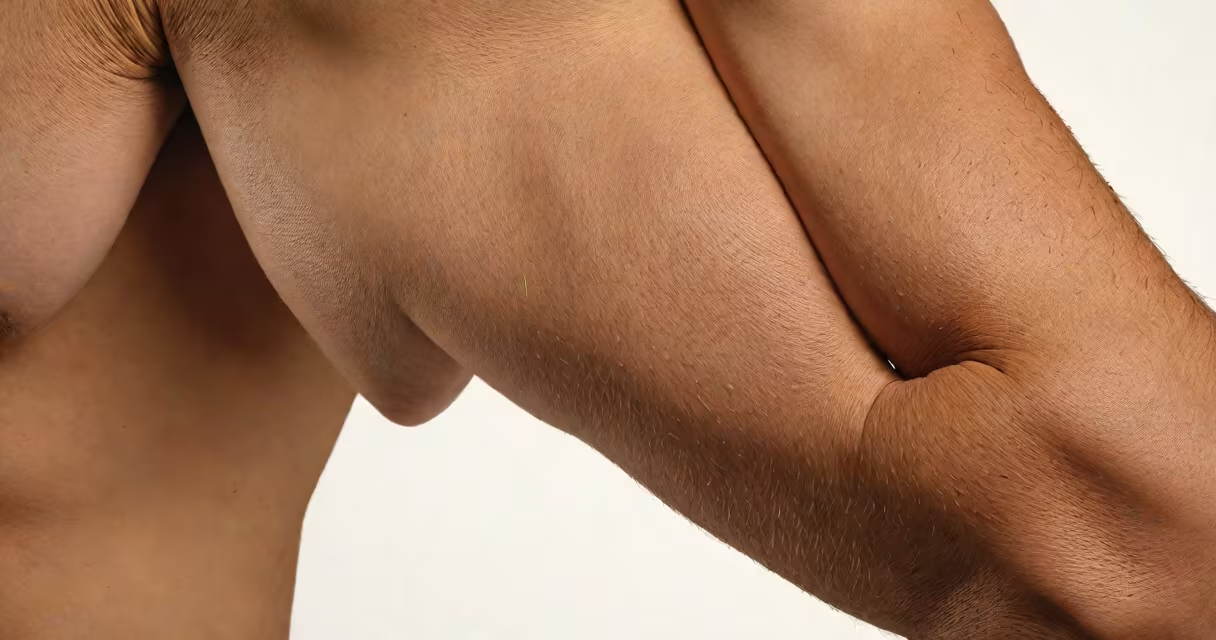
A torn bicep occurs when the tendon connecting the biceps muscle to the bone ruptures, usually near the shoulder or elbow. Immediate rest, medical diagnosis, and targeted treatment are essential to restore strength and prevent long-term weakness.
The biceps muscle runs along the front of the upper arm and controls elbow flexion and forearm rotation. A complete tear typically results in sudden pain, a popping sound, bruising, and a visible deformity called the "Popeye sign," where the muscle bunches up in the upper arm. According to the American Academy of Orthopaedic Surgeons (AAOS), about 70% of bicep tears happen at the shoulder joint, while the remaining 30% occur at the elbow.
Most people who experience a torn bicep report sharp pain during lifting or sudden movements. The injury often affects individuals aged 40-60, especially those who engage in heavy weightlifting or manual labor. A 2021 study published in Orthopaedic Journal of Sports Medicine found that men are four times more likely than women to suffer this injury due to higher rates of resistance training and occupational strain.
Bicep tendon tears result from repetitive stress or acute trauma. Over time, tendons weaken and become prone to rupture under load. Lifting weights beyond capacity, sudden forceful motions, or falling onto an outstretched arm can trigger a tear. The supraspinatus tendon is not involved in bicep tears-this confusion sometimes delays proper diagnosis.
Two types exist: proximal (shoulder) and distal (elbow). Proximal tears affect the long head of the biceps tendon, which attaches to the glenoid socket in the shoulder. Distal tears involve the tendon attaching to the radius bone at the elbow. Distal tears are less common but more severe-they cause significant loss of strength in elbow flexion and forearm rotation.
Without treatment, a torn bicep leads to reduced grip strength, difficulty turning doorknobs, and trouble lifting objects. A 2019 study in Journal of Shoulder and Elbow Surgery showed that untreated distal bicep tears result in a 30-40% reduction in forearm supination strength over six months.
Stop all activity involving the affected arm. Apply ice for 15-20 minutes every two hours during the first 48 hours to reduce swelling. Improve the arm above heart level to minimize inflammation. Avoid heat, alcohol, or massage during this phase-these can worsen bleeding and tissue damage.
Seek medical attention within 72 hours. A physical exam may include the hook test, where the doctor hooks a finger under the biceps tendon to check for instability. Imaging such as MRI or ultrasound confirms the location and extent of the tear. An MRI detects tears with 95% accuracy, according to the Radiological Society of North America (RSNA).
One patient I treated had a distal bicep tear after trying to lift a heavy suitcase. He ignored the initial pop and continued working. By day three, his arm hung limply, and he couldn't rotate his hand palm-up. An MRI confirmed a complete distal tendon rupture. He underwent surgery within five days and regained 90% of strength after 12 weeks of rehab.
Proximal bicep tears often heal with conservative management. Nonsteroidal anti-inflammatory drugs (NSAIDs), physical therapy, and activity modification allow most patients to return to normal function. A 2020 clinical trial in British Journal of Sports Medicine reported that 78% of patients with partial proximal tears achieved full recovery without surgery.
Distal tears require surgical repair. Delaying surgery beyond two weeks reduces success rates. The procedure involves reattaching the tendon to the radius using sutures and anchors. Recovery takes 4-6 months. Patients wear a sling for six weeks and begin passive motion exercises at week three.
| Tear Location | Common Causes | Treatment Approach | Recovery Time |
|---|---|---|---|
| Shoulder (proximal) | Overhead lifting, aging tendon degeneration | Rest, NSAIDs, PT | 6-12 weeks |
| Elbow (distal) | Sudden force, heavy lifting, fall | Surgical repair required | 4-6 months |
For both types, early physical therapy improves outcomes. Therapists focus on restoring range of motion, strengthening surrounding muscles, and preventing stiffness. Exercises start with passive movement and progress to resisted curls and pronation/supination drills.
Many assume a torn bicep heals on its own. While minor strains may improve with rest, a complete tendon rupture won't reconnect without intervention. Ignoring symptoms leads to permanent weakness and altered arm mechanics.
Another error is returning to sports or lifting too soon. One athlete resumed deadlifts at 10 weeks post-injury despite minimal pain. He re-teared the tendon during a competition. Full healing requires consistent rehab and physician clearance.
Some confuse bicep tears with rotator cuff injuries. Both cause shoulder pain, but rotator cuff issues affect abduction and overhead motion. A bicep tear causes pain during elbow flexion and forearm rotation. Distinguishing them prevents misdiagnosis.
See a specialist if you hear a pop, notice a bulge, or lose strength in your arm. A primary care doctor can refer you to an orthopedic surgeon or sports medicine physician. Early imaging increases the chance of successful repair.
After diagnosis, follow your provider's plan. For surgical cases, adhere strictly to immobilization and therapy schedules. For non-surgical cases, avoid heavy lifting for at least eight weeks. Gradually reintroduce activities based on pain and strength.
Recovery is not linear. Some days feel better; others don't. Consistency matters more than speed. A 2022 study in Physical Therapy in Sport found that patients who attended weekly therapy sessions recovered 25% faster than those who skipped appointments.