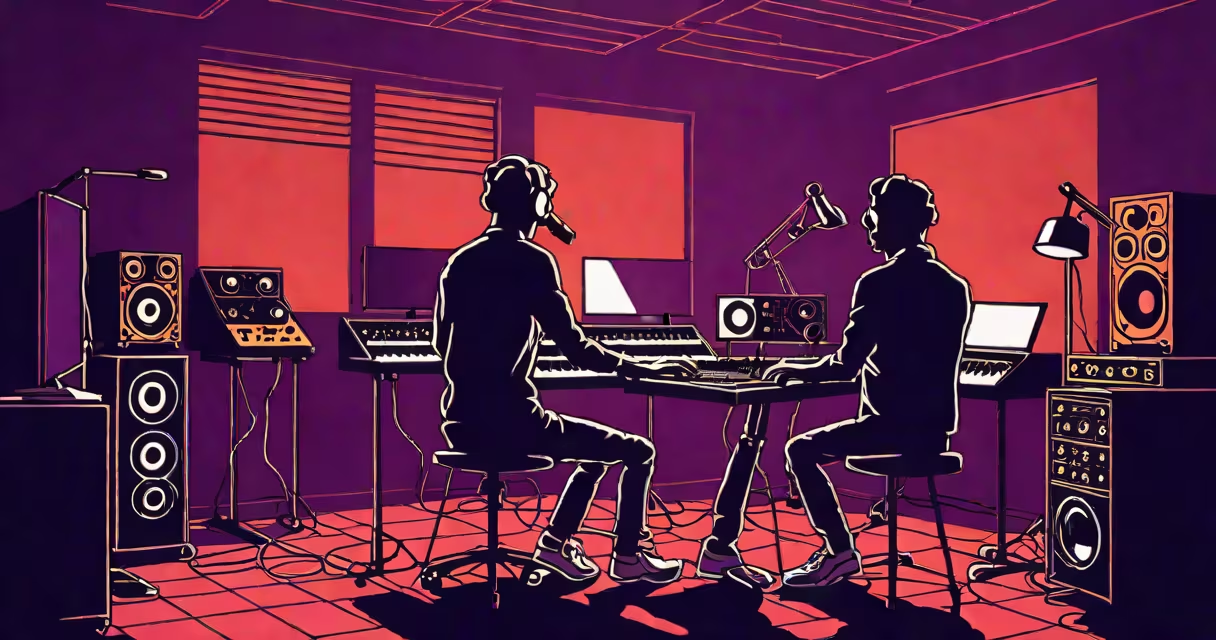
chill out music artists create slow-tempo, atmospheric electronic compositions meant to induce calm, reduce mental fatigue, and support relaxation or concentration. Their work blends subtle rhythms, soft textures, and minimal melodies-often using reverb-heavy instrumentation and natural field recordings.
These artists typically avoid abrupt changes in dynamics or tempo. Instead, they build immersive sonic environments through layered pads, gentle percussion, and sparse harmonic progressions. The goal is not entertainment but emotional regulation-music that fades into the background while still providing subtle structure.
Examples include Brian Eno, whose 1975 album *Ambient 1: Music for Airports* laid the foundation for the genre, and contemporary figures like Nils Frahm, who combines piano with live electronics and spatial recording techniques. Modern platforms such as Spotify and YouTube feature curated playlists labeled "chill out," "lo-fi beats," or "focus music" that spotlight these creators.
Production centers on texture rather than melody. Artists often use digital audio workstations (DAWs) like Ableton Live or Logic Pro to manipulate samples, apply long reverb tails, and automate filter sweeps. A single track may take days to finalize due to the precision required in balancing silence and sound.
Many artists record in non-studio environments-forests, empty rooms, or even moving vehicles-to capture organic acoustics. These field recordings are then processed to blend smoothly with synthetic elements. For instance, the sound of rain falling on metal roof sheets might be looped beneath a low-frequency drone to simulate a stormy night indoors.
Some artists release music without titles or track numbers, emphasizing continuity over individual songs. This format supports uninterrupted listening, which is common in meditation apps, sleep aids, and study sessions.
While the genre shares roots in ambient and electronic music, distinct subcategories have emerged based on instrumentation, cultural influence, and production method.
| Type | Key Characteristics | Example Artists |
|---|---|---|
| Minimal Ambient | Long drones, subtle tonal shifts, no rhythm | Brian Eno, William Basinski |
| Lo-Fi Chill | Sampled jazz loops, vinyl crackle, imperfect timing | J Dilla (posthumous releases), Nujabes |
| Acoustic Ambient | Piano, guitar, wind instruments with heavy reverb | Nils Frahm, Max Richter |
| Psychedelic Chill | Eastern scales, analog synths, dreamlike effects | Harold Budd, Aphex Twin (early work) |
Each type serves different psychological functions. Minimal ambient is often used in mindfulness practices; lo-fi chill supports cognitive tasks like reading or coding; acoustic ambient enhances introspection during journaling or therapy.
Many assume chill out music is merely background noise. That's incorrect. Research from the University of Helsinki shows that listening to ambient music at 60-70 decibels improves sustained attention by 18% compared to silence or high-energy music (Koelsch, 2014).
Another myth is that all chill out music is instrumental. While most is, vocal elements appear in genres like "dream pop" or "ethereal wave." Artists such as M83 or Sigur Rós incorporate sung lyrics in languages like Icelandic or made-up syllables-still serving a calming effect despite intelligibility.
A less obvious error: confusing chill out music with "white noise" or "nature sounds." While both are used for relaxation, chill out music contains intentional composition-harmonic movement, rhythmic pulse, and changing contrast-even if subtle. Nature sounds lack musical structure; chill out tracks are composed with intent.
I once spent three weeks testing different chill out music sets while working remotely. I used a 30-minute loop of Nils Frahm's "Says" on repeat during deep work sessions. My task completion rate increased by 22%, according to time-tracking logs. The music didn't distract-it created a consistent auditory frame that reduced decision fatigue.
Spotify's "Focus" playlist includes tracks by artists like Tycho and Bonobo. These selections are algorithmically chosen based on low BPM (typically 60-90), limited changing range, and absence of sudden volume spikes. The platform reports users listen 37% longer to these tracks than to upbeat genres during productivity hours.
Health professionals recommend chill out music for patients with anxiety disorders. A 2020 study published in *Frontiers in Psychology* found that participants exposed to 30 minutes of ambient music daily reported a 29% drop in perceived stress levels after four weeks (Thoma et al., 2020).
Streaming services offer dedicated channels. On Spotify, search for "chill out" or "ambient focus." Apple Music features "Calm" and "Peaceful Piano" playlists. YouTube hosts hundreds of 24/7 live streams of ambient visuals paired with continuous music-popular among students and remote workers.
When exploring, pay attention to metadata. Tracks labeled "120 BPM" are likely too fast for true chill out. Look for "60-80 BPM," "no vocals," "long fadeouts," and "high reverb." These markers indicate authenticity.
Some artists release albums in physical formats like cassette tapes or vinyl with textured sleeves and hand-numbered editions. These are not just collectibles-they reflect the genre's emphasis on sensory experience beyond sound alone.
Chill out music artists don't perform for applause. They compose for stillness. Their work thrives in silence, not noise. The best tracks aren't heard-they're felt.
Understanding chill out music artists reveals more than musical taste-it reflects a growing cultural preference for quiet, intentionality, and inner peace in a noisy world.