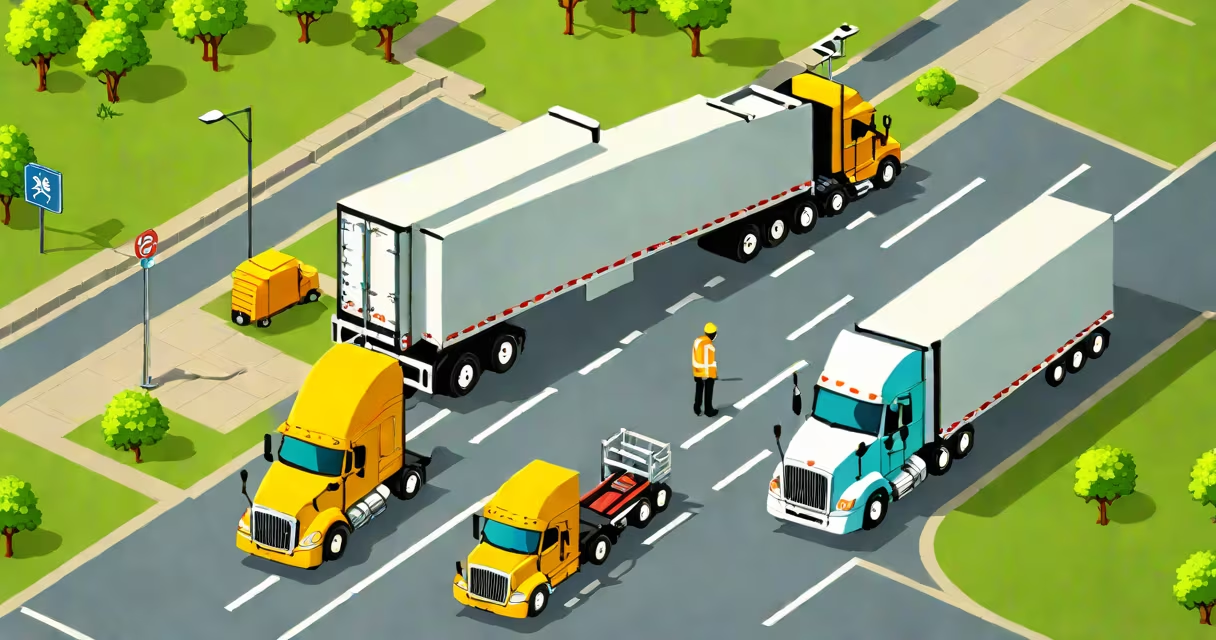
A Commercial Driver's License (CDL) is required to operate certain large, heavy, or hazardous vehicles in interstate or intrastate commerce. The U.S. Department of Transportation mandates a CDL for vehicles exceeding 26,001 pounds GVWR, those designed to carry 16 or more passengers, or those transporting hazardous materials requiring placarding.
CDL requirements are defined by federal regulation under the Federal Motor Carrier Safety Administration (FMCSA). These rules apply to all commercial operations involving vehicles that meet or exceed specified weight, passenger, or cargo thresholds. Failure to hold a valid CDL for these vehicles results in fines, suspension, or criminal penalties depending on state enforcement.
The FMCSA outlines three classes of CDLs-Class A, B, and C-based on vehicle type and capacity. Class A allows operation of combination vehicles with a gross combination weight rating (GCWR) of 26,001 pounds or more, such as tractor-trailers. Class B covers single vehicles weighing 26,001 pounds or more, including city buses and dump trucks. Class C applies to vehicles carrying 16 or more passengers or hazardous materials requiring placards.
Vehicle classification for CDL purposes hinges on gross vehicle weight rating (GVWR), passenger count, and cargo type. The FMCSA defines GVWR as the maximum operating weight specified by the manufacturer, including the vehicle, fuel, passengers, and cargo. This figure determines whether a CDL is required regardless of actual load.
For example, a 26,000-pound delivery van does not require a CDL. But a 26,001-pound box truck does. The difference is one pound-but it triggers federal licensing rules. The FMCSA enforces this threshold strictly because even minor increases in vehicle size affect stopping distance, handling, and crash risk.
The nature of the cargo matters. Transporting hazardous materials listed in 49 CFR Part 172 that require placarding-such as flammable liquids, explosives, or toxic gases-necessitates a CDL. Drivers must also pass a background check and obtain a Hazardous Materials Endorsement (HME), which includes fingerprinting and FBI clearance.
CDLs are required for many commercial vehicles and roles. The following table outlines common vehicle types and their CDL class requirements:
| Vehicle Type | Weight/Passenger Threshold | Required CDL Class | Example Use Case |
|---|---|---|---|
| Tractor-trailer (18-wheeler) | GCWR ≥ 26,001 lbs | Class A | Long-haul freight transport |
| City bus (passenger) | Carries 16+ passengers | Class B | Public transit routes |
| Dump truck | GVWR ≥ 26,001 lbs | Class B | Construction site material hauling |
| Refrigerated delivery van | GVWR ≥ 26,001 lbs | Class B | Food distribution networks |
| Bus transporting school children | Carries 16+ passengers | Class B | School district transportation |
| Truck carrying flammable liquid | Placardable quantity | Class A or B (with HME) | Gasoline delivery to service stations |
Some vehicles fall under multiple categories. For instance, a 30,000-pound tanker truck transporting diesel fuel qualifies for both Class A and a Hazardous Materials endorsement. The driver must hold a Class A CDL with HME to legally operate it.
Non-commercial vehicles do not require a CDL-even if they're large. A 30,000-pound moving van used for personal relocation doesn't trigger CDL rules unless it's part of a business operation. The key distinction lies in the purpose of operation: commercial vs. private use.
Many assume that any large vehicle demands a CDL. This is incorrect. A 25,000-pound flatbed truck used for landscaping deliveries does not require a CDL, even though it's heavy. Only vehicles at or above the 26,001-pound threshold do.
Another misconception is that CDLs are state-specific. While states issue licenses, the FMCSA sets national standards. A CDL issued in California is valid in all 50 states for interstate travel. However, state-specific endorsements-like school bus or passenger transport-may have additional training or testing requirements.
Drivers often confuse CDL with standard driver's licenses. A regular license permits operation of personal cars and small trucks. A CDL is not automatically granted with a standard license. Applicants must complete written exams, skills tests, and vision screenings. The process takes 2-6 weeks depending on state processing times.
Consider a driver transporting 45,000 pounds of electronics from Los Angeles to Chicago in a 53-foot dry van trailer. The tractor unit weighs 15,000 pounds, and the trailer adds 10,000 pounds. The combined weight exceeds 26,001 pounds, making this a Class A CDL requirement.
The driver must also pass a background check and obtain a Hazardous Materials Endorsement if transporting sensitive equipment. Even if the cargo isn't classified as hazardous, the vehicle's size and weight alone trigger CDL rules. Without a valid Class A CDL, the driver faces immediate suspension and potential fines up to $10,000 per violation under 49 CFR § 383.117.
I once observed a driver operating a 26,000-pound delivery truck without a CDL during a roadside inspection. The vehicle was used for daily retail deliveries. The officer cited the driver for operating without proper certification. The company faced a $5,000 penalty and had to retrain all drivers on CDL compliance.
Once obtained, a CDL opens access to high-demand jobs in logistics, public transit, and emergency services. Drivers with a Class A CDL can operate long-haul freight trucks, while Class B enables work in city transit and refuse collection. Class C supports roles in school bus driving and hazmat transport.
Each endorsement-such as Passenger (P), School Bus (S), or Hazardous Materials (H)-requires separate testing. A driver may hold multiple endorsements. For example, a Class A CDL with P and HME allows operation of a passenger bus carrying hazardous medical supplies.