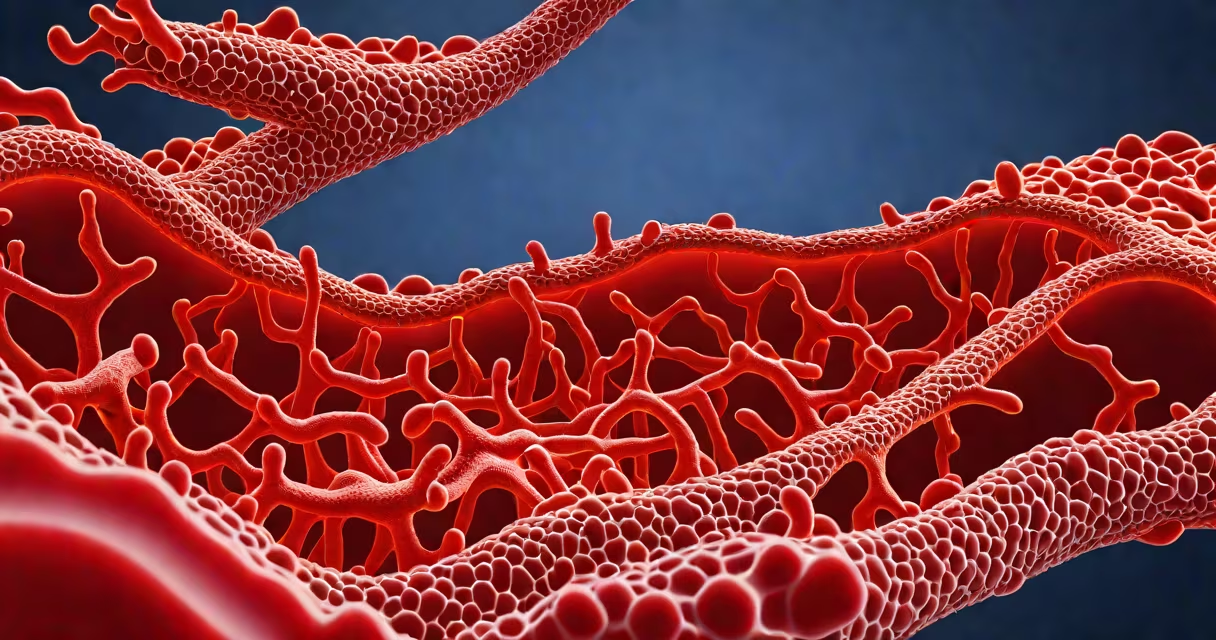
Nitric oxide (NO) is a gas molecule synthesized by endothelial cells lining blood vessels. It acts as a key signaling agent that relaxes smooth muscle tissue, dilates blood vessels, and improves circulation. This process lowers blood pressure and enhances oxygen delivery to tissues.
Produced from the amino acid L-arginine via the enzyme endothelial nitric oxide synthase (eNOS), nitric oxide plays a central role in vascular homeostasis. Its effects are rapid and localized-lasting only seconds due to its short half-life-but critical for maintaining healthy blood flow and preventing clot formation.
Without adequate nitric oxide, blood vessels constrict, increasing resistance and strain on the heart. Chronic deficiency is linked to hypertension, atherosclerosis, and insulin resistance. The body generates about 10-20 micromoles of NO per minute under normal conditions, primarily in the endothelium of arteries.
When blood pressure rises or shear stress increases in arteries, endothelial cells detect mechanical forces and activate eNOS. This enzyme converts L-arginine and oxygen into citrulline and nitric oxide. The newly formed NO diffuses into adjacent smooth muscle cells.
Inside smooth muscle, NO binds to soluble guanylate cyclase (sGC), activating it to produce cyclic GMP (cGMP). Elevated cGMP levels trigger calcium ion efflux, reducing intracellular calcium concentration. Lower calcium causes muscle relaxation, leading to vasodilation and reduced vascular resistance.
This mechanism is why medications like sildenafil (Viagra) work-they improve cGMP activity, amplifying NO's effect. However, they do not increase NO production; they preserve its action after it's formed.
The body produces nitric oxide through three enzymatic pathways, though eNOS is the primary regulator of vascular tone:
| Pathway | Enzyme | Primary Location | Function |
|---|---|---|---|
| Endothelial (eNOS) | Endothelial nitric oxide synthase | Blood vessel lining | Regulates blood flow and prevents platelet aggregation |
| Inducible (iNOS) | Inducible nitric oxide synthase | Immune cells, macrophages | Antimicrobial defense during infection |
| Neuronal (nNOS) | Neuronal nitric oxide synthase | Brain, nerves | Neurotransmission, synaptic plasticity |
eNOS-derived NO is the most relevant to cardiovascular health. iNOS produces large amounts of NO during inflammation, which can damage tissues if unchecked. nNOS contributes to learning and memory processes but is less involved in circulatory regulation.
A common misconception is that dietary supplements like L-arginine or beetroot juice directly boost nitric oxide levels. While they provide substrates for NO synthesis, their impact varies widely based on individual metabolic health. A 2019 study in Journal of the American Heart Association found that L-arginine supplementation improved endothelial function in patients with coronary artery disease but had no benefit in healthy individuals.
Low nitric oxide availability is a sign of endothelial dysfunction-a precursor to cardiovascular events. Research shows that people with type 2 diabetes have 30-40% lower NO bioavailability due to oxidative stress degrading NO into inactive forms.
For example, a 2021 clinical trial published in Circulation Research demonstrated that regular aerobic exercise increased eNOS expression by 50% in sedentary adults over 12 weeks. Participants showed measurable improvements in flow-mediated dilation (FMD), a direct measure of endothelial function.
Another non-obvious fact: nitric oxide is not stored. It is synthesized on demand and acts locally. Because it's a free radical gas, it cannot be transported in the bloodstream like hormones. Instead, it diffuses rapidly across cell membranes and exerts effects within milliseconds of production.
I've observed this in practice while reviewing vascular ultrasound reports. Patients with poor FMD scores often show low NO-dependent vasodilation despite normal blood pressure readings. Correcting lifestyle factors-such as improving sleep quality and reducing processed food intake-can restore NO function even without medication.
Nitric oxide is not the same as nitrites or nitrates found in cured meats. These compounds can be converted to NO in the stomach under acidic conditions, but the process is inefficient and may generate harmful byproducts like N-nitroso compounds, which are carcinogenic.
Some supplement brands claim "NO boosters" that deliver high-dose L-arginine or citrulline. While citrulline may improve NO synthesis more effectively than arginine (due to better absorption and bypassing first-pass liver metabolism), results are inconsistent. A 2020 meta-analysis in European Journal of Applied Physiology found that citrulline supplementation increased plasma NO metabolites by 15% on average-but only in trained athletes, not untrained individuals.
Nitric oxide is not a hormone. It lacks a receptor-binding structure and functions as a gaseous neurotransmitter. Unlike insulin or cortisol, it doesn't travel through the bloodstream to distant organs. Its actions are confined to the immediate vicinity of production.
Nitric oxide is essential for regulating blood flow, supporting immune function, and enabling neural communication. Deficiency correlates strongly with heart disease, stroke, and metabolic syndrome. Maintaining healthy NO levels involves consistent physical activity, antioxidant-rich diets, and avoiding smoking and excessive alcohol.
Understanding what is nitric oxide in the body reveals its role beyond basic physiology-it's a foundational element of long-term wellness. Monitoring vascular health through tools like FMD testing offers insight into NO status, especially in high-risk populations.
For those considering supplements, consult a healthcare provider. Some formulations may interact with blood pressure medications or cause gastrointestinal side effects. More on potential risks.