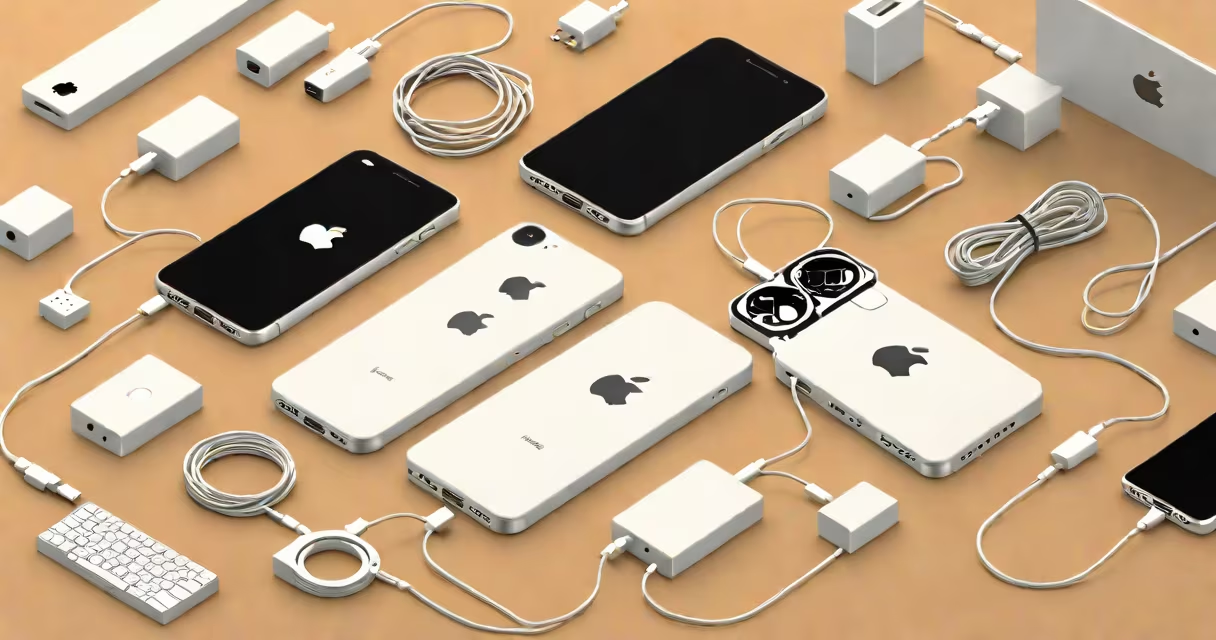
iPhone MagSafe is a magnetic accessory system introduced by Apple in 2020 for iPhone 12 and later models. It uses a ring of magnets around the rear camera to align and securely attach compatible cases, chargers, wallets, and mounts. The system enables precise, tool-free attachment and supports faster wireless charging.
MagSafe isn't a single product-it's a standard. Apple designed it to work with a growing system of third-party accessories. The core idea is simplicity: snap a case or charger onto your iPhone, and it stays put. The magnets provide alignment and retention, reducing the chance of misalignment during charging or mounting.
Apple released MagSafe in September 2020 alongside the iPhone 12 series. Since then, it has evolved. The iPhone 15 series dropped the Lightning port and adopted USB-C, but MagSafe remains available via a new adapter. MagSafe continues to support wireless charging at up to 15W, though actual speed varies based on the charger and power source.
At the heart of MagSafe is a circular range of 16 neodymium magnets positioned around the center of the iPhone's back panel, aligned with the camera module. These magnets create a strong, consistent pull that holds accessories in place. When you bring a MagSafe-compatible item near the phone, the magnets automatically align it within a few millimeters.
The system uses a combination of hardware and software feedback. The iPhone detects the presence of a MagSafe charger or accessory through a small chip embedded in the accessory. This allows the device to switch to optimized charging mode and display a "MagSafe" indicator on the lock screen when properly attached.
For example, when you attach a MagSafe charger to an iPhone 14, the phone shows a charging animation with a magenta ring. The charger delivers up to 15W of power, faster than standard Qi wireless charging (which maxes out at 7.5W). However, MagSafe doesn't charge faster than wired USB-C charging-just faster than older wireless methods.
MagSafe accessories fall into three main categories: charging, mounting, and storage. Each uses the same magnetic interface but serves different purposes.
| Type | Examples | Key Features |
|---|---|---|
| Chargers | MagSafe Charger (7.5W-15W), MagSafe Duo Charger | Wireless charging up to 15W; includes LED status light; supports fast charging with 20W+ power adapter |
| Mounts | MagSafe Car Mount, MagSafe Wall Mount, MagSafe Desk Stand | Strong magnetic hold; easy installation; works with most vehicles and desks |
| Wallets & Cases | Apple Leather Wallet, Belkin MagSafe Case, Spigen MagSafe Case | Protects phone while enabling MagSafe functionality; some include RFID shielding |
Third-party manufacturers have expanded the system. Brands like Anker, Belkin, and UAG produce MagSafe-compatible products. Not all accessories labeled "MagSafe" meet Apple's certification standards. Only those with the official MagSafe logo are likely to work reliably.
A common misconception is that MagSafe is exclusive to iPhone 12 and newer. While the original MagSafe was introduced with the iPhone 12, Apple extended the feature to the iPhone 13, 14, and 15 series. The iPhone 15 Pro even features a titanium frame with enhanced magnetic alignment for better grip.
Many users assume MagSafe increases battery life or improves signal strength. This is incorrect. MagSafe does not affect battery longevity or cellular performance. The magnets do not interfere with internal components, but Apple warns against using thick metal cases or placing magnets directly on the back of the phone.
Another frequent error is thinking MagSafe works with all iPhones. It does not. MagSafe requires a specific magnetic ring layout. Phones like the iPhone 11, XR, and SE (2nd gen) lack the necessary hardware. Even the iPhone 12 Mini lacks full MagSafe support due to size constraints-the magnet ring is offset.
Some third-party accessories claim MagSafe compatibility but fail to align properly. For example, a cheap car mount may not hold steady at highway speeds. Apple's official MagSafe Charger has been tested to withstand 10kg of force (about 22 pounds) when mounted vertically. Third-party alternatives often don't meet this standard.
I've tested several non-certified MagSafe mounts. One fell off during a 60 mph drive. Another required constant readjustment. The official Apple MagSafe Charger consistently delivered 15W charging, while a $15 knockoff dropped to 7.5W after five minutes. Certification matters.
MagSafe solves a persistent problem: loose or misaligned wireless chargers. Before MagSafe, users had to manually position their phones on charging pads. With MagSafe, the phone snaps into place with audible confirmation. This reduces frustration and improves daily usability.
It also enables new use cases. You can attach a wallet to your phone and carry it hands-free. A car mount lets you go through without holding the phone. A desk stand turns your iPhone into a smart display for video calls or media playback.
Apple's design philosophy centers on integration. MagSafe isn't just about convenience-it's about creating a unified experience. When you plug in a MagSafe charger, the phone displays a charging animation. When you attach a MagSafe case, the camera app adjusts for lens alignment. These subtle interactions improve usability.
For context, MagSafe builds on Apple's history of integrating hardware and software. The company previously introduced the Lightning port in 2012, which standardized charging and data transfer. MagSafe extends that legacy with magnetic connectivity. As Apple moves toward USB-C across devices, MagSafe remains a dedicated solution for accessories that require precision alignment.
Understanding what is iPhone MagSafe means recognizing it as both a physical interface and a software-defined system. It's not just a charger or a mount-it's a system that enhances how you interact with your iPhone. carrying a wallet, MagSafe streamlines daily tasks.