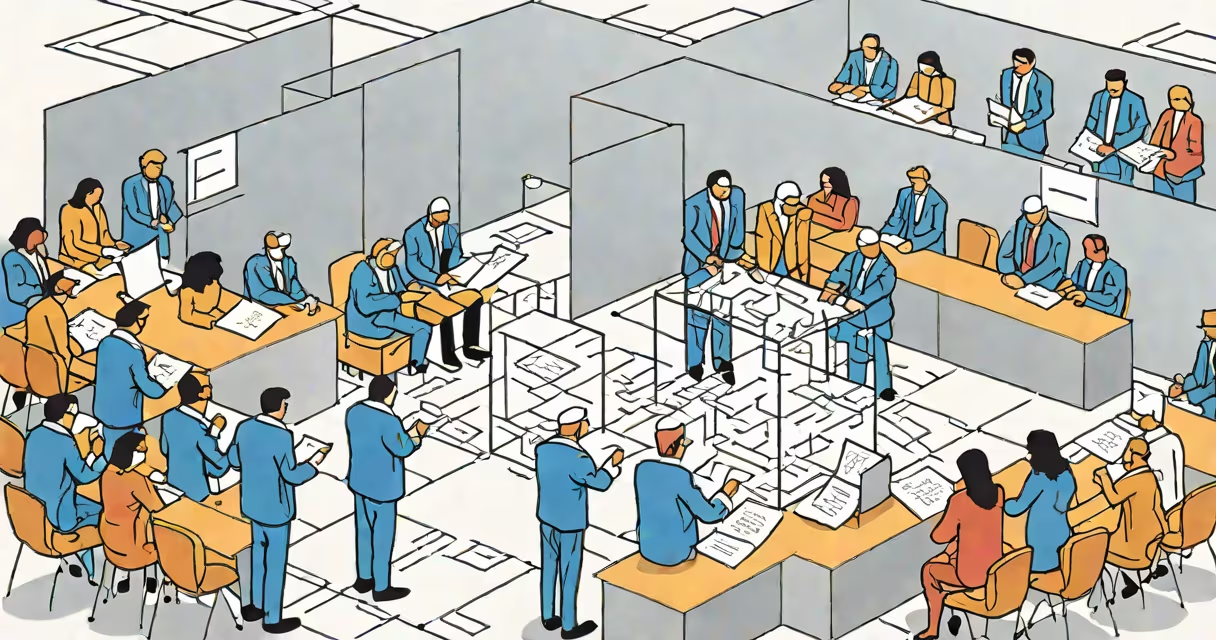
Democracy is a system of government in which power resides with the people, exercised through free and fair elections, protection of individual rights, and mechanisms for civic participation and accountability. It is not a single model but a structure grounded in principles like majority rule, minority rights, and institutional checks.
At its core, democracy requires regular, competitive elections where citizens choose leaders through universal suffrage. These elections must be transparent, verifiable, and conducted under the rule of law. The United Nations defines democracy as "a system of government in which the people have the authority to choose their governing officials," emphasizing both representation and popular legitimacy.
The concept originated in ancient Athens around 500 BCE, where male citizens gathered in assemblies to debate and vote on laws. Modern democracies evolved from Enlightenment ideals and constitutional frameworks, such as those in the United States and France. Today, democracy manifests in various forms-representative, direct, and deliberative-but all share foundational elements: free expression, independent judiciary, and access to information.
Modern democratic systems rely on institutions to translate public will into policy. Citizens elect representatives who make decisions on their behalf. These representatives serve fixed terms and are subject to recall or removal if they fail to act in the public interest. In parliamentary systems, the executive branch derives authority from legislative approval, creating a feedback loop between voters and lawmakers.
Direct democracy supplements representative models in some contexts. Referendums allow citizens to vote directly on specific issues, such as constitutional amendments or major policy changes. Switzerland uses this model extensively, with national referendums held every year on topics ranging from immigration to environmental regulations. In 2023, Swiss voters rejected a proposal to ban private drone flights, demonstrating how citizen input shapes regulation.
Accountability mechanisms include independent media, civil society organizations, and oversight bodies. When elected officials violate laws or ethical standards, courts and ethics commissions can investigate and sanction them. The U.S. Congress, for example, has the power to impeach federal officials, including the president, ensuring that no individual holds unchecked authority.
Democracy is often misunderstood as mere majority rule. But in practice, it protects minority rights through constitutional safeguards. A law passed by a 51% majority cannot strip fundamental freedoms-such as speech or religion-from a minority group. The U.S. Supreme Court ruled in Tinker v. Des Moines (1969) that students have the right to wear black armbands to protest the Vietnam War, affirming that democratic systems must protect dissent.
Another misconception is that democracy equates to constant consensus. In reality, democratic societies accept conflict as part of governance. Disagreement fuels debate, improves policy quality, and strengthens legitimacy. The European Parliament regularly debates climate legislation, with opposing factions presenting evidence and proposing alternatives-resulting in stronger, more inclusive outcomes.
Democracy also requires informed participation. Voter turnout in national elections varies widely. In 2020, U.S. presidential turnout reached 60%, the highest since 1900, according to the U.S. Census Bureau. Low turnout correlates with reduced trust in institutions. Countries like Belgium and Sweden maintain high participation rates through automatic voter registration and mandatory voting, though enforcement varies.
Democracies differ in structure and function. The following table outlines key models:
| Type | How It Works | Example Country | Key Feature |
|---|---|---|---|
| Representative | Citizens elect officials to make laws and govern | United States | Separation of powers among branches |
| Direct | People vote directly on laws and policies | Switzerland | Annual national referendums |
| Deliberative | Randomly selected citizens discuss issues and advise policymakers | Ireland | Citizen assemblies on climate and abortion reform |
| Participatory | Communities engage in decision-making at local levels | Brazil (participatory budgeting) | Residents allocate municipal funds via forums |
Each model reflects different values. Representative systems prioritize efficiency and expertise. Direct systems emphasize sovereignty and transparency. Deliberative models aim to reduce polarization by fostering informed discussion. Participatory systems focus on equity and local empowerment.
Democracy is not synonymous with freedom or equality. A country can hold elections and still restrict press freedom or disenfranchise certain groups. Venezuela held elections from 1998 to 2013, but opposition parties were barred from running in 2017, leading the Organization for Security and Co-operation in Europe (OSCE) to label the process "neither free nor fair."
Some nations claim to be democratic while operating under authoritarian control. China describes itself as a "socialist democracy" but limits political competition and controls media narratives. According to Freedom House's 2023 Freedom in the World report, only 20% of global countries are classified as "free," with most of those in Western Europe and North America.
A critical distinction lies in the difference between procedural and substantive democracy. Procedural democracy focuses on elections and legal processes. Substantive democracy evaluates whether citizens can meaningfully influence outcomes. For example, a country may hold regular elections but fail to deliver basic services, education, or healthcare-indicating a gap between form and function.
The 2020 U.S. presidential election illustrates how democracy functions under stress. Over 158 million Americans voted, the highest turnout in over a century. Mail-in ballots increased due to pandemic restrictions, with states like Pennsylvania and Georgia implementing new verification procedures.
After the results were certified, false claims of voter fraud spread widely online. Despite multiple court rulings confirming the integrity of the vote-including a federal judge in Michigan dismissing a lawsuit based on lack of evidence-the spread of disinformation threatened public confidence.
The Electoral College confirmed Joe Biden's victory. Congress convened in January 2021 to certify the results. The peaceful transfer of power, despite intense political division, demonstrated the resilience of democratic institutions. This event underscored that democracy depends not only on fair elections but on shared acceptance of outcomes.
In 2018, I attended a community forum in Portland, Oregon, where residents debated zoning changes affecting affordable housing. The city had established a participatory planning process requiring public comment and advisory panels. After three months of meetings, a draft plan was revised based on input from renters, small business owners, and environmental advocates.
When the final vote came, the council approved a version that included inclusionary zoning-requiring developers to set aside 15% of units for low-income households. The outcome reflected compromise, not dominance. That experience showed me that democracy isn't about winning-it's about making space for voices that might otherwise be ignored.
While often used interchangeably, democracy and republic are distinct concepts. A republic is a state without a monarch, governed by elected officials. A democracy emphasizes popular sovereignty. The United States is both-a constitutional republic with democratic features. Its founders designed a system where elected representatives, not direct voters, make laws.
Democracy shares conceptual roots with scientific inquiry. Both rely on evidence, peer review, and openness to revision. Just as a hypothesis is tested against data, democratic decisions are evaluated through outcomes. If a policy fails to improve public health or economic mobility, it may be revised or replaced.
Similarly, democratic systems require ethical grounding. The Universal Declaration of Human Rights, adopted by the UN in 1948, affirms that "everyone has the right to take part in the government of his country, directly or through freely chosen representatives." This principle underpins democratic legitimacy.
When institutions uphold these standards, democracy endures. When they erode-through gerrymandering, voter suppression, or disinformation-democracy weakens. The 2023 Global State of Democracy Report by International IDEA notes that 43% of democracies experienced a decline in civil liberties over the past decade, highlighting ongoing risks.
Democracy is not a static condition. It is a living system maintained through vigilance, engagement, and institutional integrity. To define democracy is to define a promise: that power belongs to the people, and that their will, expressed fairly and consistently, shapes the future.
Understanding how to define democracy begins with recognizing its structures, principles, and real-world tests. It is not simply voting-it is accountability, inclusion, and the continuous effort to ensure that no one is above the law.