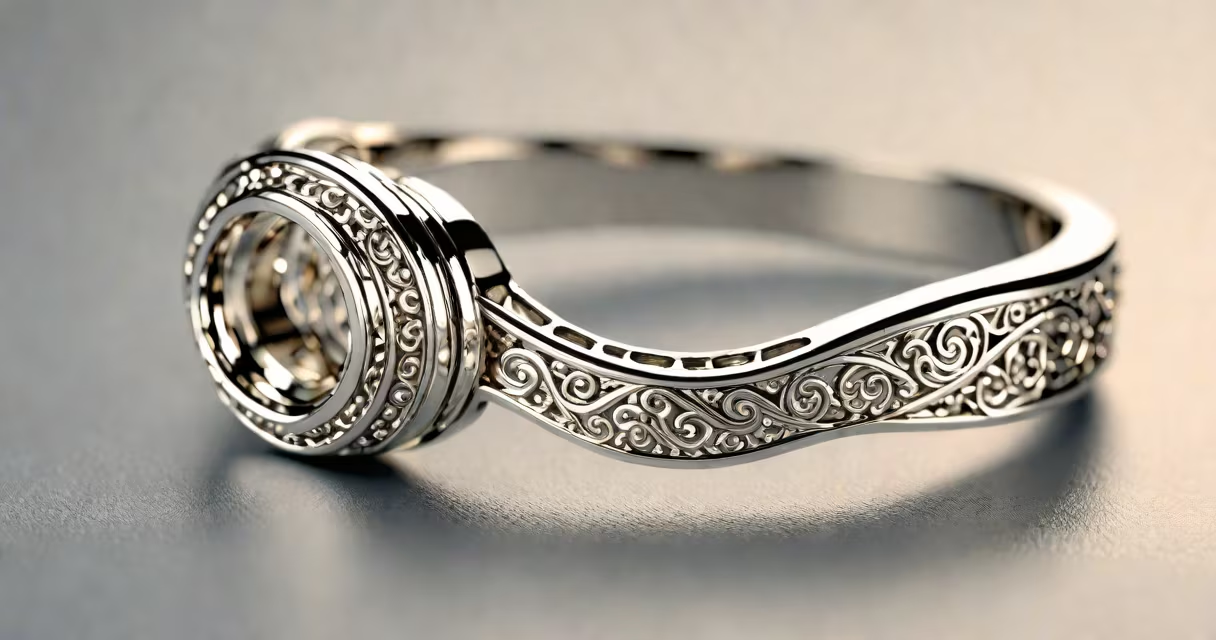
Fine silver plated refers to a base metal coated with a thin layer of 99.9% pure silver, applied via electroplating. The finish mimics solid fine silver but costs less.
This method combines affordability with visual appeal. A piece labeled "fine silver plated" contains no more than 0.001 inches (25 microns) of actual silver. The base metal-often brass, copper, or nickel-provides structural integrity. Without the plating, the base material would tarnish quickly and lack the luster associated with silver.
The U.S. Federal Trade Commission defines "silver plated" as requiring at least 0.000006 ounces of silver per square inch of surface area. This standard ensures minimal silver content, preventing misleading claims. For context, a typical silver-plated spoon may contain about 0.002 ounces of silver-less than half a gram.
Electroplating deposits silver ions onto a conductive surface using an electric current. The base metal is cleaned, polished, and activated with a layer of nickel or copper to improve adhesion. The item then enters a bath containing silver nitrate and other electrolytes. When current passes through, silver atoms bond to the surface.
Plating thickness matters. Standards define four levels: light (0.00005 inches), medium (0.0001 inches), heavy (0.0002 inches), and extra-heavy (0.0005 inches). Heavy plating lasts longer-up to five years with regular wear-while light plating may wear off in months.
A real-world example: a pair of earrings with 0.0002-inch silver plating. At $12 per ounce of silver, the silver content costs roughly $0.03. The base metal and labor account for most of the $18 retail price. Without plating, the earrings would look like cheap brass.
Base metals vary by application. Brass is common in costume jewelry due to its malleability and low cost. Copper is used in decorative items because it accepts silver well and resists corrosion. Nickel is often used in cutlery and tableware for durability and resistance to acid.
Table: Common Base Metals and Their Uses
| Base Metal | Typical Use | Advantage | Limitation |
|---|---|---|---|
| Brass | Jewelry, decorative accents | Easy to shape, affordable | Tarnishes faster than copper |
| Copper | Art pieces, wall hangings | Strong adhesion to silver | Prone to oxidation if unsealed |
| Nickel | Flatware, watch cases | Resists wear and acid | Can cause allergic reactions |
Some manufacturers use a double-layer process: nickel under the silver to prevent copper migration. Over time, copper can diffuse through silver and discolor the surface. The nickel barrier stops this-common in high-end plated watches.
Fine silver plating is widespread in consumer goods. Jewelry accounts for over 60% of applications. Rings, necklaces, and bracelets use plating to achieve a premium look at low cost. A silver-plated wedding band sells for $25-$50, compared to $300+ for solid sterling silver.
Home decor uses plating too. Picture frames, candle holders, and mirror edges benefit from the reflective quality of silver. A 12-inch wall sconce with fine silver plating costs $45 to produce, versus $180 for solid silver.
Industrial uses include electronics. Silver-plated connectors offer better conductivity than gold at lower cost. In circuit boards, silver plating reduces resistance by 15% compared to tin-only finishes.
"Fine silver plated" is often mistaken for "sterling silver." Sterling silver is 92.5% silver, 7.5% alloy-typically copper. It's solid, not coated. A sterling silver spoon weighs 40 grams and costs $120. A fine silver plated version of the same size weighs 18 grams and costs $20. The difference is not just price-it's composition.
Another error: assuming all silver plating wears off equally. Thickness determines longevity. A 0.0001-inch layer on a bracelet worn daily may last 18 months. A 0.0002-inch layer on a necklace worn weekly may survive five years. Wear patterns differ based on contact frequency and friction.
Fact: silver plating can be reconditioned. A jeweler can replate a ring with new silver using a process called "replating." This restores the finish and extends life. Replating costs $15-$30, depending on size and complexity.
I once repaired a vintage locket with fine silver plating. After cleaning, I found the silver layer had worn through at the hinge. Using a commercial plating kit, I restored the surface. The result matched the original-visually indistinguishable. But the process required precise voltage control and clean immersion. Even small errors caused uneven deposition.
Not all silver coatings are equal. "Silver plate" refers to any silver layer, regardless of purity. "Fine silver plated" specifies 99.9% pure silver. Some products use "silver electroplate" to imply higher quality-but it doesn't guarantee purity or thickness.
Manufacturers sometimes label items as "silver finished" without specifying plating. That term lacks regulatory definition. A product labeled "silver finished" could have a thin, unstable layer. Always check for "fine silver plated" or "sterling silver" for clarity.
For reference, the American Society for Testing and Materials (ASTM) sets standards for silver plating thickness and adhesion. ASTM B488 outlines test methods for measuring plating thickness and durability. The International Organization for Standardization (ISO) also publishes guidelines on metal coating specifications.
When shopping, look for hallmarks. Items marked "EP" (electroplated) or "SLP" (silver layered plate) indicate plating. Solid silver is marked "925" or "Sterling." Avoid vague terms like "silver tone" or "silver look"-these describe appearance, not composition.
Fine silver plated is not a substitute for solid silver in investment or heirloom contexts. But for everyday wear, home décor, and budget-conscious design, it delivers consistent performance and visual appeal.
Understanding what is fine silver plated prevents misjudgment. It's not "real silver," but it's not worthless either. With proper care, it lasts years. When choosing between options, compare thickness, base metal, and intended use.