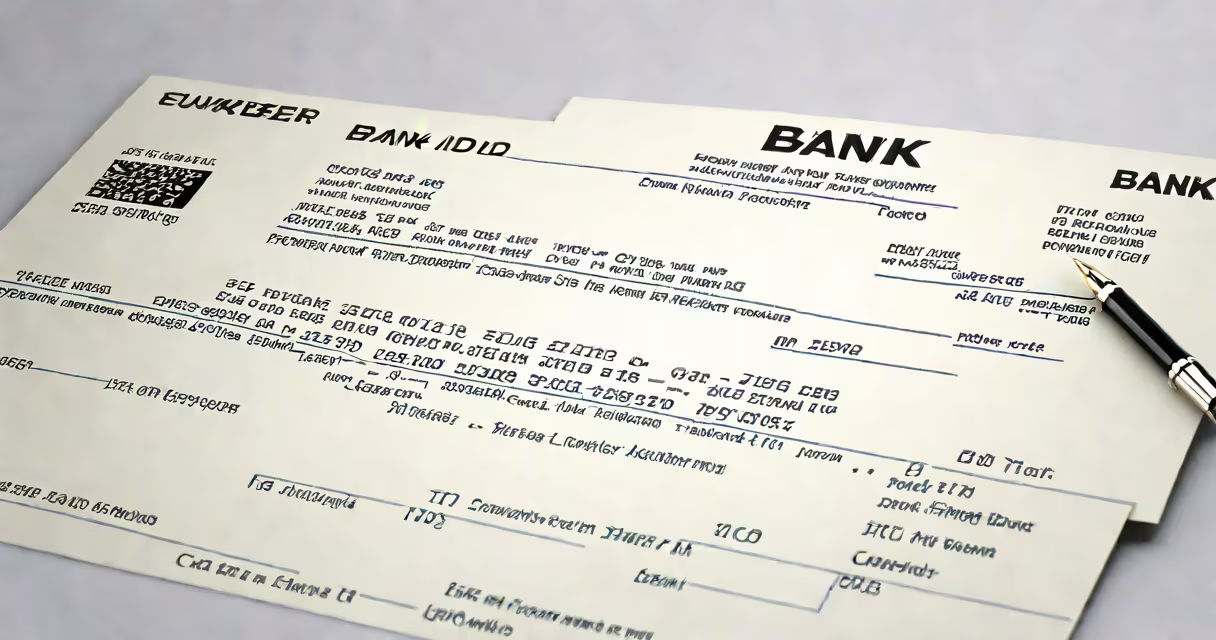
A bank ID number, often called a routing number, is a nine-digit code that identifies a specific financial institution in the United States. It routes electronic payments and direct deposits between banks and ensures transactions reach the correct destination.
Routing numbers are assigned by the American Bankers Association (ABA) and appear on checks, online banking portals, and wire transfer forms. They are distinct from your personal account number, which identifies your individual account within that bank.
The Federal Reserve System maintains oversight of the national payment system, including routing number validation. According to the ABA, routing numbers are standardized across all U.S. financial institutions and are required for all ACH (Automated Clearing House) and wire transfers.
When you set up a direct deposit, pay a bill electronically, or send money via ACH, the system uses your bank's routing number to locate the receiving institution. The number directs funds through the Federal Reserve's network to the correct bank.
For example, if you receive a paycheck via direct deposit, your employer's payroll software sends the payment using your bank's routing number and your account number. The Federal Reserve processes the transaction and credits the funds to your account within 1-2 business days.
Routing numbers are also used for wire transfers. Domestic wires require both the recipient's routing number and account number. International wires may use SWIFT codes instead, but domestic transfers rely solely on the routing number.
There are two primary types of bank ID numbers used in the U.S.:
| Type | Length | Use Case | Example |
|---|---|---|---|
| Routing Number | Nine digits | ACH, direct deposit, wire transfers | 021000021 (Bank of America) |
| Account Number | 8-17 digits | Individual account identification | 1234567890 (your personal account) |
Routing numbers are publicly available on checks and bank websites. You can find yours on the bottom-left corner of a check, below the bank name. Account numbers are private and should never be shared.
Some banks use multiple routing numbers based on location or transaction type. For example, Bank of America uses different routing numbers for accounts opened in California versus New York. Always verify the correct number for your region.
Many people confuse the bank ID number with their account number. The routing number identifies the bank; the account number identifies your specific account. Mixing them up causes failed transactions or delayed deposits.
Another misconception is that routing numbers are unique to individuals. They are not. The same routing number applies to all accounts at a single branch or institution. For example, every checking account at a Bank of America branch in Chicago uses the same routing number, 021000021.
Some assume that routing numbers are encrypted or protected by default. They are not. Since they're printed on checks and listed on bank websites, they're accessible to anyone who sees a check or visits a bank's official site. This accessibility is intentional-it enables smooth processing-but it also increases risk if misused.
While routing numbers aren't secret, they're critical for transaction integrity. Using the wrong number can result in funds being sent to the wrong bank. In rare cases, criminals have exploited routing number mismatches to redirect payments.
According to the Consumer Financial Protection Bureau (CFPB), over 150,000 complaints were filed in 2023 related to unauthorized transactions involving routing numbers. Most involved phishing scams where victims unknowingly shared their routing and account details.
I once helped a client recover funds lost after entering their routing number on a fake bank portal. The site looked identical to the real bank's login page. After reporting it to the CFPB, we traced the scam to a domain registered in Eastern Europe. The attacker used the routing number to initiate a wire transfer. This incident underscored how important it is to verify the URL before submitting any financial data.
Financial institutions use multi-layered verification to prevent fraud. When you set up a new payment, many banks perform micro-deposit validation-sending small test amounts to confirm the routing and account numbers match. This process reduces errors and blocks unauthorized access.
A bank ID number is a nine-digit routing number that identifies a financial institution. It enables electronic fund transfers through ACH and wire systems. It is not the same as your account number, which identifies your personal account.
Understanding the difference between routing numbers and account numbers prevents costly errors and protects against fraud. The system relies on accuracy-each number serves a precise role in the nation's financial infrastructure.