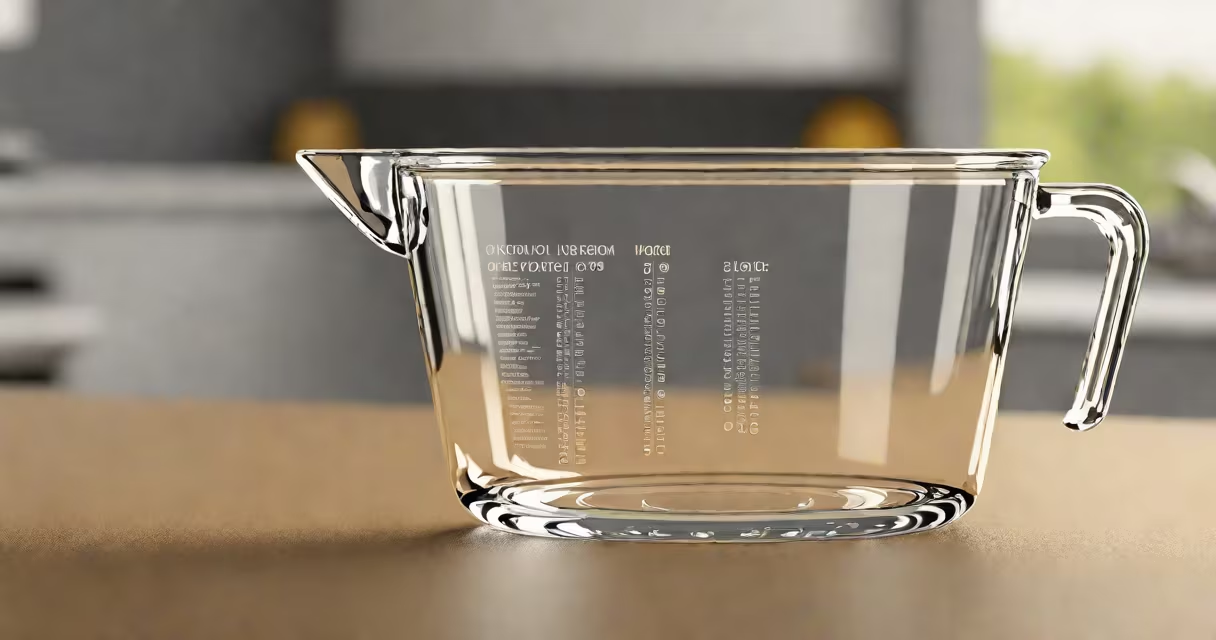
A cup in measurements is a standardized volume unit equal to 8 fluid ounces, 236 milliliters, or 1/2 pint. It's used globally in cooking and baking to ensure consistent results. The physical form varies by region but typically resembles a small, wide-mouthed container with a handle and marked increments.
Cooking relies on precise volume measures. A cup is not a vague amount-it's a defined quantity. In the U.S., a legal cup equals exactly 236.588 mL, according to the National Institute of Standards and Technology (NIST). In metric systems, it's rounded to 250 mL for simplicity, though this differs slightly from the U.S. standard. These differences matter when scaling recipes across regions.
Measuring cups come in two main forms: dry and liquid. Dry measuring cups are flat-topped, designed to be filled and leveled off with a knife. Liquid measuring cups have spouts and transparent sides with markings at 1/4, 1/3, 1/2, and full cup. The most common design is a clear plastic or glass cylinder with a handle and graduated lines.
Most standard kitchen measuring cups are about 4 inches tall and 3.5 inches wide at the base. They hold approximately 236 mL of liquid. When filled to the 1-cup line, the surface of the liquid sits flush with the top edge of the marking. This line is usually etched or printed near the rim.
For dry ingredients like flour or sugar, a dry measuring cup is used. These are typically made of metal or plastic, have no spout, and are meant to be filled to the brim and then scraped flat with a straight edge. A typical dry cup holds 250 mL, which is slightly larger than the U.S. fluid cup. This difference causes issues when substituting dry and liquid measures without conversion.
Visualizing a cup helps avoid errors. A standard coffee mug holds about 8-10 fluid ounces, making it close to a cup-but not exact. Many mugs are wider and shorter, so they hold more volume than a proper measuring cup. Using a mug instead of a measuring cup introduces variability, especially in baking where precision affects texture and rise.
The following table compares common cup types used in kitchens:
| Type | Volume (U.S.) | Shape | Use Case | Common Material |
|---|---|---|---|---|
| Liquid measuring cup | 8 fl oz (236 mL) | Cylindrical, transparent, with spout | Measuring liquids like milk, oil, water | Plastic, glass |
| Dry measuring cup | 8.5 fl oz (250 mL) | Flat-bottomed, no spout | Measuring flour, sugar, rice | Metal, plastic |
| Measuring cup set | 1/4, 1/3, 1/2, 1 cup | Stackable or nested | Multiple volume needs in one tool | Plastic, silicone |
One key distinction often missed: dry and liquid cups are not interchangeable. A dry cup holds more volume than a liquid cup due to different standards. For example, 1 dry cup of flour weighs about 120 grams, while 1 liquid cup of water weighs exactly 236 grams. Confusing them leads to ingredient imbalances.
I once baked banana bread using a dry cup for milk because I didn't have a liquid one. The batter was too wet, and the loaf sank in the middle. After checking NIST guidelines, I realized the dry cup held 250 mL, not 236 mL-just 10% more. That small difference altered the recipe's hydration. Now I always use the correct cup type.
Many assume a "cup" is a flexible or approximate measure. It's not. In regulated food labeling, a cup must meet specific volume standards. The U.S. FDA defines a cup as 240 mL for nutrition facts, even though the actual legal measure is 236.588 mL. This discrepancy exists because 240 mL is easier to calculate with-especially for rounding nutritional values.
Another misconception: that all cups are the same size regardless of country. In Canada, a cup is 250 mL. In Australia, it's 250 mL, but the term "cup" is less standardized in home kitchens. In the UK, a cup is traditionally 284 mL (a UK imperial cup), which is larger than the U.S. version. Using a UK cup in a U.S. recipe increases ingredient amounts by nearly 20%.
When converting between units, always verify the system. For example, 1 cup = 236 mL in the U.S., but 1 cup = 250 mL in metric contexts. Always check whether your recipe uses U.S. customary or metric standards. Using the wrong standard leads to failed dishes.
Consider a vanilla cake recipe requiring 2 cups of flour, 1 cup of sugar, and 1 cup of milk. Using the correct measuring tools ensures consistency:
If you substitute a coffee mug for the milk, you risk adding 300 mL instead of 236 mL-a 27% increase. This excess liquid weakens the structure, causing collapse during baking. The result: a dense, soggy cake.
Understanding what a cup looks like in measurements prevents such errors. It's not just a mental image-it's a physical tool with defined dimensions. Always use calibrated measuring cups, not household containers.