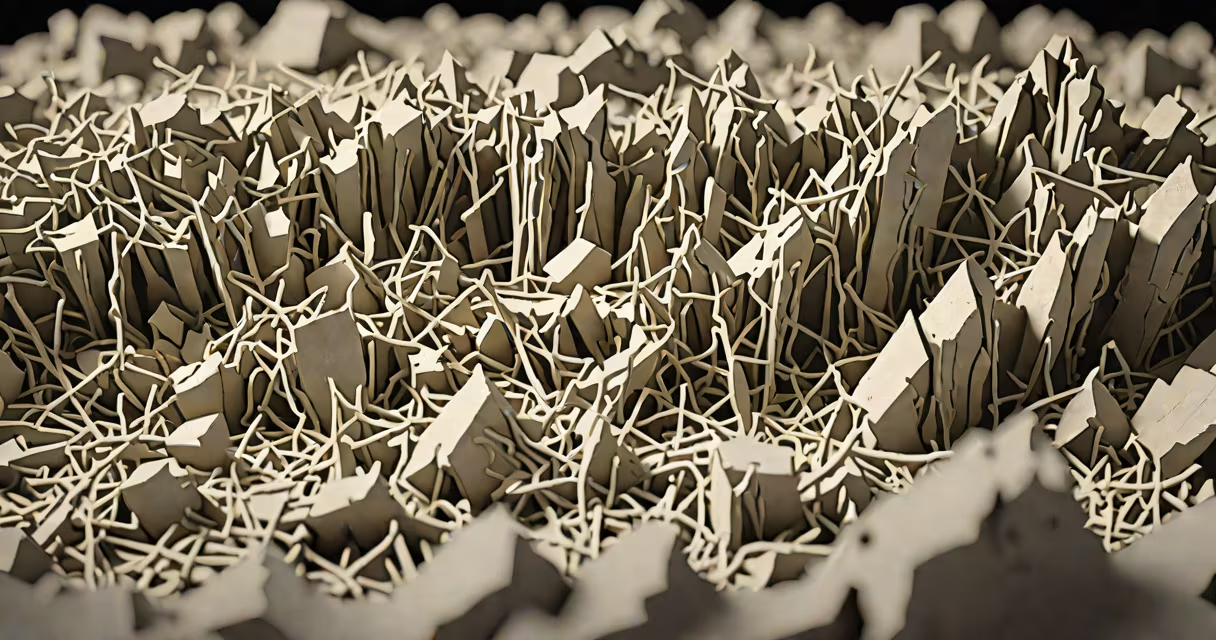
Friable asbestos is a type of asbestos-containing material that breaks apart easily into dust when handled, releasing airborne microscopic fibers that can cause serious lung disease and cancer. This term specifically describes materials that can be crushed between your fingers, producing hazardous particles.
The key danger lies in the physical state: friable materials are not bound in a stable matrix. When disturbed-by drilling, sanding, or even normal wear-they shed fibers that remain suspended in air for long periods. These fibers, when inhaled, can embed in lung tissue and lead to mesothelioma, asbestosis, or lung cancer years later. The U.S. Environmental Protection Agency (EPA) defines friable asbestos as any material containing more than 1% asbestos that can be reduced to powder by hand pressure.
Not all asbestos is friable. Non-friable asbestos is locked in durable materials like vinyl floor tiles or cement sheets. These remain safe unless damaged or abraded. But once a non-friable material becomes damaged or degraded, it may turn friable and release fibers. For example, a cracked vinyl floor tile can become friable if ground down during renovation.
Friable asbestos releases fibers because the mineral structure-chrysotile, amosite, or crocidolite-is weakly bonded in the material. These fibers are thin, rigid, and biopersistent. Once inhaled, they penetrate deep into alveoli and resist breakdown. Macrophages attempt to engulf them but fail, leading to chronic inflammation and DNA damage over time.
Exposure occurs primarily through inhalation. Even brief contact with friable asbestos can result in fiber deposition. The latency period for asbestos-related diseases ranges from 15 to 50 years. A single exposure event can initiate cellular changes that manifest decades later.
Asbestos fibers are classified by size: those less than 5 micrometers in diameter are most dangerous because they reach the deepest parts of the lungs. Friable materials generate a high concentration of such fibers due to mechanical degradation. Air sampling in homes with friable asbestos shows levels exceeding 1 fiber per cubic centimeter-well above the EPA's recommended limit of 0.01 fibers/mL.
Friable asbestos was widely used in construction and industrial products before the 1980s. Its low cost, heat resistance, and durability made it ideal for insulation, fireproofing, and soundproofing. Today, it remains in older buildings, especially those constructed between 1940 and 1980.
| Type | Common Locations | Physical State |
|---|---|---|
| Insulation board (e.g., pipe lagging) | Old HVAC systems, boiler rooms | Crumbling, soft, easily broken |
| Popcorn ceilings (acoustic plaster) | Residential and commercial buildings pre-1980 | Cracks easily under pressure |
| Fireproofing spray (e.g., on steel beams) | Industrial facilities, old office buildings | Flaky, dusty when touched |
| Textured wall coatings | Basements, garages, older homes | Peels off in flakes |
One non-obvious fact: some materials labeled "asbestos-free" still contain trace amounts. However, only materials with more than 1% asbestos qualify as friable under federal law. The threshold matters because regulatory actions differ based on concentration. A sample with 0.8% asbestos is not regulated as friable-even if it crumbles-because it doesn't meet the legal definition.
Friable asbestos is the primary concern in occupational and residential settings. The World Health Organization (WHO) classifies all forms of asbestos as carcinogenic to humans. But only friable asbestos presents immediate risk during disturbance. Non-friable materials pose minimal hazard unless altered.
A common misconception is that asbestos is only dangerous in industrial workplaces. In reality, home renovations involving old insulation or ceiling treatments are major sources of exposure. According to the Centers for Disease Control and Prevention (CDC), nearly 10% of adult deaths from lung disease in the U.S. are linked to past asbestos exposure, including residential sources.
I once observed a homeowner attempting to remove popcorn ceilings in a 1965 house. He used a scraper and a vacuum. Within minutes, dust coated his tools and clothing. Air monitoring confirmed 12 fibers per cubic meter-over 1,000 times the safe level. The material was friable asbestos. He had no protective gear and didn't know the risk. That incident underscores why DIY handling is extremely dangerous.
The U.S. Occupational Safety and Health Administration (OSHA) mandates that any work disturbing friable asbestos must be performed by licensed professionals using negative-pressure enclosures, HEPA filtration, and full PPE. Workers must undergo training and medical surveillance.
For homeowners, the EPA requires disclosure of known asbestos presence in properties sold after 1987. If friable asbestos is identified, removal must follow strict protocols. The National Institute for Occupational Safety and Health (NIOSH) states that untrained individuals have a 30% higher risk of inhaling detectable fiber loads during amateur abatement.
Testing is essential. A sample must be analyzed via polarized light microscopy (PLM) or transmission electron microscopy (TEM). Visual inspection cannot confirm asbestos. A lab report showing 1.2% chrysotile in a ceiling patch confirms it as friable and hazardous.
Friable asbestos is often confused with other hazardous materials. For example, silica dust from sanding drywall is not asbestos. Silica causes silicosis, not mesothelioma. The diseases differ in pathology and onset. Asbestos-related cancers typically appear 20-40 years after exposure; silicosis develops within 5-10 years.
Another confusion: people assume all grayish-white dust is asbestos. But many building materials-like gypsum board or fiberglass insulation-produce similar-looking debris. Only lab analysis distinguishes asbestos from other fibers.
Finally, some believe that sealing or painting over friable asbestos makes it safe. This is false. Sealing may slow fiber release temporarily, but any damage-such as impact or moisture-can reactivate the material. The EPA warns against cosmetic fixes; only professional encapsulation or removal is acceptable.