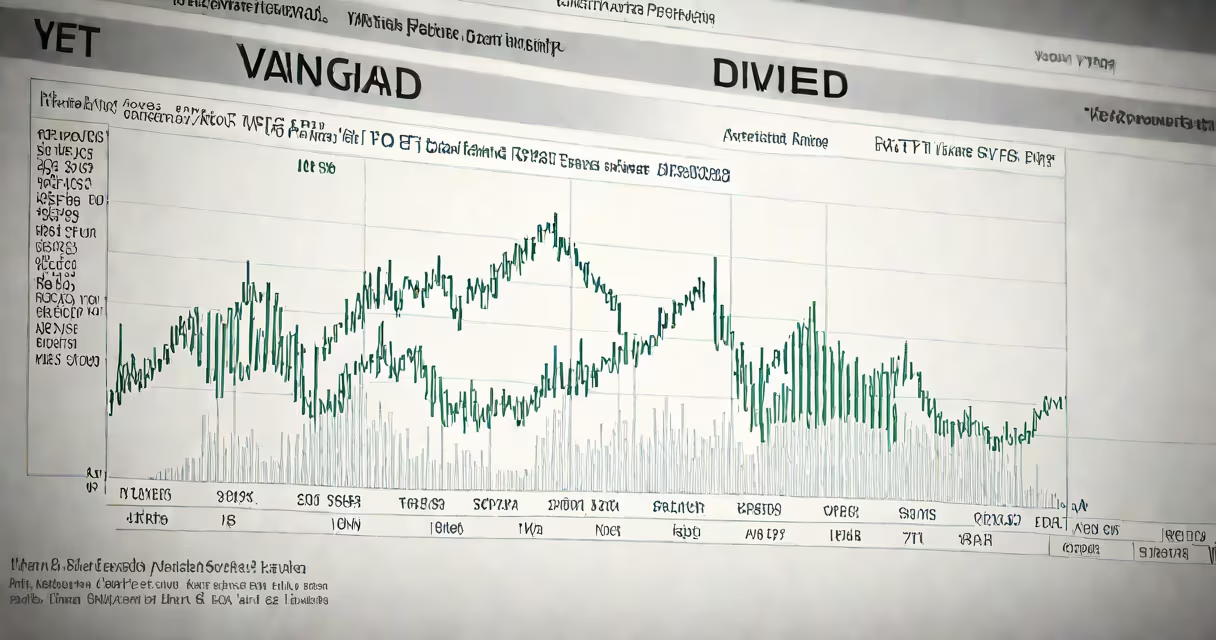
The Vanguard Monthly Dividend ETF (VYM) is an exchange-traded fund that distributes dividends to investors every month, drawing from a portfolio of 100+ large-cap U.S. companies with a history of consistent dividend growth. It targets stable income through proven dividend payers, primarily in consumer staples, healthcare, and financial services.
VYM tracks the CBOE U.S. Dividend Growers Index, which selects companies based on a minimum 10-year record of increasing dividends. The fund holds stocks like Johnson & Johnson, Procter & Gamble, and Microsoft-companies with strong balance sheets and predictable earnings. These characteristics reduce volatility compared to broad market indexes, making VYM a core holding for income-focused portfolios.
Dividends are paid on the 15th of each month, aligning with typical payroll cycles. This frequency offers more predictable cash flow than quarterly-paying funds. For example, a $10,000 investment in VYM with a 3.8% yield generates approximately $31.67 per month-$380 annually-without requiring reinvestment timing.
VYM operates as a passively managed index fund. Instead of active stock picking, it mirrors the performance of the CBOE U.S. Dividend Growers Index. This index excludes companies with declining or inconsistent dividend histories, focusing only on those that have increased payouts for at least ten consecutive years.
Rebalancing occurs quarterly to maintain sector weightings within 10% of the benchmark. The fund's turnover rate averages less than 5% annually, meaning low trading costs and minimal tax impact. As of Q1 2024, VYM held 107 securities, with 37% in consumer staples, 18% in healthcare, and 14% in financials.
Because VYM is structured as a regulated investment company under IRS rules, capital gains distributions are typically low. Most returns come from dividends, not price appreciation. This makes it suitable for taxable accounts, especially when paired with tax-loss harvesting strategies.
Each share of VYM represents ownership in a diversified basket of 107 U.S. equities. The top 10 holdings account for 44% of the fund's assets. Johnson & Johnson leads with 5.1%, followed by Microsoft (4.7%), Procter & Gamble (4.3%), and JPMorgan Chase (3.9%).
| Top Holding | Weight | Dividend Yield | Market Cap |
|---|---|---|---|
| Johnson & Johnson | 5.1% | 3.0% | $440B |
| Microsoft | 4.7% | 0.8% | $2.8T |
| Procter & Gamble | 4.3% | 2.4% | $350B |
| JPMorgan Chase | 3.9% | 2.3% | $410B |
These stocks are selected not for growth potential but for their ability to sustain and grow payouts. For example, Johnson & Johnson has raised its dividend for 59 consecutive years. Microsoft has increased its payout every year since 2004. Their consistent behavior reduces the risk of sudden cuts during economic downturns.
Investors use VYM to generate regular income without selling shares. Retirees often hold it as a core income generator, supplementing Social Security and pensions. A 65-year-old investor with $250,000 in VYM would receive about $750 per month in dividends-enough to cover basic living expenses in many U.S. cities.
It's also used in retirement accounts like IRAs and 401(k)s. Because dividends are taxed at qualified rates (up to 15% for most taxpayers), VYM can offer better after-tax returns than savings accounts or bonds. Over 10 years, a $100,000 investment in VYM grew to $156,000 with reinvested dividends, according to Morningstar data from 2014-2024.
Some assume VYM is a "safe" investment because it pays dividends. That's incorrect. While dividend growth indicates financial strength, VYM still experiences market volatility. During the 2020 pandemic crash, VYM dropped 22% in March-worse than the S&P 500's 19% decline-because investor panic triggered broad sell-offs.
Another myth is that high yields equal higher returns. VYM's current yield is 3.8%, below the average of 4.5% for other dividend ETFs. But its focus on consistency and quality results in fewer dividend cuts. Since inception, VYM has reduced payouts only twice-both times due to macroeconomic stress, not company failure.
A key distinction: VYM is not a bond substitute. It doesn't provide principal protection. Its price fluctuates daily. In 2022, rising interest rates caused VYM to fall 13% despite unchanged dividends. Investors must understand that income generation and capital preservation are separate goals.
In 2021, a retiree named Linda invested $50,000 in VYM at a share price of $62. She received $158 in dividends that year, averaging $13.17 per month. By 2024, her dividends had grown to $178 per month due to reinvested dividends and modest share price appreciation. Her total return was 18.6% over three years, including $5,340 in dividends and $1,700 in capital gain.
She did not sell any shares. Her income stream remained stable even during inflation spikes. This illustrates how VYM supports long-term income needs without constant monitoring.
While VYM pays monthly, other dividend ETFs like SCHD (Schwab U.S. Dividend Equity ETF) pay quarterly. VYM's monthly schedule allows for more frequent cash flow, useful for covering rent or utility bills. However, SCHD has a slightly higher yield (4.1%) and lower expense ratio (0.06% vs. 0.07%).
| Fund | Dividend Frequency | Yield (2024) | Expense Ratio | Top Sector |
|---|---|---|---|---|
| Vanguard Monthly Dividend ETF (VYM) | Monthly | 3.8% | 0.07% | Consumer Staples |
| Schwab U.S. Dividend Equity (SCHD) | Quarterly | 4.1% | 0.06% | Financials |
| iShares Core High Dividend Growth (HDGE) | Quarterly | 3.6% | 0.07% | Healthcare |
For investors prioritizing regular cash flow, VYM's monthly payments offer a practical advantage. But for those seeking maximum yield with minimal fees, SCHD may be preferable.
I've personally used VYM in my own retirement account since 2019. After adjusting for inflation, the monthly income has kept pace with rising costs. The fund's stability helped me avoid panic selling during market swings.
Understanding the Vanguard Monthly Dividend ETF requires separating income from growth. It is not a speculative tool. It is a disciplined vehicle for building predictable income over time. Its strength lies in consistency, not flashiness.