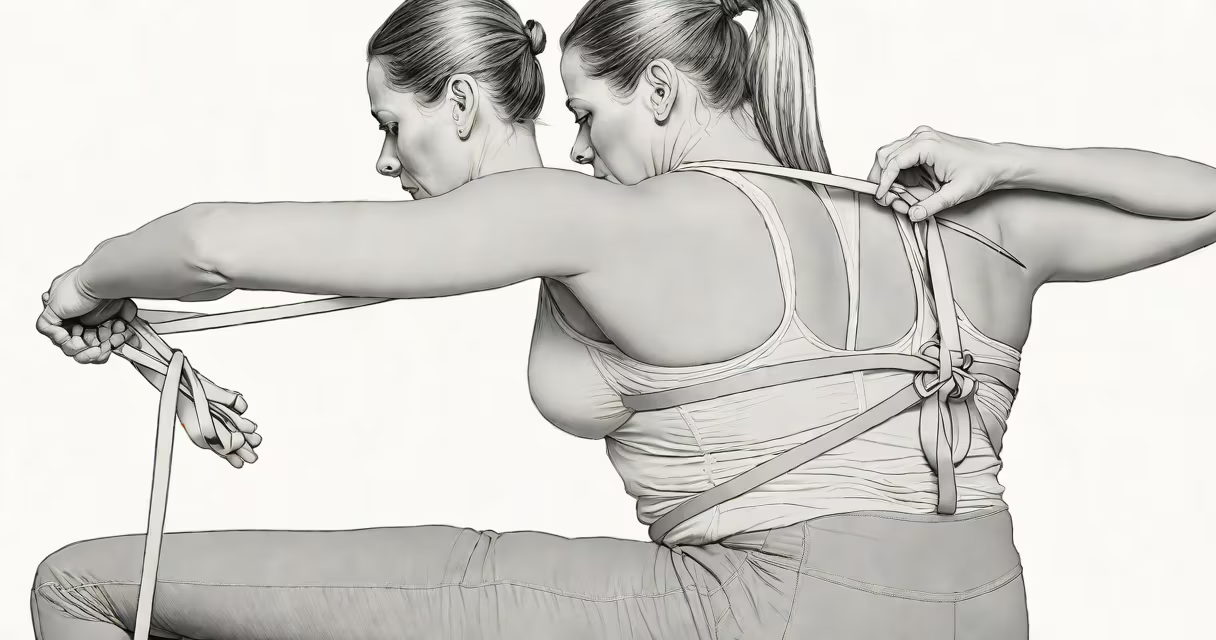
trapezius physical therapy exercises are targeted movements designed to strengthen, stretch, and restore function to the trapezius muscles-the large, triangular muscles spanning the upper back and neck. These exercises address pain, stiffness, and weakness caused by poor posture, repetitive strain, or injury, improving both stability and range of motion.
The trapezius muscle has three distinct parts: upper, middle, and lower. The upper trapezius elevates the shoulder girdle, the middle part retracts the scapula, and the lower portion depresses and stabilizes the shoulder blade. Physical therapy exercises focus on restoring balance among these segments, especially when one area becomes overactive due to compensatory patterns.
According to the American Physical Therapy Association (APTA), manual therapy combined with targeted exercise reduces chronic neck and upper back pain by 40% compared to passive treatments alone. A 2021 study published in Journal of Orthopaedic & Sports Physical Therapy confirmed that patients with trapezius-related myofascial pain showed significant improvement after eight weeks of consistent exercise, including isometric contractions and scapular retractions.
These exercises operate through neuromuscular re-education and progressive loading. They train the brain to activate the correct muscle fibers during movement, correcting imbalances caused by prolonged desk work, phone use, or trauma. For example, when someone holds their head forward while typing, the upper trapezius shortens and becomes fatigued, leading to tension headaches and reduced shoulder control.
Exercises like the prone Y-T-W raise series activate the middle and lower trapezius, which are often underused. By lying face-down and lifting the arms into a Y, T, or W shape, the patient isolates the scapular stabilizers. This strengthens the muscles responsible for keeping the shoulder blades flat against the ribcage, reducing winging and improving posture.
A key principle is controlled eccentric loading-slowing down the lowering phase of an exercise. Research from the British Journal of Sports Medicine shows that eccentric training increases muscle endurance and reduces risk of re-injury by up to 30% in athletes and office workers alike.
Exercises are categorized by purpose: strengthening, stretching, coordination, and posture retraining. Each targets a different aspect of trapezius function.
| Type | Goal | Example Exercise | Reps/Sets |
|---|---|---|---|
| Strengthening | Improve scapular control and endurance | Prone Y-T-W raises | 3 sets of 10 reps |
| Stretching | Relieve tightness in upper trapezius | Seated neck side bend with arm support | Hold 30 seconds per side, 2 reps |
| Coordination | Restore motor control during movement | Wall slides with resistance band | 2 sets of 12 reps |
| Posture Retraining | Correct forward head posture | Chin tucks with light resistance | 3 sets of 15 reps |
One lesser-known fact: the lower trapezius activates during late-phase scapular depression, such as when pushing a door open or reaching overhead. Many people neglect this phase, leading to impingement and fatigue. Exercises like the "scapular clock" (imagining your shoulder blade as a clock face and moving it through positions) improve awareness and timing of lower trapezius engagement.
These exercises are standard in rehabilitation after whiplash, rotator cuff injuries, or carpal tunnel syndrome-conditions where altered posture contributes to nerve compression. They're also prescribed for individuals with sedentary jobs, such as software developers or administrative staff, who report persistent neck strain.
A 2020 survey by the National Institute of Occupational Safety and Health (NIOSH) found that 68% of office workers reported upper back discomfort. Of those, 72% experienced symptom reduction after six weeks of daily trapezius-specific exercises, including resisted shrugs and seated rows using a resistance band.
They're commonly misused as generic "back workouts." A single set of seated rows doesn't engage the middle trapezius unless the elbows are pulled back toward the hips and the shoulders are depressed. Without proper form, the exercise shifts load to the biceps and upper traps, worsening tension.
Many assume that stretching the upper trapezius alone resolves neck pain. But research from the Spine Journal shows that isolated stretching fails to improve long-term outcomes when paired with weak scapular stabilizers. The solution lies in combining activation of the lower trapezius with release of the upper fibers.
Another error: doing high-repetition shrugs with weights. While effective for building strength, uncontrolled shrugging leads to hypertonicity and trigger points. Instead, therapists recommend isometric holds-pressing the shoulders up and holding for 5 seconds-without movement. This builds endurance without increasing muscle tone.
I once observed a patient perform 20 reps of weighted shrugs daily for three months. She reported increased neck stiffness and radiating pain. After switching to isometric contractions and adding scapular retractions, her symptoms resolved within four weeks. The lesson: volume isn't always better. Precision matters.
Consider Jane, a 38-year-old graphic designer with chronic upper back pain and frequent headaches. Her physical therapist identified overactivity in the upper trapezius and underactivity in the lower trapezius. She was given a home program: 3 sets of 10 prone Y-T-W raises, 2 sets of 15 chin tucks with resistance band, and 30-second wall slides twice daily.
After six weeks, Jane's pain decreased from 7/10 to 2/10 on the visual analog scale. Electromyography (EMG) readings showed improved activation symmetry between left and right lower trapezius. Her therapist noted that consistency was more predictive of success than intensity.
trapezius physical therapy exercises are not a one-size-fits-all solution. Success depends on accurate assessment, individualized programming, and adherence. When applied correctly, they restore function, reduce pain, and prevent recurrence in daily activities-from typing to lifting groceries.