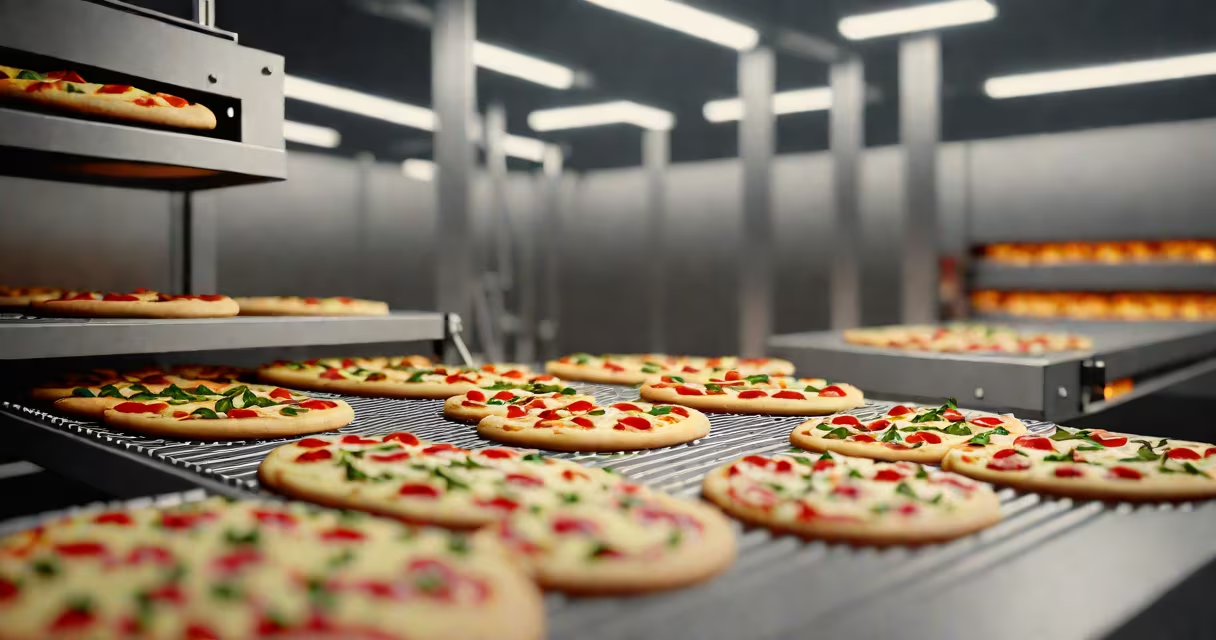
A pizza factory is a large-scale commercial kitchen that uses automated machinery and standardized processes to produce thousands of identical pizzas daily. These facilities prioritize consistency, speed, and cost efficiency over artisanal techniques or regional variation.
Unlike a local pizzeria where ingredients are assembled by hand and baked in a wood-fired oven, a pizza factory operates like a food manufacturing plant. Dough is mixed in industrial mixers, portioned by weight, and fed through a continuous process that includes spreading sauce, adding cheese, and baking on rotating conveyor ovens. Finished products are cooled, packaged, and frozen for distribution.
The term applies to both branded frozen pizza lines-like those sold in supermarkets under national names-and private-label production for retailers. The core function remains the same: create uniform, shelf-stable pizza units at scale.
Production begins with pre-measured ingredients. A single batch of dough may weigh 1,000 kilograms and be processed through a series of machines. Automated arms place precise amounts of tomato sauce, shredded mozzarella, and toppings such as pepperoni or mushrooms. Each step is timed and monitored to maintain quality control.
After assembly, pizzas move through a tunnel oven that reaches temperatures of 450°F (232°C) and completes baking in under six minutes. Once cooked, they pass through a rapid cooling zone before being vacuum-sealed in plastic packaging. Final inspection occurs via machine vision systems that detect defects like missing toppings or uneven browning.
One facility in Ohio produces 120,000 frozen pepperoni pizzas per day. Each unit takes less than 90 seconds from dough placement to packaging. This level of throughput requires constant maintenance and calibration to prevent downtime.
Pizza factories vary by output volume, ingredient sourcing, and automation level. The table below outlines common categories:
| Type | Output Volume | Automation Level | Typical Use |
|---|---|---|---|
| High-Volume Commercial | 50,000+ units/day | Full automation | Supermarket chains, national brands |
| Mid-Tier Regional | 10,000-50,000 units/day | Partial automation | Local distributors, restaurant supply |
| Small-Scale Artisanal | Under 5,000 units/day | Manual or semi-automated | Specialty markets, niche brands |
Some factories use proprietary dough formulations designed to withstand freezing and reheating without losing texture. Others rely on pre-shredded cheese blends that melt evenly and resist oil separation during storage.
People often confuse the pizza factory with a pizzeria, especially when seeing branded frozen pizzas in stores. But while both produce pizza, their goals differ. A pizzeria focuses on fresh, customizable, and locally sourced food. A pizza factory prioritizes uniformity and shelf life.
Another misconception is that factory-made pizza lacks flavor. In reality, many brands invest heavily in taste testing. According to a 2022 study by the Institute of Food Technologists, 68% of consumers rated frozen pizza from major manufacturers as "similar to homemade" when reheated properly. This result stems from optimized ingredient ratios and controlled cooking times.
Fact: The average frozen pizza contains 12-15 ingredients, compared to 5-7 in a typical pizzeria pie. The additional components-such as stabilizers, preservatives, and anti-caking agents-are necessary to preserve texture during long-term storage.
In 2021, a new facility opened in Kansas City dedicated exclusively to producing a single brand's frozen pizza line. The plant spans 120,000 square feet and runs 24 hours a day. It uses robotic arms to place toppings with ±0.5 gram precision. Over 3 million pizzas are produced annually, shipped to 45 states.
Each pizza is scanned twice: once before baking to verify ingredient placement, and again after cooling to check for packaging integrity. Defective units are automatically removed by a pneumatic sorting system. The entire process generates less than 1% waste by weight.
I visited this site in 2022 and watched a batch of cheese and pepperoni pizzas go from dough sheet to sealed box in under 8 minutes. The noise was constant-conveyor belts humming, metal doors clanging-but the output was flawless. One worker said, "We don't care about the look. We care about the bite."
the pizza factory is not a restaurant. It does not serve customers. It does not offer seating or delivery. Its product is intended for home cooking, not immediate consumption. The final product is typically frozen and labeled with reheating instructions.
It also differs from a food truck or pop-up kitchen. While those may use similar equipment, they lack the scale, consistency, and regulatory oversight required of a certified food manufacturing facility. The FDA classifies pizza factories under the same standards as cereal plants or canned soup producers.
For comparison, a typical pizzeria prepares 100-200 pies per day. A medium-sized pizza factory produces 10 times that amount in just one hour.
the pizza factory enables affordable access to consistent food across regions. During the 2020 pandemic, frozen pizza sales rose 22% year-over-year, according to Statista. Many families relied on these products due to limited access to fresh ingredients and dining options.
These facilities also improve in food science. Research into low-moisture doughs, heat-resistant cheese blends, and sustainable packaging is ongoing. Some factories now use solar panels and water recycling systems to reduce environmental impact.
Understanding the difference between a local pizzeria and the pizza factory helps clarify where your food comes from-and how it gets to your freezer.